serial murder
A criminological term describing multiple murders committed by the same offender over an extended period, typically with cooling-off periods between incidents. Not a distinct legal offense in most jurisdictions.

Definition
Serial murder refers to the killing of multiple victims in separate incidents over a period of time, typically with emotional cooling-off periods between each homicide. While widely used in criminology, forensic psychology, and media coverage, "serial murder" is not a separately defined criminal offense in most legal systems, including U.S. federal law.
The FBI's Behavioral Analysis Unit defines serial murder as the unlawful killing of two or more victims by the same offender(s) in separate events. This criminological definition helps law enforcement identify patterns and investigate related homicides, but it does not create a distinct legal charge. Each homicide committed by a serial killer is prosecuted individually under applicable murder statutes.
In U.S. federal jurisdiction, murders are prosecuted under general homicide provisions such as 18 U.S.C. § 1111, which defines murder as the unlawful killing of a human being with malice aforethought. Federal jurisdiction applies when murders occur on federal property, involve federal officials, cross state lines in certain circumstances, or otherwise fall within federal competence. The serial nature of the crimes may influence sentencing considerations and prosecutorial strategy, but does not change the fundamental legal classification of each individual homicide.
When multiple murders are prosecuted together, they are typically charged as separate counts of murder or first-degree murder under the relevant jurisdiction's statutes. Aggravating factors such as premeditation, torture, or multiple victims may enhance sentencing, potentially including capital punishment in jurisdictions where it remains available. The pattern of serial killing may be presented as evidence of premeditation, planning, or the defendant's ongoing danger to society.
Related entries
Read more
Karl Denke: The Cannibal of Münsterberg
Karl Denke, a seemingly pious church organist in Münsterberg, Germany, murdered at least 30 people between 1903 and 1924. His crimes included cannibalism and selling human flesh as pork at local markets.
Paul Ogorzow: The S-Bahn Murderer of Nazi Berlin
Between 1940 and 1941, Paul Ogorzow terrorized wartime Berlin by attacking women on the city's S-Bahn railway system. The Nazi Party member killed at least eight women before his capture and execution.
Rudolf Pleil: The Death Maker of Post-War Germany
Rudolf Pleil confessed to murdering at least nine women in the chaos of post-war Germany between 1946 and 1947. Operating along the border zones between East and West Germany, he preyed on refugees fleeing Soviet occupation.
Related articles

Indian Predator: The Butcher of Delhi
Netflix documentary series about Chandrakant Bachan Shetty, a Delhi taxi driver who beheaded at least 4 victims and left taunting notes outside Tihar Jail in 2006–2007.

Archivo Negro: Sombras del Crimen
Archivo Negro: Sombras del Crimen is a ViX anthology documentary series covering five real high-impact criminal cases from Mexico City and its metropolitan area, including serial femicide.
The New Detectives: Case Studies in Forensic Science
The New Detectives is a docudrama series (1996–2005) covering 118 real criminal cases solved through forensic science, streaming free on Tubi, Pluto TV, and The Roku Channel.

Netflix Documentary Reopens the Long Island Serial Killer Case
A new Netflix documentary series shines a light on the Long Island Serial Killer case and the investigation that led to the arrest of New York City architect Rex Heuermann.
Karl Denke: The Cannibal of Münsterberg
Karl Denke, a seemingly pious church organist in Münsterberg, Germany, murdered at least 30 people between 1903 and 1924. His crimes included cannibalism and selling human flesh as pork at local markets.
Paul Ogorzow: The S-Bahn Murderer of Nazi Berlin
Between 1940 and 1941, Paul Ogorzow terrorized wartime Berlin by attacking women on the city's S-Bahn railway system. The Nazi Party member killed at least eight women before his capture and execution.

Rudolf Pleil: The Death Maker of Post-War Germany
Rudolf Pleil confessed to murdering at least nine women in the chaos of post-war Germany between 1946 and 1947. Operating along the border zones between East and West Germany, he preyed on refugees fleeing Soviet occupation.
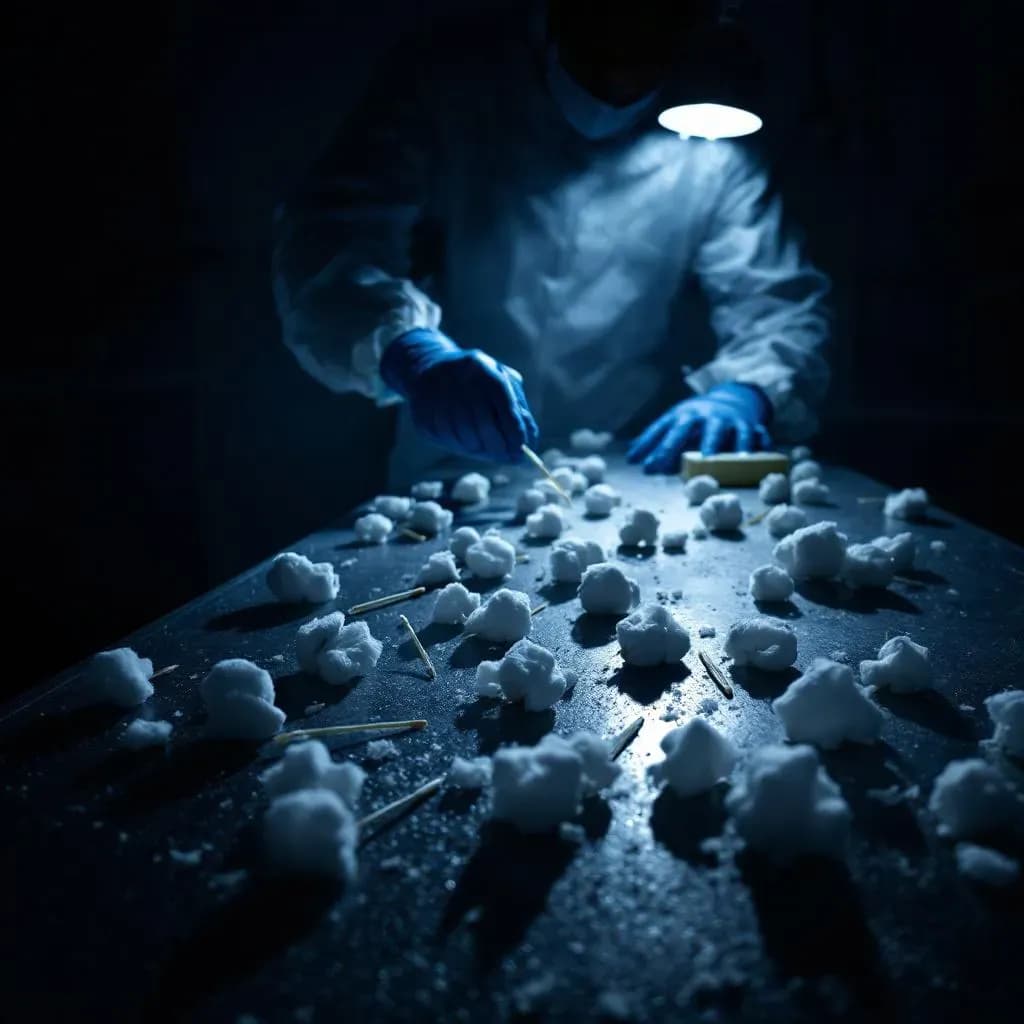
The Phantom of Heilbronn: A DNA Mystery That Never Existed
For sixteen years, German police hunted a prolific female serial killer whose DNA appeared at over 40 crime scenes across Europe. In 2009, investigators discovered the Phantom of Heilbronn never existed — the DNA belonged to a factory worker who packaged cotton swabs.
Jürgen Bartsch: The Child Killer of the Ruhr Valley
Between 1962 and 1966, German teenager Jürgen Bartsch abducted, sexually assaulted, and murdered four young boys in abandoned mine shafts near Langenberg, West Germany. His case shocked the nation and transformed understanding of juvenile offenders.

Joachim Kroll: The Ruhr Cannibal's 21-Year Murder Spree
Joachim Kroll terrorized Germany's Ruhr Valley from 1955 to 1976, murdering at least 14 people. His arrest came only after a neighbor discovered human remains clogging the building's shared toilet.
Pam Hupp-sagen: Mordet på Louis Gumpenberger i Missouri
Pamela Marie Hupp skød og dræbte Louis Gumpenberger i sit hjem i O'Fallon, Missouri, den 16. august 2016 – en sag der endte med livstid i fængsel.
Homicide: New York Season 2 Launches on Netflix March 25
Netflix releases the second season of Homicide: New York on March 25, 2026, featuring five hour-long episodes that chronicle some of the city's most challenging murder investigations through the eyes of the detectives and prosecutors who solved them.