Jack the Ripper: Conspiracies
Apple TV, 2002 — the unsolved 1888 Whitechapel murders and their enduring suspects
Quick facts
What Is the Series About?
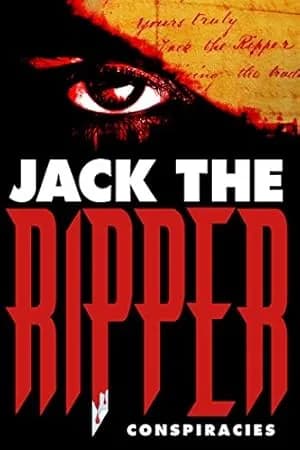
Jack the Ripper: Conspiracies is a 2002 documentary film directed by Liam Dale that examines the most infamous series of unsolved murders in recorded criminal history — the Whitechapel killings of autumn 1888. Running approximately one hour and thirty minutes, the film is available to rent or purchase through the Apple TV Store and Amazon Prime Video, and is catalogued on IMDb under the identifier tt4228846 with a current user rating of 6.4 out of 10 based on 25 ratings.
Rather than presenting a solved case, the documentary is framed entirely around the conspiracy theories and suspect profiles that have accumulated over more than a century of Ripperology. Its central argument is not that any one named individual committed the murders, but that the evidence — fragmentary, contested, and often contradictory — points in several directions simultaneously, making definitive attribution impossible. The film surveys the four most discussed suspects and interrogates the institutional cover-up theories that have made this case a fixture of both criminal history and popular culture.
---
The Case
Between August and November 1888, at least five women were murdered in the Whitechapel district of London's East End. These five — Mary Ann Nichols, Annie Chapman, Elizabeth Stride, Catherine Eddowes, and Mary Jane Kelly — are collectively known as the canonical victims, a designation reflecting the general consensus among historians and investigators that these killings share enough forensic and behavioural characteristics to be attributed to a single offender.
Mary Ann Nichols was found on 31 August 1888 in Buck's Row. Annie Chapman was killed on 8 September in the yard of 29 Hanbury Street. The night of 30 September produced the so-called 'double event,' with both Elizabeth Stride and Catherine Eddowes murdered within hours and a short distance of each other. Mary Jane Kelly, killed on 9 November in her room at Miller's Court, suffered the most severe mutilations of any victim and is generally considered the last confirmed case.
The Metropolitan Police Whitechapel murder investigation was one of the largest police operations London had seen to that point, yet it failed to produce a prosecution. No suspect was ever charged, tried, or convicted. The case was never formally closed.
The documentary focuses on four suspects whose names recur most frequently in the academic and popular literature:
- Aaron Kosminski, a Polish-born Jewish barber and asylum patient who lived in Whitechapel at the time of the murders, has been identified by several investigators — including a 2014 DNA study whose methodology remains disputed — as the most probable offender. He was committed to Colney Hatch Lunatic Asylum in 1891 but was never charged with any murder.
- Francis Tumblety, an American patent medicine seller and known criminal, was arrested in London in November 1888 on unrelated charges and fled to the United States after posting bail. Contemporary police correspondence names him as a serious suspect, but he was never extradited or charged in connection with the Whitechapel murders.
- Sir William Gull, the royal physician, became the centrepiece of a high-level conspiracy theory popularised in the 1970s and 1980s, alleging that the murders were carried out to protect the British royal family from a scandal involving Prince Albert Victor. Historians widely regard this theory as without credible evidentiary foundation.
- James Maybrick, a Liverpool cotton merchant whose diary — purportedly confessing to the murders — surfaced in 1992, is considered a serious suspect by some and a straightforward hoax by the majority of forensic document experts.
Because no arrest was ever made and no trial ever held, the documentary's treatment of all four is explicitly speculative rather than evidentiary.
---
Production
The film was directed by Liam Dale and released in December 2002 in the United States. It is presented as a single documentary feature rather than an episodic series, with a runtime of approximately one hour and twenty-nine to thirty minutes depending on the platform version. Production details beyond the director credit are not extensively documented in available public sources, which is consistent with the low-budget, archival-driven approach typical of historical true crime documentaries of that era.
The film draws on the extensive historical record that surrounds the Whitechapel case — police files, inquest transcripts, period journalism, and the voluminous secondary literature produced by Ripperologists in the decades following the murders. No indication exists in the available record that the production involved access to restricted archival materials or cooperation from law enforcement agencies, which would in any case be a moot point given that the investigation is more than 130 years old.
The documentary's structure — presenting multiple suspects and conspiracy frameworks in sequence rather than building toward a single conclusion — reflects the standard epistemological position of serious Ripper scholarship: that the evidence is insufficient to convict any one individual, and that intellectual honesty requires acknowledging that uncertainty rather than manufacturing false resolution.
---
Reception
Public reception for Jack the Ripper: Conspiracies is difficult to assess with precision. Its IMDb listing records a rating of 6.4 out of 10 from only 25 user ratings — a dataset too small to support broad conclusions about audience response, but suggestive of a modestly positive reception among the niche viewership that sought it out. A score in the low-to-mid sixes is typical of competent but unremarkable documentary work in a saturated subgenre.
The subject matter itself generates persistent controversy that no documentary treatment can fully avoid. The Jack the Ripper case attracts a highly informed and often combative online community, and any film that presents a particular suspect as credible — or, conversely, dismisses one — risks pushback from advocates of competing theories. Viewer discussion of Ripper documentaries characteristically centres on three fault lines: the quality of the physical evidence used to implicate suspects, the credibility of conspiracy narratives involving the Crown or Metropolitan Police, and the ethical dimension of naming individuals who were never charged.
The documentary's decision to cover multiple suspects rather than argue for a single solution is both its most defensible editorial choice and the one most likely to frustrate viewers seeking resolution.
---
The Case Today
The Whitechapel murders of 1888 remain officially unsolved. No new forensic evidence has emerged that commands consensus among specialists, and the Metropolitan Police hold no active investigation. The most significant recent development in the academic literature was the 2014 DNA analysis conducted by Dr Jari Louhelainen, which its authors claimed linked biological material on a shawl reportedly recovered from the scene of Catherine Eddowes's murder to Aaron Kosminski. That study was widely reported as a definitive identification, but it was subsequently subjected to serious methodological criticism, including concerns about chain of custody for the shawl, potential contamination, and the statistical interpretation of mitochondrial DNA matches.
The case continues to generate books, documentaries, podcasts, and academic papers at a rate that reflects both its genuine historical importance and its cultural status as the archetypal unsolved murder. Jack the Ripper: Conspiracies occupies a modest place in that library — a straightforward archival overview rather than a landmark contribution, but a serviceable introduction to the central suspects and the conspiracy frameworks that surround them.
For viewers new to the case, the film provides a functional survey of the major theories. For those already familiar with the literature, it offers little that has not been covered in greater depth elsewhere. It can be watched via the Apple TV Store or Amazon Prime Video.