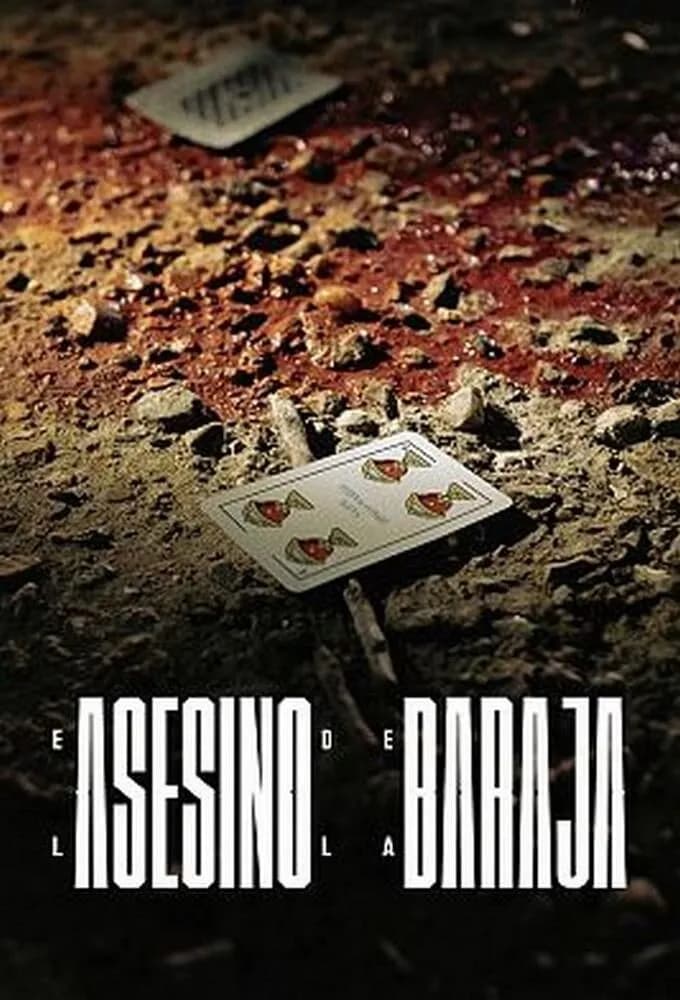
Baraja: la firma del asesino
Netflix, 2023 — The story of Spain's Playing Card Killer, Alfredo Galán Sotillo
What Is the Series About?
Baraja: la firma del asesino is a Netflix documentary series that chronicles one of Spain's most shocking modern serial-killer cases: the nine-week murder spree carried out by former soldier Alfredo Galán Sotillo in the Madrid area between January and March 2003. Released on 9 June 2023, the series takes its name from the killer's chilling habit of leaving a playing card at each crime scene as a personal signature — a detail that both fascinated and horrified the Spanish public and gave Galán his enduring nickname, el asesino de la baraja (the playing-card killer). The documentary is separate from RTVE's own docuseries on the same case, which aired around the same period under the title El asesino de la baraja and ran across three chapters and an epilogue.
The Case
A City Held in Fear
Between 24 January 2003 and 20 March 2003, residents of Madrid and the surrounding communities lived under the shadow of an unidentified gunman. Over the course of fewer than sixty days, the perpetrator shot and killed six people and wounded three others in apparently random attacks. The killer left a Spanish playing card — a naipe — at or near each scene, a macabre flourish that immediately set the case apart from ordinary street crime and gave investigators a consistent forensic signature to work with.
Spanish media coverage was intense. The case dominated front pages and evening news bulletins for months, and the playing-card detail lodged itself in the public imagination in a way that few criminal cases had managed before. As reporting on the case consistently noted, the killer appeared to have no personal connection to his victims — the randomness of the targets made anyone feel potentially at risk, amplifying collective anxiety across the capital.
The Perpetrator: Alfredo Galán Sotillo
Alfredo Galán Sotillo was a former member of the Spanish military — described across multiple sources as an exmilitar or exsoldado — when he began his killing spree. His military background gave him proficiency with firearms, and investigators believe this training played a direct role in how he carried out his attacks. The court described his actions as reflecting a manifest contempt for human life, a phrase echoed in subsequent media coverage.
The investigation was led jointly by the National Police and the Guardia Civil and stretched over approximately seven months. Despite the pressure of one of the largest manhunts in recent Spanish history, it was ultimately Galán himself who ended it: on 3 July 2003, he walked into a police station in Puertollano, Ciudad Real, and surrendered voluntarily.
According to reporting by Mediaset Infinity, Galán later stated that he killed in an attempt to feel something — a chilling account of emotional emptiness that has since become one of the most quoted aspects of the case in Spanish true-crime coverage.
Victims
The case involved six fatal victims and three survivors who were shot but not killed. Among the victims confirmed by name in available sources is Juan Carlos Martín. Full verified details on all nine victims — including complete names and ages at the time of each attack — are not comprehensively available in currently sourced materials. The court proceedings in 2005 formally established the identities and circumstances of each attack as part of the conviction record.
Trial and Sentence
The trial before the Audiencia Provincial de Madrid concluded in 2005. Galán was found guilty of six counts of murder and three counts of attempted murder. The sentence handed down was 142 years and 3 months in prison. The court also ordered Galán to pay more than €600,000 in financial compensation to the victims' families and the three survivors.
A critical nuance of the Spanish penal system applies here: regardless of the nominal length of a sentence, Spanish law at the time of Galán's conviction capped actual time served at 25 years for cases of this kind. This legal ceiling has been a source of ongoing public debate in Spain about the adequacy of the justice system's response to the most serious violent crimes.
Production
Baraja: la firma del asesino premiered on Netflix on 9 June 2023. The director of the Netflix series has not been confirmed in currently available sourced materials. The series arrives as part of a broader wave of Spanish true-crime documentary content that has found strong audiences both domestically and internationally on streaming platforms.
The case had already attracted significant documentary attention from Spanish public broadcaster RTVE, whose separate production El asesino de la baraja covered the same events across three chapters and an epilogue. The existence of two distinct docuseries about the same case within a short window reflects both the enduring public fascination with the story and the competitive interest of streaming platforms in high-profile Spanish true-crime content.
Reception
The Netflix series arrived to an audience already primed by decades of media coverage of the original case. The playing-card killings of 2003 had never truly faded from Spanish public memory, and the 2023 documentary renewed that attention on a global platform. Spanish media coverage of the series' release was substantial, with multiple outlets running retrospectives on the case timed to the premiere.
No verified aggregate review scores, audience ratings, or formal critical assessments from major outlets are available in currently sourced materials for the Netflix production specifically. The series does not yet have a confirmed IMDb listing or rating in the verified source set. What is clear from the volume of media coverage is that the case retains enormous cultural weight in Spain — enough to sustain not one but two major documentary productions in 2023 alone.
The Case Today
As of the time of writing, Alfredo Galán Sotillo remains incarcerated, serving his sentence under the 25-year cap established by Spanish law at the time of his conviction. His precise current facility and expected release date have not been confirmed in currently available sourced materials.
The case continues to be referenced as a landmark moment in Spanish criminal history — a rare instance of domestic serial murder that unfolded in a major European capital, documented in near-real time by a saturated media environment, and ended not with a dramatic arrest but with the killer's own decision to surrender. For true-crime audiences worldwide, Baraja: la firma del asesino offers a window into that moment and into the question that has never been fully answered: why did an ex-soldier with no apparent motive choose random strangers, and leave a playing card behind each time?