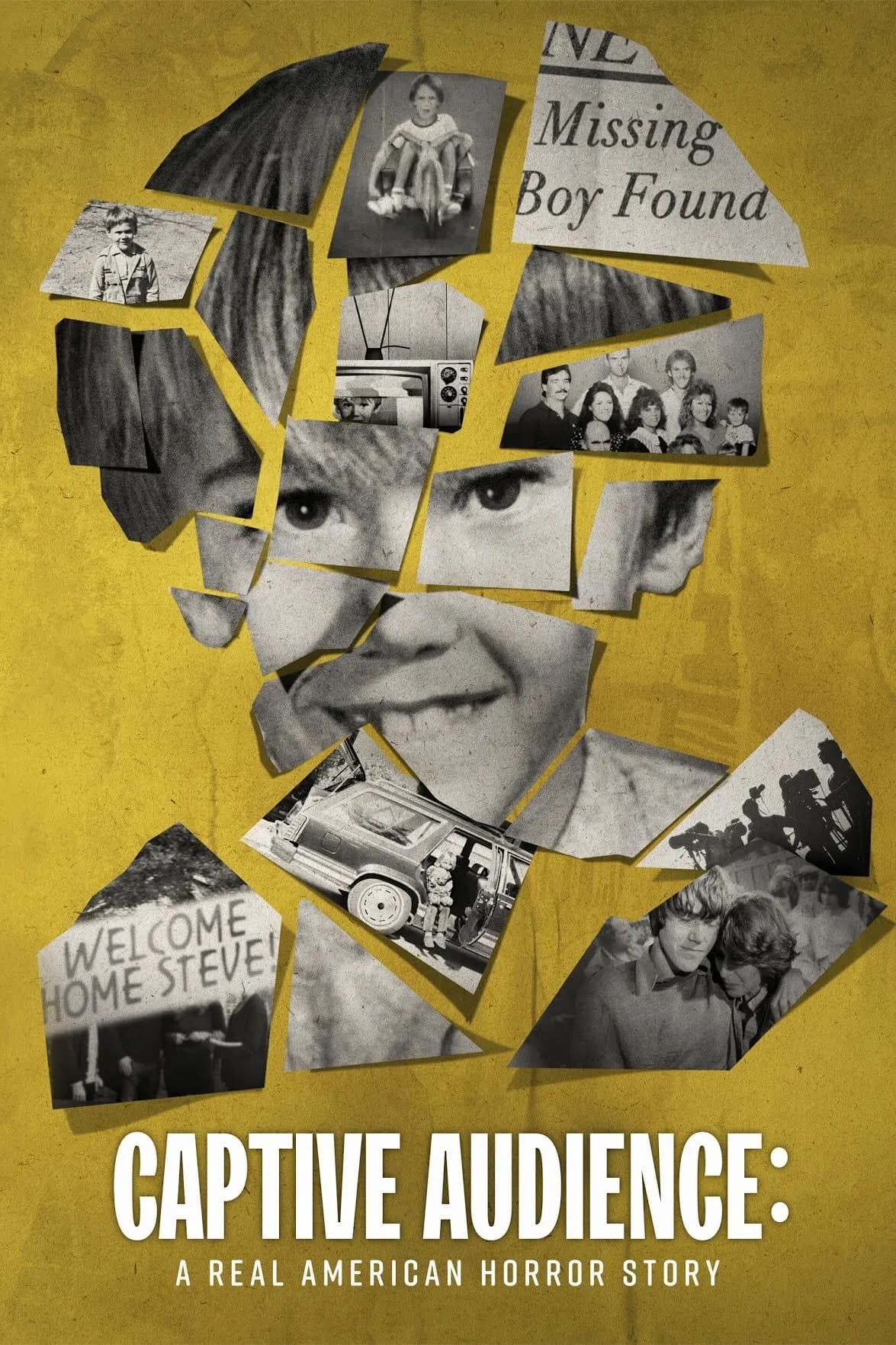
Captive Audience: A Real American Horror Story
Disney+/Hulu, 2022 — the Stayner family: a kidnapping survivor and a serial killer
Quick facts
What Is the Series About?
*Captive Audience: A Real American Horror Story* is a three-part docuseries that examines one of the most haunting family stories in American true crime history: the 1972 kidnappingtrue crime history: the 1972 kidnapping of seven-year-old Steven Stayner from Merced, California, and the later discovery that his older brother, Cary Stayner, had become a convicted serial killer responsible for four murders near Yosemite in 1999. Directed by Jessica Dimmock and released on April 21, 2022, on Hulu and Disney+, the series goes beyond a conventional crime retelling to explore how trauma, media obsession, and public spectacle shaped — and arguably devastated — the entire Stayner family across three decades.
The series is notable for its refusal to treat these two cases in isolation. Instead, it asks a deeply uncomfortable question: what does it mean when the same family produces both a celebrated kidnapping survivor and a death-row serial killer? That tension drives all three episodes and has made the series one of the most discussed true-crime productions of 2022.
---
The Case
The Kidnapping of Steven Stayner (1972–1980)
On December 4, 1972, Steven Stayner — then just seven years old — was approached and abducted in Merced, California, by Kenneth Eugene Parnell, a convicted sex offender who posed as a religious man seeking a donation. Parnell took Steven and, over the following years, subjected him to prolonged sexual abuse while moving him across Northern California, raising him under a false name and identity.
Steven remained in Parnell's captivity for nearly seven years. In early 1980, after Parnell abducted yet another child — five-year-old Timmy White — Steven made the decision to escape, taking Timmy with him. He walked into a police station and identified himself, triggering a media frenzy. His return home was covered nationally and marked as a rare, almost miraculous resolution to a child-abduction case. Kenneth Eugene Parnell was subsequently arrested and convicted of kidnapping.
As Common Sense Media notes in its review of the series, the documentary does not shy away from the lasting psychological damage Steven suffered, nor from the ways in which the media's relentless coverage of his story made genuine recovery difficult for him and his family.
Tragically, Steven Stayner died in a motorcycle accident in 1989, at age 24, before he could see the full arc of his own story told on screen.
The Yosemite Murders: Cary Stayner (1999)
The second half of the series shifts focus to Cary Stayner, Steven's older brother. In 1999 — nearly two decades after Steven's return — Cary committed a series of murders in and around Yosemite, California, killing four women. One of the victims identified in coverage is Joie Ruth Armstrong. Cary was arrested, tried, and convicted on four counts of first-degree murder. In 2002, he was sentenced to death.
According to People magazine's reporting on Cary Stayner's current status, he remains on death row at San Quentin State Prison and is not eligible for parole. The series examines how Cary's crimes retraumatized a family that had already endured extraordinary public scrutiny, and raises difficult questions about whether the Stayner family's decades of exposure and unaddressed trauma contributed to the conditions that enabled Cary's violence.
---
Production
Captive Audience was directed by Jessica Dimmock, an award-winning documentary filmmaker known for her immersive, character-driven approach. The series is produced as a Hulu original and is distributed on both Hulu and Disney+ in the United States and internationally.
The documentary's structure — three episodes that move across decades, crime types, and family members — reflects a deliberate editorial choice to contextualize both cases within a single, unbroken family narrative. Rather than treating Steven's kidnapping and Cary's murders as separate stories that happen to share a surname, the series argues they are inseparable chapters of the same tragedy.
A key theme running through the production is media sensationalism. The series interrogates how television dramatizations of Steven's story, and the subsequent press attention surrounding Cary's arrest, kept the Stayner family perpetually exposed to public scrutiny with little regard for their wellbeing. As the New York Post observed at the time of the premiere, the docuseries revisits a story that many Americans already thought they knew — and reframes it in ways that are unsettling precisely because of how familiar it feels.
---
Reception
Captive Audience: A Real American Horror Story has been well received by critics. The series holds a 92% score on Rotten Tomatoes based on 13 critic reviews, reflecting strong consensus that the documentary handles an extraordinarily sensitive subject with care and rigor.
Critical commentary has highlighted the series' willingness to interrogate not just the crimes themselves, but the American media ecosystem that turned the Stayner family into a decades-long public spectacle. Several reviewers have noted that the series functions as much as a meditation on trauma and exposure as it does as a conventional true-crime narrative.
According to coverage from El Confidencial, the series is described as deeply disturbing and surprising in its scope — not merely a retelling of known events, but a substantive interrogation of how American society consumes and prolongs the suffering of crime victims and their families.
The series is listed on IMDb under the title Captive Audience (TV Mini Series 2022) with the identifier tt15185666.
---
The Case Today
As of the series' release in 2022 and thereafter, Cary Stayner remains on death row at San Quentin State Prison in California, with no parole eligibility. Kenneth Eugene Parnell, who abducted Steven Stayner in 1972, was convicted of kidnapping and subsequently faced additional legal proceedings in later years, though the full sentencing record requires sourcing beyond the materials used for this article.
Steven Stayner, who died in 1989, is remembered both as a victim of one of the most prolonged child abductions in California history and as a young man who showed extraordinary courage in rescuing another child. His story — and the devastating epilogue written by his brother Cary — continues to prompt broader conversations about how the American justice system, mental health infrastructure, and media culture respond to survivors of serious crimes.
Captive Audience: A Real American Horror Story is available to stream on Hulu and Disney+ in three episodes.