Escobar by Escobar
Apple TV / Rakuten TV, 2021 — Pablo Escobar's story told by his widow
What Is the Series About?
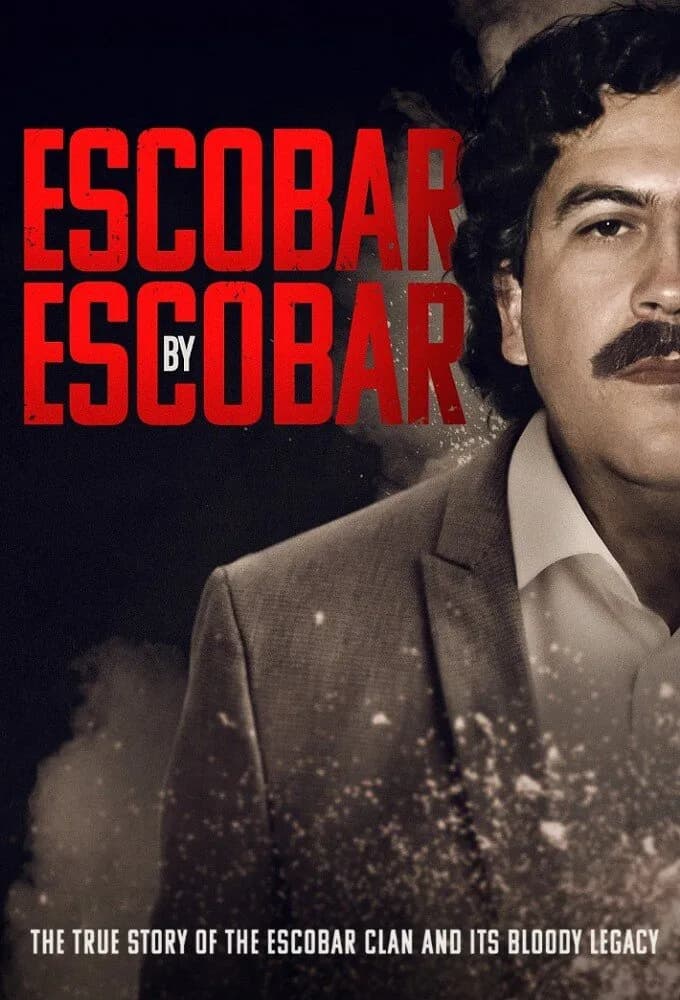
Escobar by Escobar is a 2021 documentary series that places the camera — and the narrative — directly in the hands of someone who witnessed Pablo Escobar's reign from its most intimate vantage point: his own home. The series is built around the testimony of María Isabel Santos Caballero, known publicly as "la Tata," who was Escobar's wife for more than two decades. Rather than relying on law enforcement sources, rival cartel members, or dramatised reconstructions, the series takes the unusual editorial decision of letting Santos tell the story in her own words, without a prosecutorial frame.
The series is available for purchase or rental on Apple TV Store, Blockbuster, SF Anytime, and Rakuten TV.
---
The Case
Pablo Emilio Escobar Gaviria was born in Rionegro, Colombia, in 1949 and grew up in the working-class neighbourhoods of Medellín. By the late 1970s he had become the central figure in what would be called the Medellín Cartel, an organisation responsible for an estimated 80 percent of the cocaine smuggled into the United States at the height of its power.
Escobar's methods were defined by a dual strategy he described himself as plata o plomo — silver or lead. Public officials, judges, journalists, and politicians were either bribed into compliance or murdered. His campaign of terror included the 1989 bombing of Avianca Flight 203, the assassination of presidential candidate Luis Carlos Galán, and hundreds of car bombings across Colombian cities that killed thousands of civilians.
At the same time, Escobar cultivated a public image as a benefactor in poor communities around Medellín, building football pitches, housing blocks, and schools. This duality — beloved patron and mass murderer — is central to the ongoing cultural debate around his legacy and is addressed directly in the documentary through Santos's account.
Escobar briefly entered politics in the early 1980s as an alternate member of the Colombian Congress, but was expelled when his criminal background was exposed. From that point, his conflict with the Colombian state escalated dramatically. He declared war on extradition, targeting any political figure who supported handing Colombian nationals over to U.S. courts.
In 1991, Escobar negotiated a surrender deal with the government and entered La Catedral, a prison he had effectively designed himself in the hills above Medellín. He continued to run the cartel from inside. When the government moved to transfer him to a conventional facility in July 1992, he escaped. The following 16 months were among the bloodiest of the entire conflict.
On December 2, 1993, Colombian security forces located Escobar in a middle-class Medellín neighbourhood. He was shot and killed — the day after his 44th birthday. The cause of the fatal shot remains disputed: official accounts say he was killed by security forces; some sources, including members of his own family, have claimed he died by suicide.
Escobar was never formally convicted of any crime in a court of law.
---
María Isabel Santos: The Witness at the Centre
What distinguishes Escobar by Escobar from the dozens of documentaries, dramatisations, and journalistic investigations that preceded it is its source. María Isabel Santos met Escobar when she was a teenager and married him at fifteen. She was present across nearly the entire arc of his criminal career — through the early years of cartel building, the political ambitions, the wars with the state and rival traffickers, the imprisonment at La Catedral, the flight, and ultimately his death.
Santos has spoken publicly before — notably in her memoir Mi Vida y Mi Cárcel con Pablo Escobar — but a documentary format allows for a different kind of testimony: visual, emotional, and immediate. Her account addresses not only the crimes but the domestic reality of living under the same roof as a man conducting a narco-terrorist campaign, raising children in safe houses, and navigating constant threats to her own family's survival.
This perspective is inherently partial, and the series is understood to reflect her point of view rather than a comprehensive historical account. Viewers and critics have noted both the unique value of her access and the obvious limitations of a story told by someone with deep personal loyalty to its subject.
---
Production
Detailed production information — including the director, production company, and episode count — has not been confirmed in available sources at the time of publication. The series was distributed across multiple digital retail and streaming platforms in 2021, suggesting a relatively wide international release strategy for a documentary of this type.
The production approach appears to prioritise first-person testimony over external expert commentary, a format that has become increasingly common in true crime documentary series following the success of similar intimate witness-based projects in the genre.
---
Reception
Verified aggregated review scores and critical consensus data for Escobar by Escobar (2021) were not available in confirmed sources at the time of writing. An IMDb rating could not be confirmed.
The broader subject matter — Pablo Escobar as documentary and dramatisation subject — has attracted consistent criticism from Colombian victims' groups and journalists who argue that any framing of Escobar's story through a sympathetic family lens risks sanitising or romanticising the violence he inflicted. Whether Escobar by Escobar has faced this criticism specifically is not confirmed in available sources.
The series enters a crowded field. Netflix's Narcos (2015–2017) brought Escobar's story to a massive global audience through dramatisation, and has itself been criticised in Colombia for aestheticising narco culture. Documentary treatments including The Two Escobars (ESPN, 2010) and reporting by journalists such as María Jimena Duzán have set a high bar for rigorous engagement with the material.
---
The Case Today
Pablo Escobar has been dead for more than thirty years, but his legacy continues to generate active controversy in Colombia and internationally. Medellín has undergone a dramatic urban and social transformation since the 1990s, and city officials have repeatedly clashed with tourism operators over so-called "narco tours" that treat Escobar as an attraction rather than a criminal responsible for mass death.
Escobar's son, Sebastián Marroquín (born Juan Pablo Escobar), has become a public figure in his own right, speaking internationally about the impact of his father's crimes and advocating for reconciliation with victims — a notably different public posture from the one taken in Escobar by Escobar, which centres his widow's perspective.
The Medellín Cartel itself was dismantled following Escobar's death, but the cocaine trade it industrialised continues. Colombia remains the world's largest producer of cocaine, and successor organisations including the Gulf Clan and FARC dissidents operate in territories once controlled by Escobar's network.
For viewers seeking context beyond a single witness's account, the documentary sits within a now-extensive archive of Escobar-related material — and the debate over how his story should be told, and by whom, shows no sign of resolution.