Nevenka: Breaking the Silence
Netflix, 2021 — Spain's landmark sexual harassment case against a sitting mayor
Quick facts
What Is the Series About?
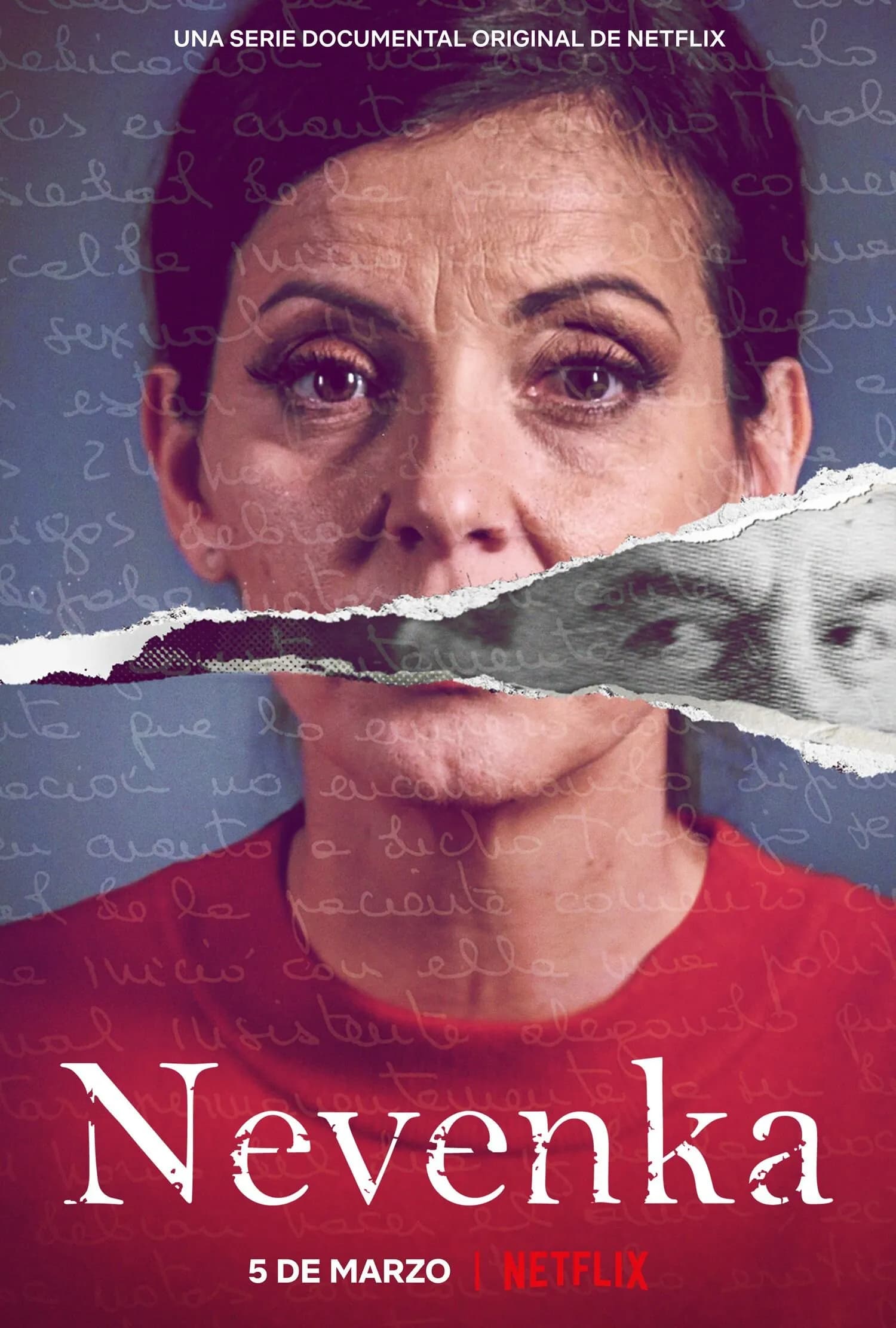
Nevenka: Breaking the Silence is a 2021 Netflix Spanish docuseries that chronicles one of the most consequential sexual harassment cases in Spanish legal history: the caso Nevenka, in which young city councillor Nevenka Fernández filed a lawsuit against Ismael Álvarez, the mayor of Ponferrada, León, for sustained sexual harassment that took place in 2000. Directed by Maribel Sánchez Maroto and released on March 5, 2021, the three-episode series is told largely from Fernández's perspective and marks the first time she has spoken publicly and at length about the ordeal in approximately 20 years. Far from a cold-case retrospective, the documentary lands as a deeply personal reckoning with power, silence, and institutional failure — one that resonates loudly in the post-MeToo era.
The Case
In 1999, Nevenka Fernández was just 20 years old when she was elected to the Ponferrada city council in Castilla y León, Spain. She was young, politically ambitious, and working directly under the supervision of Mayor Ismael Álvarez, a senior figure in the Partido Popular. What followed over the next two years was a systematic campaign of sexual harassment that, according to Netflix's synopsis, targeted her both at work and at her home.
By early 2001, Fernández had reached a breaking point. In March of that year, she resigned from her position and went public with her accusations, filing a formal lawsuit against Álvarez. The move was extraordinary for its time. Spain had no established legal precedent for holding a sitting politician criminally accountable for workplace sexual harassment, and the political and media environment was deeply hostile to her claims.
The public reaction was not uniformly supportive. As reporting on the case has documented, Fernández was subjected to intense scrutiny, victim-blaming, and a sexist backlash that effectively forced her into years of public silence. Critics of the political establishment questioned her motives; local media coverage was often framed in ways that minimized or delegitimized her account.
Despite the hostile climate, the courts ruled in her favor. The Tribunal Superior de Castilla y León convicted Ismael Álvarez of sexual harassment, sentencing him to nine months in prison, a fine of 6,480 euros, and 12,000 euros in damages payable to Fernández. The conviction was historic: it stands as the first successful conviction of a politician in Spain for sexual harassment, a legal milestone that would take two decades to fully enter public consciousness.
Production
Directed by Maribel Sánchez Maroto, Nevenka: Breaking the Silence is a tightly structured, three-episode docuseries that builds its case through archival footage, media records from the original trial period, and — most powerfully — Fernández's own testimony. Forbes described the result as a gripping Spanish documentary, with the production praised for its disciplined focus on Fernández's lived experience rather than sensationalism.
Sánchez Maroto's approach centers the victim's voice at every turn. Rather than building a procedural retelling of the legal case, the series uses Fernández's first extended public testimony in approximately 20 years as its emotional and narrative spine. Archival news clips and courtroom documentation serve to contextualize what she describes — and to show how dramatically the public conversation around the case has shifted since 2001. The series premiered globally on Netflix on March 5, 2021.
Reception
Critical reception to Nevenka: Breaking the Silence was strong. Decider and But Why Tho? both highlighted the documentary's emotional weight and its importance as a cultural document, with the latter arguing that the series should not go unheard. Writing in the Wall Street Journal, critics noted the historical significance of the case and the courage it took for Fernández to revisit it on camera after so many years of silence.
Spanish-language media, including Elle España and Esquire España, focused heavily on the social and political dimensions of the case — emphasizing how the backlash Fernández endured in 2001 mirrors dynamics that the global MeToo movement would not begin to widely dismantle until 2017 and beyond. The series was widely framed as Spain's own MeToo origin story: a case that happened before the language and the movement existed, but that contains all the same structural elements of institutional protection for the powerful and isolation for the victim.
The documentary's IMDb page is registered under the title Nevenka: Breaking the Silence (tt14091172), though no verified aggregate rating score is available from current sources.
The Case Today
The caso Nevenka is now recognized as a watershed moment in Spanish legal and social history. The conviction of Ismael Álvarez remains the first of its kind in the country — a benchmark against which subsequent political harassment cases have been measured. Nevenka Fernández, who spent nearly two decades in the shadows after her legal victory, has re-emerged through this documentary as a symbol of institutional courage.
The docuseries has renewed public debate in Spain about how the media covered her case in 2001, how the political establishment responded, and what systemic changes — if any — have followed in the intervening years. No verified information from current sources confirms Álvarez's current occupation or legal status beyond the original conviction. For many viewers, the most unsettling aspect of the series is not the verdict — which Fernández won — but the cost: years of public vilification, silence, and exile from a career she had barely begun.
As one of the earliest and most clearly documented cases of a public official being held legally accountable for sexual harassment in Spain, the caso Nevenka has found new relevance in the streaming era. That Fernández is now able to tell her story in her own words, on a global platform, to an audience equipped with the vocabulary of MeToo, represents a kind of delayed justice that the courtroom alone could not deliver.