Suicide
The complex line between tragedy, murder, and investigative pitfalls

Definition
A suicide can be a tragedy, a concealed murder, or a perpetrator's escape. Discover the complex ways suicide impacts true crime investigations.
The complex line between tragedy, murder, and investigative pitfalls
What is suicide in true crime and why is it not isolated?
In true crime, suicide refers to a person's intentional act of taking their own life, but its relevance in this context extends far beyond the individual tragedy. True crime cases focus on complex scenarios where a suicide is inextricably linked to criminal acts – either as a direct consequence, an attempt to conceal a crime, or as a factor complicating the subsequent investigation.
Suspected suicide: A crucial turning point for investigators
In the investigation of a case, a suspected suicide represents a critical turning point. It may turn out to be a meticulously planned murder, staged to mislead the police and thus evade prosecution. Conversely, a genuine suicide, especially if the circumstances at the scene are unclear or atypical, can mistakenly lead to suspicion of a crime, requiring thorough investigation to determine if other individuals were involved. A perpetrator might also choose suicide to avoid arrest and conviction, which can leave victims and their families without the justice and closure they need. Furthermore, prolonged exposure to crime, such as stalking or persistent domestic violence, can, in tragic cases, drive a victim to suicide. This can complicate cases and sometimes leave the underlying crime unresolved.
Concealed murder or despair: Forensic science reveals truth
The line between a genuine suicide and a criminal act, such as a concealed murder, can be extremely fine. This necessitates a meticulous forensic examination and analysis of all evidence, from technical traces at the crime scene to the deceased's psychological profile and any motives of potential perpetrators. Determining the correct cause of death is paramount, not only for justice in the individual case but also for uncovering the underlying patterns of violence and despair that can lead to such tragic incidents. This crucial distinction remains a central challenge in many criminal cases, including potential unsolved cases, and it underscores the critical importance of thoroughness, objectivity, and in-depth investigation.
Is it suicide or a cleverly disguised murder? Explore real-life cases of perpetrators' escapes and tragic victims. Dive into our exciting cases about suicide below.
Read more
Ashley Madison Breach: 37 Million Exposed in 2015 Hack
In July 2015, hackers calling themselves "The Impact Team" breached Ashley Madison, a website marketed for extramarital affairs, stealing personal data from approximately 37 million users across 40 countries. The incident exposed not only intimate details but also widespread corporate deception that defined the scandal.
Unable to Publish: Case Verification Failed
We cannot publish an article about Marei Stephansen based on available research. Our investigation found no verified English-language sources documenting this case.
The Vanishing of Brian Shaffer
On April 1, 2006, 27-year-old Brian Shaffer, an Ohio State University medical student, walked into the Ugly Tuna Saloona bar in Columbus for a night out with friends. Hours later, he vanished—never to be seen or heard from again, despite extensive surveillance footage and a thorough police investigation.
Related articles

Xtra: Hvorfor dræbte Lindsay Clancy sine tre børn?
Ekstraafsnit af Mørkeland om Lindsay Clancy, der har erkendt at dræbe sine tre børn, men hvor retssagen alene har handlet om, om det skete med koldt blod eller i en psykose.

Mordet på Jannick
Mordet på Jannick is a 2015 Danish documentary on DR3/DRTV about the death of 19-year-old Jannick Nordsted, framed as a murder mystery but ultimately revealing his death was suicide.

Crime Junkie Investigates the Mysterious Death of 15-Year-Old Tripp Brazeale
Popular true crime podcast Crime Junkie has turned its spotlight on the death of 15-year-old Tripp Brazeale, found hanging in an Arkansas forest in November 2024. Authorities quickly ruled it a suicide, but his family isn't convinced.

Estonia's Cannibal Killer: The Johannes-Andreas Hanni Case
In the spring of 1982, Johannes-Andreas Hanni began a killing spree across Harju County, Estonia that would claim three lives and shock the nation. The 25-year-old murderer, aided by his own wife, carried out a series of brutal attacks before his arrest in October that year.

Danish Study Challenges Perceptions of Female Criminality
Susanne Sperling's work 'Forbrydelsen Indefra: Kriminelle kvinders sind' addresses controversial questions about female criminality and societal attitudes toward women offenders in Denmark.

Ashley Madison Breach: 37 Million Exposed in 2015 Hack
In July 2015, hackers calling themselves "The Impact Team" breached Ashley Madison, a website marketed for extramarital affairs, stealing personal data from approximately 37 million users across 40 countries. The incident exposed not only intimate details but also widespread corporate deception that defined the scandal.

Unable to Publish: Case Verification Failed
We cannot publish an article about Marei Stephansen based on available research. Our investigation found no verified English-language sources documenting this case.

The Vanishing of Brian Shaffer
On April 1, 2006, 27-year-old Brian Shaffer, an Ohio State University medical student, walked into the Ugly Tuna Saloona bar in Columbus for a night out with friends. Hours later, he vanished—never to be seen or heard from again, despite extensive surveillance footage and a thorough police investigation.

The Night a Delusional Man Nearly Killed Beatles Legend George Harrison
On December 30, 1999, at approximately 3:30 AM, George Harrison was attacked in his Oxfordshire home by Michael Abram, a 34-year-old Liverpool native who believed the Beatles were witches and that Harrison was a sorcerer. Harrison survived multiple stab wounds, including one that punctured his lung, thanks in part to his wife Olivia's intervention.

The Timmothy Pitzen Case: America's Enduring Child Disappearance Mystery
On May 11, 2011, six-year-old Timmothy James Pitzen was withdrawn from his Illinois school by his mother, Amy Fry-Pitzen, who claimed a family emergency. Three days later, Amy was found dead from suicide with a note stating the boy was safe but would never be found. More than a decade on, Timmothy remains missing.
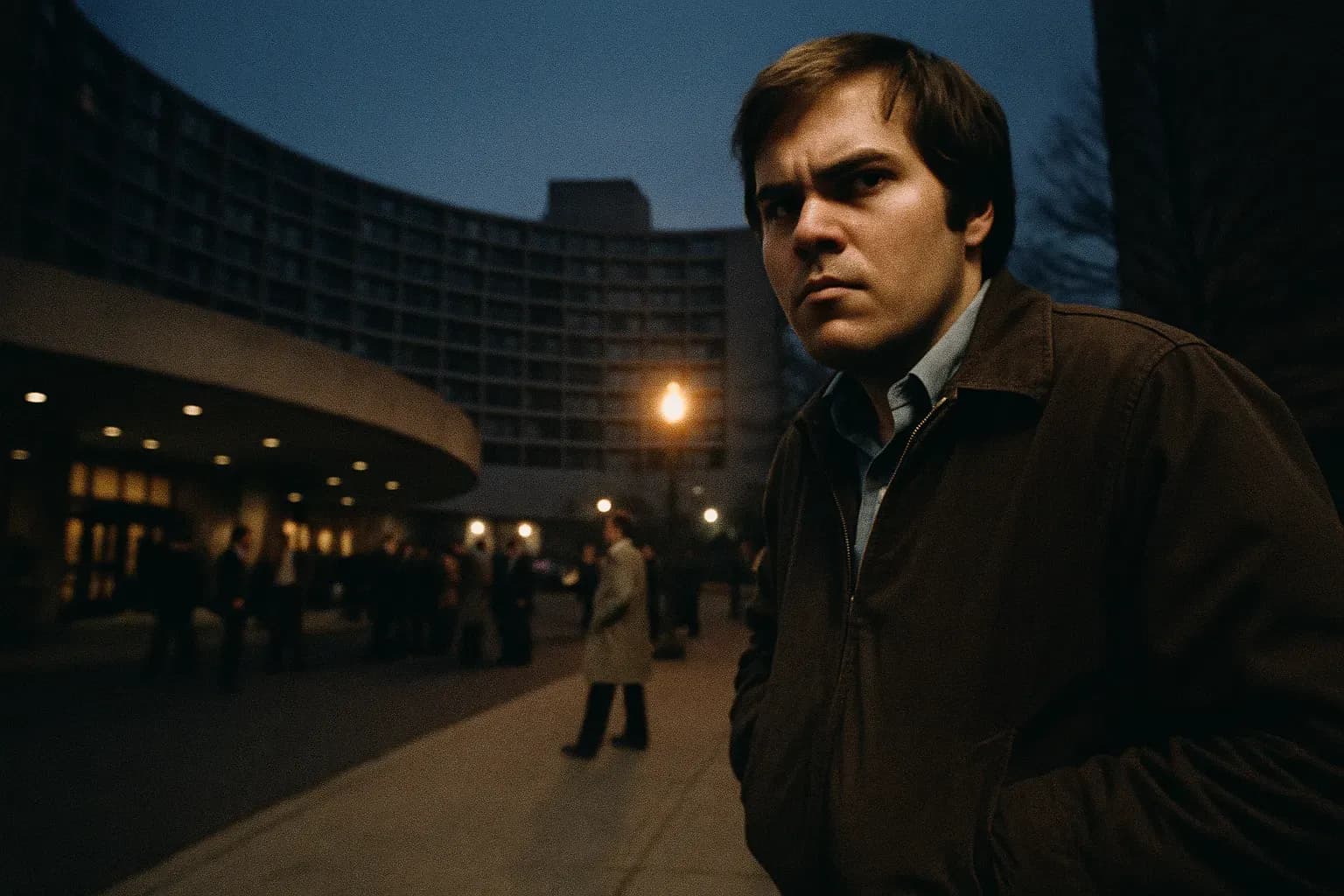
The Shot That Nearly Killed a President
On March 30, 1981, outside the Washington Hilton Hotel, a 25-year-old man fired six shots at President Ronald Reagan. The assassination attempt wounded the president and three others, and set in motion events that would reshape U.S. law and national security policy.
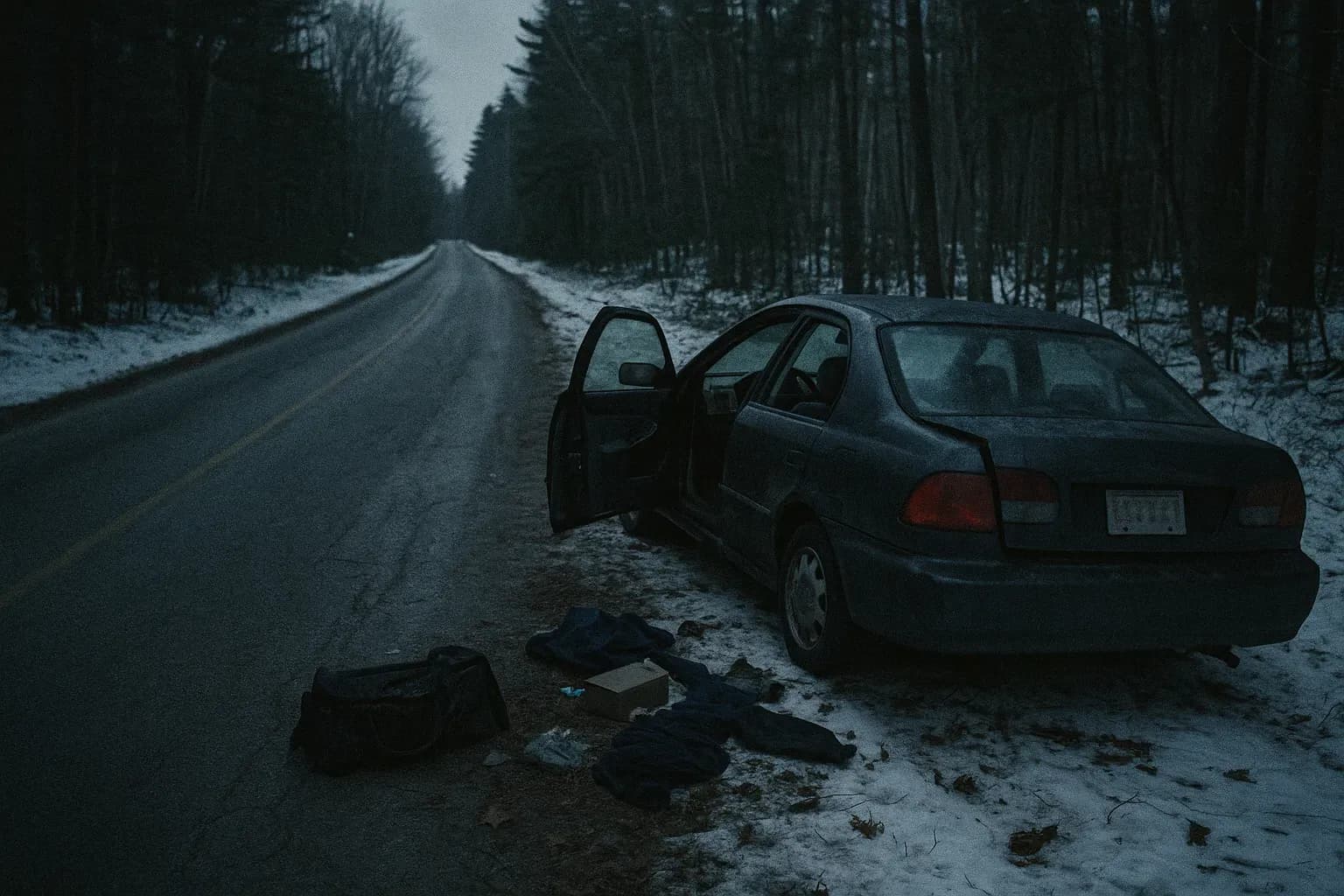
Maura Murray: 20 Years Missing After New Hampshire Crash
On February 9, 2004, 21-year-old Maura Murray crashed her car on Route 112 near Woodsville, New Hampshire. When police arrived minutes later, she was gone—and despite two decades of investigation, no trace of her has ever been found.