The 56-Second Heist: How a Vienna Museum's Security Expert Became Its Thief
Austrian alarm specialist Robert Mang exploited his own knowledge to steal a priceless Renaissance masterpiece
Published June 6, 2025
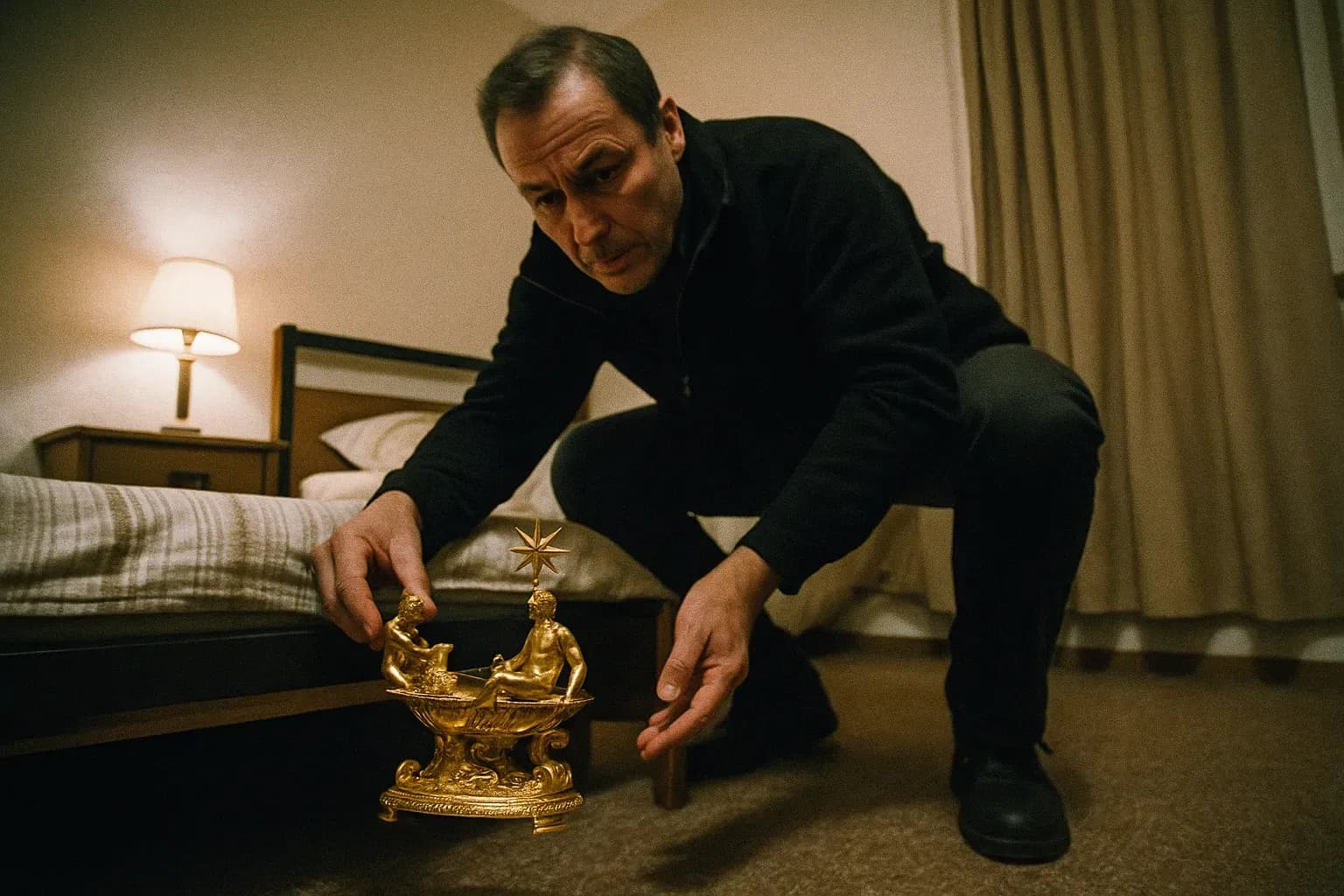
In the annals of international art theft, few cases illustrate the paradox of insider security expertise quite like the 2003 Saliera robbery. When Robert Mang, an Austrian specialist in alarm systems, walked through the doors of Vienna's Kunsthistorisches Museum on a May morning, he carried knowledge that no ordinary thief possessed: the precise vulnerabilities of the institution's security infrastructure.
The target was one of the Renaissance's most celebrated objets d'art—Benvenuto Cellini's Saliera, a gilded salt cellar crafted in the 16th century and valued at approximately €50 million (roughly $65 million USD). For nearly 500 years, the piece had been among the crown jewels of the Austrian capital's cultural heritage. On that spring day, it took Mang just 56 seconds to remove it from public display.
Mang's method was deceptively simple. His professional familiarity with the museum's alarm systems—gained through legitimate security consultancy work—allowed him to identify critical gaps in the defensive protocols. He had conducted reconnaissance during an earlier museum visit in early May, mapping the precise route and timing needed to bypass security. Once inside, his expertise proved decisive. Where an amateur thief would have triggered alarms, Mang navigated the system as someone who understood its logic and limitations.
Timeline
Saliera stolen from Kunsthistorisches Museum in Vienna
On the night of 11 May 2003, Robert Mang broke into the museum and removed Cellini's gilded Renaissance salt cellar from its display case.
Mang identified and turns himself in to police
After surveillance footage from a mobile phone purchase was published, Mang was identified. In January 2006 he turned himself in and led police to the artwork.
Saliera recovered in wooded area near Vienna
Shortly after Mang's surrender in January 2006, the Saliera was recovered in a wooded area near Vienna — intact and undamaged.
First verdict: 4 years in prison at Wiener Straflandesgericht
On 7 September 2006, the Wiener Straflandesgericht sentenced Mang to 4 years in prison for aggravated burglary. He was acquitted of attempted extortion.
New trial: Mang sentenced to 5 years in prison
After the Oberster Gerichtshof overturned the first verdict, a new trial on 26 June 2007 ended with an increased sentence of 5 years in prison.
Mang released after early parole
According to later reports, Robert Mang was released early in 2008, after serving part of his 5-year prison sentence.
After the theft, Mang did not flee Austria or attempt to move the artwork through international smuggling networks. Instead, he concealed the Saliera in a suitcase stored beneath his bed—a hiding place so mundane it bordered on the absurd for an object of such legendary value. The masterpiece remained there, sequestered in domestic obscurity, for the next three years.
The investigation that would eventually unravel the theft began not with art crime specialists, but with routine surveillance footage from an unrelated incident. In 2005, Mang was captured on CCTV during the purchase of a mobile telephone. This seemingly insignificant image was the thread that, when pulled, unraveled the entire case. Once identified, the 50-year-old Mang made an unexpected decision: rather than face prolonged investigation and prosecution, he turned himself in to Austrian police in January 2006 and confessed to the theft in full.
His cooperation proved instrumental. In the months following his confession, investigators located the Saliera buried in a metal box near Zwettl, approximately 55 kilometers north of Vienna. The artwork had been carefully wrapped in linen and plastic—preserved, ironically, with the same meticulous care one might expect from a conservator rather than a criminal.
In September 2006, an Austrian court found Mang guilty of the art theft. He was acquitted on a secondary charge of extortion due to insufficient evidence. The sentence reflected the severity of his crime: four years in prison. Mang completed his term and was released on October 20, 2006, having served his full sentence.
The case exposed uncomfortable truths about museum security in Europe and beyond. Institutions had invested heavily in technological systems, yet the greatest vulnerability remained human—specifically, employees or consultants with legitimate access and technical understanding. The Saliera theft prompted widespread security audits across major European museums and reinforced lessons about compartmentalizing access and oversight.
Two decades later, the robbery remains a cautionary tale in both art crime and security studies circles. It demonstrates that even world-class institutions housing irreplaceable masterpieces remain vulnerable when insider knowledge is weaponized. The fact that recovery took three years—and occurred only because of chance surveillance footage—underscores how thorough Mang's planning was and how easily such thefts can succeed when perpetrators understand the systems designed to stop them.
Ask about this case
Answers from KrimiNyt's coverage onlyFollow this case
Get an email when a new documentary, podcast or book about The 56-Second Heist: How a Vienna Museum's Security Expert Became Its Thief appears, or when a verdict is reached.