The Most Dangerous Animal of All
Disney+, 2020 — the Zodiac Killer case and one man's search for his father
Quick facts
What Is the Series About?
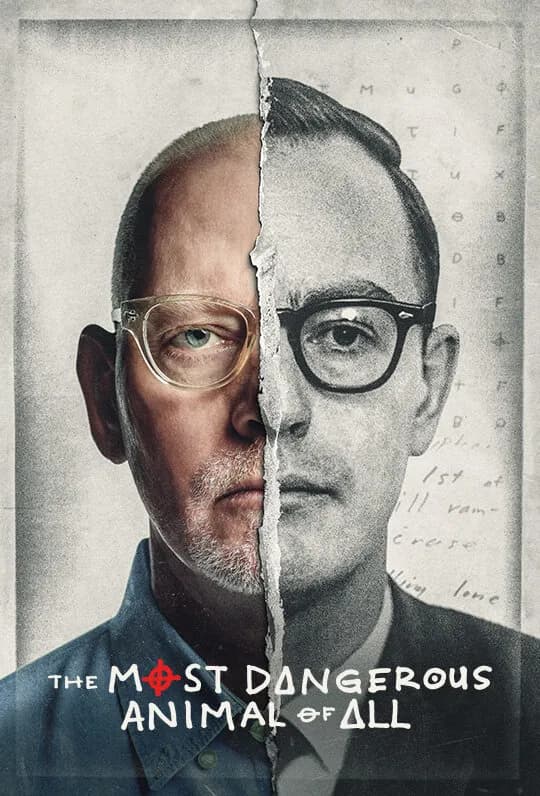
The Most Dangerous Animal of All is a four-part documentary series that premiered on Disney+ in 2020, directed by Kief Davidson. It covers the infamous and still-unsolved Zodiac Killer murders that terrorized the San Francisco Bay Area in the late 1960s — but it approaches the case through an intensely personal lens. At the center of the series is Gary L. Stewart, a man who spent years searching for his biological father after being abandoned as an infant on the steps of a New Orleans building. What he claims to have found is one of the most disturbing answers imaginable: that his father may have been one of America's most notorious unidentified serial killers.
The series is based on Stewart's 2012 book of the same name, co-written with Susan Mustafa, in which he first publicly put forward his theory. The documentary expands on that argument with archival footage, handwriting analysis, physical comparisons, and personal testimony — all aimed at building a case against Earl Van Best Jr., Stewart's biological father.
---
The Case
The Zodiac Killer is responsible for some of the most chilling crimes in American history. The killer's confirmed attacks took place primarily between 1968 and 1969 across Northern California, targeting young couples and individuals in isolated settings.
The first confirmed attack occurred on December 20, 1968, near Vallejo, California, where David Arthur Faraday, 17, and Betty Lou Jensen, 16, were shot and killed while parked on a rural road. Less than seven months later, on July 4, 1969, Darlene Elizabeth Ferrin, 22, was murdered and Michael Renault Mageau, 19, was critically wounded in another Vallejo shooting. The killer called police afterward to direct them to the scene.
On September 27, 1969, the Zodiac attacked Bryan Calvin Hartnell, 20, and Cecelia Ann Shepard, 22, at Lake Berryessa in Napa County, binding and stabbing them. Shepard died two days later. The final confirmed killing came on October 11, 1969, in San Francisco's Presidio Heights neighborhood, where cab driver Paul Lee Stine, 29, was shot at close range. The killer then sent a piece of Stine's bloodied shirt to the San Francisco Chronicle as gruesome proof of his deed.
What made the Zodiac case uniquely terrifying was not just the murders but the killer's sustained, taunting correspondence with newspapers and police. Beginning in August 1969, the Zodiac sent a series of letters and encrypted ciphers, threatening mass murder and demanding front-page coverage. He claimed a victim count far higher than law enforcement could confirm. The letters gave him his name — he signed them with a crosshair symbol and called himself "the Zodiac."
Despite one of the most extensive investigations in California history, the Zodiac Killer was never officially identified or arrested. The case remains open.
Earl Van Best Jr., the man the series focuses on, was never charged or convicted in connection with any Zodiac crime. Stewart's argument rests on circumstantial evidence: physical resemblance to composite sketches, alleged handwriting similarities, and biographical details that Stewart believes align with the killer's movements and communications. Critics — including established Zodiac researchers — have largely disputed these claims as falling well short of the evidentiary standard required for a credible identification.
---
Production
The series was directed by Kief Davidson, a documentary filmmaker known for his work on socially engaged non-fiction projects. The four-episode format allows the series to move between two parallel narratives: Stewart's deeply emotional personal journey to identify his birth father, and the broader, decades-old investigation into the Zodiac murders.
The production uses a range of documentary techniques — archival news footage from the late 1960s, expert interviews, dramatic reconstructions, and on-camera testimony from Stewart himself — to walk viewers through the evidentiary chain Stewart has assembled over years of private investigation. The series does not present itself as a definitive solution to the Zodiac case, but it is structured in a way that gives substantial weight to Stewart's conclusions.
The blending of a personal adoption story with a cold-case investigation gives the series an emotional dimension that distinguishes it from more conventional true-crime documentaries. Stewart's anguish and conviction are genuine and palpable on screen — even for viewers who remain unconvinced by his theory.
---
Reception
Audience and critical reaction to The Most Dangerous Animal of All was sharply divided.
Some viewers praised the series for its emotional storytelling, the compelling personal narrative at its heart, and the way it humanized both the victims and the investigator. The Zodiac case retains enormous cultural fascination — partly fueled by David Fincher's 2007 film Zodiac — and the series successfully tapped into that enduring public interest.
However, the series drew significant criticism from true-crime journalists, amateur Zodiac researchers, and criminologists. The central objection was that the documentary lends considerable credibility to a theory that has not withstood serious scrutiny. Established Zodiac case researchers pointed out that the evidence linking Earl Van Best Jr. to the crimes is circumstantial, contested, and in some instances demonstrably flawed — particularly the handwriting and cipher analyses presented as damning.
A deeper ethical concern raised by critics is the series' potential to cement a dead man's reputation as a serial killer in the public mind without any judicial process having established that connection. Earl Van Best Jr. cannot defend himself, and no law enforcement agency has endorsed Stewart's theory as a viable lead.
The series nonetheless generated strong engagement on Disney+, illustrating the continued appetite for Zodiac-related content and the emotionally powerful hook of a son searching — and believing he found — the worst possible answer about his own origins.
---
The Case Today
As of 2024, the Zodiac Killer case remains officially unsolved. No suspect has ever been charged in connection with the confirmed murders. California authorities have periodically revisited the case using modern forensic tools, including DNA analysis.
In 2021, a cold case group called the Case Breakers made separate headlines by naming a different individual — Gary Francis Poste, a deceased house painter — as their Zodiac suspect, a claim that was similarly disputed by law enforcement and experienced investigators.
The San Francisco Police Department and other agencies with jurisdiction over the original crimes have not publicly endorsed any suspect theory, including the one presented in The Most Dangerous Animal of All.
Gary L. Stewart continues to believe in his identification of Earl Van Best Jr. The ciphers sent by the Zodiac remain only partially decoded — the 340-character cipher sent in November 1969 was not solved until 2020, by an international team of amateur codebreakers, and it contained no name or clear identifying information about the killer.
The Zodiac case endures as one of American true crime's most haunting open wounds — a case that has generated more theories, books, films, and documentaries than almost any other, and yet remains, officially, unsolved.