The Kings of Tupelo: A Southern Crime Saga
Netflix, 2024 — the 2013 Mississippi ricin-letters case and a wrongful arrest
Quick facts
What Is the Series About?
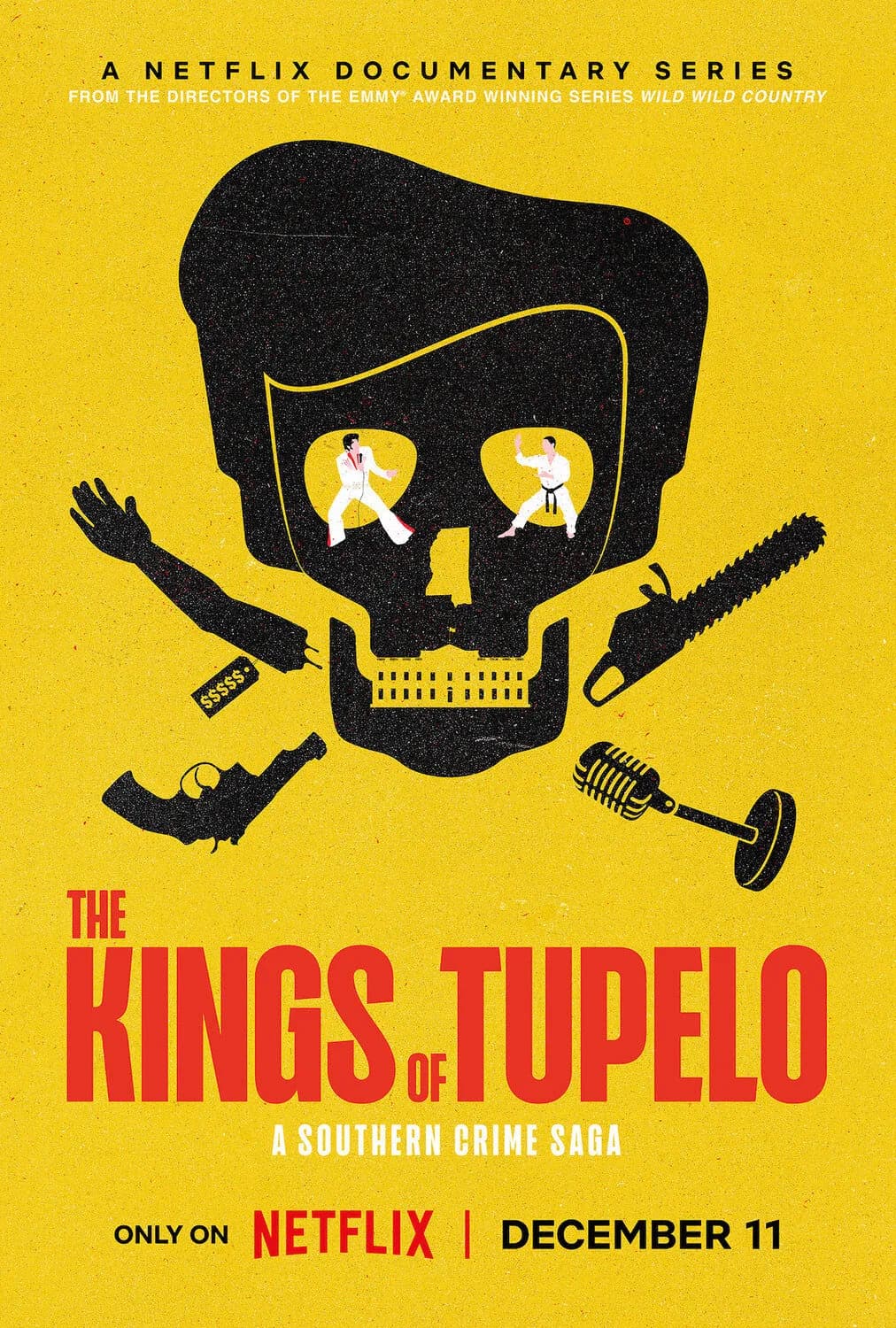
The Kings of Tupelo: A Southern Crime Saga is a Netflix documentary mini-series that covers one of the stranger chapters in modern American true crime: the 2013 ricin-letters case out of Tupelo, Mississippi. In three episodes released on December 11, 2024, directors Chapman Way and Maclain Way reconstruct how a string of poison-laced letters addressed to the President of the United States, a sitting U.S. Senator, and a Mississippi judge managed to ensnare the wrong man — and how the real sender tried to use a long-running personal feud as cover.
The series sits at the intersection of Southern Gothic atmosphere, political assassination attempt, and a small-town grudge match. Reviewers have reached for words like wild, bonkers, and bizarre to describe it.
The Case
The Letters
In April 2013, ricin-laced letters were intercepted before reaching three high-profile targets: President Barack Obama (then 51 years old), U.S. Senator Roger Wicker of Mississippi (then 61), and Lee County Justice Court Judge Sadie Holland. Ricin is derived from castor beans and has no known antidote; even a small quantity can be lethal. The interception of the letters by federal mail-screening systems almost certainly prevented serious harm.
The letters contained a recurring phrase — "I am KC and I approve this message" — which investigators connected quickly to Paul Kevin Curtis, a Tupelo-based Elvis impersonator known to use variations of that signature online.
The Wrong Man
Curtis was arrested on April 17, 2013, and became instant national news. Federal investigators, however, could not find ricin, ricin-production materials, or conclusive forensic evidence at his home. Within days the case against him was unraveling. On April 23, 2013, charges were dropped and Curtis was released.
As TIME's explainer notes, the series frames the arrest as a direct consequence of how conspiracy theories and circumstantial digital evidence can overwhelm due process — Curtis's online footprint made him look guilty to investigators who did not yet know the full picture.
The Real Perpetrator
Attention shifted almost immediately to James Everett Dutschke, a Tupelo man who worked as a taekwondo instructor and performed as an Elvis and Wayne Newton impersonator. Dutschke and Curtis had a documented, ugly personal history. Investigators concluded that Dutschke had deliberately borrowed Curtis's signature phrase and mailed the letters specifically to frame him.
According to reporting covered by Biography, Dutschke was arrested on April 27, 2013, on federal charges including attempted use of a biological weapon. He was convicted and sentenced in May 2014 to 25 years in federal prison. As of the sources available at the time of the series release, Dutschke remains incarcerated.
Targets and Survivors
None of the intended recipients came into direct contact with the ricin. The interception protocols put in place after the 2001 anthrax letter attacks functioned as designed. President Obama, Senator Wicker, and Judge Holland were never physically endangered, though the implications of a biological-weapon mailing campaign directed at a sitting president are significant in their own right.
Production
The series was directed by Chapman Way and Maclain Way, the brother duo behind previous Netflix documentary work. In a conversation with Wisconsin Public Radio, the directors discussed the appeal of a story rooted in Southern identity, Elvis culture, and the way personal vendettas can spiral into federal crimes. The Ways are known for finding documentary subjects with high strangeness quotients, and the Tupelo ricin case fits that profile precisely.
The series runs to three episodes, a tight structure that suits a case with a relatively defined arc: letters sent, wrong man arrested, real perpetrator identified and convicted. The IMDb listing classifies it as a TV mini-series (2024).
Reception
Critical and audience response has leaned heavily on the you-cannot-make-this-up register. Dexerto called it a bonkers true-crime documentary and highlighted the sheer improbability of the story's elements: a poison letter campaign, dueling Elvis impersonators, and a federal framing conspiracy all colliding in a small Mississippi city. Multiple outlets flagged it as one of the more genuinely surprising docuseries Netflix released in the final quarter of 2024.
The series benefits from a story that has a clear villain, a sympathetic wrongly-accused subject, and real geopolitical stakes. That combination of the locally absurd and the nationally serious gives The Kings of Tupelo an unusual tonal range. Numeric ratings from Rotten Tomatoes and IMDb were not yet stable in the sources available at publication.
The Case Today
James Everett Dutschke, sentenced in May 2014, remains in federal custody on his 25-year sentence. Paul Kevin Curtis, whose arrest made international headlines, has spoken publicly about the experience and is one of the primary interview subjects in the Netflix series. The case remains a reference point in discussions about wrongful arrest and the dangers of digital circumstantial evidence. For Tupelo, a city best known as Elvis Presley's birthplace, it is an unusual footnote — briefly making the town the center of a federal biological-weapons investigation.