Digital evidence
From invisible traces to a crucial piece in modern investigations
Definition
Digital evidence is key in modern crime. From deleted files to GPS tracks – see how technical clues reveal perpetrators and their deepest secrets.
From invisible traces to a crucial piece in modern investigations
What is digital evidence, and how are trails revealed?
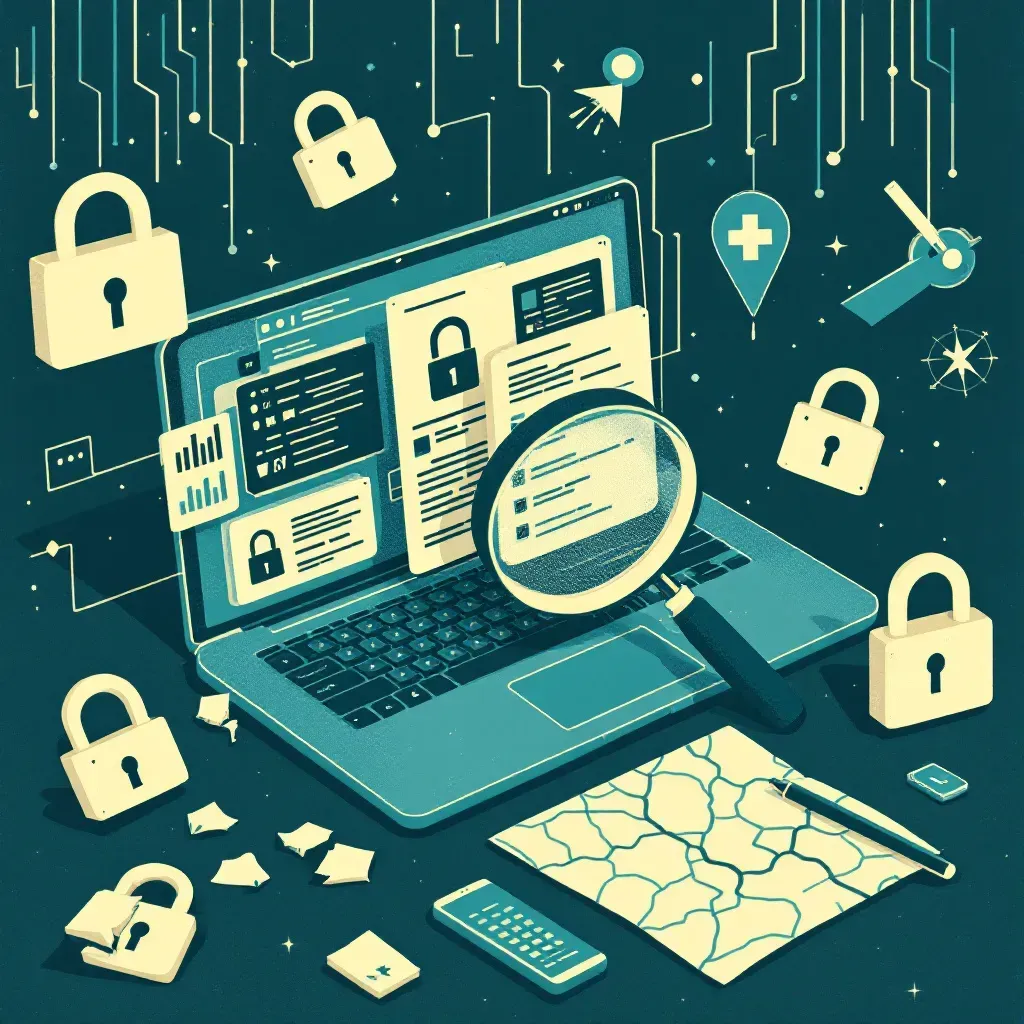
In true crime, digital evidence refers to any information of evidentiary value that is stored or transmitted in a digital format. These digital traces, which can be found on computers, mobile phones, servers, and in the cloud, have become an indispensable and often crucial component in nearly every modern criminal investigation. They can reveal critical details about communication, planning, perpetrators' movements (e.g., via GPS data), and underlying motives.
Digital traces: From emails and GPS to found secrets
The range of potential digital evidence is vast and constantly expanding with technological advancements and increasing internet use. It includes everything from emails, text messages, and chat logs to browser history, valuable GPS data from phones or vehicles, as well as image and video evidence, often enriched with timestamps and metadata. Transaction data from online commerce, documents on hard drives, and social media activity also constitute important sources for an investigation. Data recovery specialists can often retrieve even deleted files, enabling investigators to piece together a detailed picture of the sequence of events, the perpetrator's network, or even their mental state leading up to the crime. Understanding how these digital footprints can be interconnected is crucial for solving complex cases, including those involving cybercrime.
Encryption, deleted traces: A technical race against time
The collection, preservation, and analysis of digital evidence, often a core task in digital investigation and computer forensics, place significant demands on investigators. Data may be protected by strong encryption, distributed internationally, or there may have been attempts to delete and conceal it, for instance, following an organized data breach or as a result of advanced hacking. Proper handling requires specialized technical knowledge and equipment to ensure the integrity of the evidence so it can be admissible in court without being compromised. Mishandling can render valuable digital traces useless. Thus, digital evidence is not only a potent tool for the prosecution but can also be crucial for the defense, for example, by documenting an alibi or casting doubt on the prosecution's account of events. Ongoing technological advancements ensure that the pursuit and interpretation of digital evidence will remain a dynamic and critical field in solving all types of crime, including more specialized forms like cybercrime.
What does digital evidence look like in practice? Dive into cases ranging from hacking to online fraud and see how digital evidence solves crimes – find our exciting cases below.
Read more
700 Million LinkedIn Users' Data Sold on Dark Web Forum
In June 2021, a hacker using the username TomLiner posted personal data from approximately 700 million LinkedIn users—roughly 93% of the platform's membership—for sale on the dark web forum RaidForums. LinkedIn disputed the characterization as a breach, arguing the data came from public profiles and external sources rather than a direct hack of its systems.
Twitch Breach Exposed Top Streamers' Million-Dollar Payouts
A hacker breached Twitch's internal systems in early October 2021, leaking source code, passwords, and payout data for thousands of streamers. The leaked information exposed two years of earnings data, revealing that top creators earned millions from subscriptions, ad revenue, and Bits donations.
Yahoo's 3 Billion Account Breach: History's Largest Hack
Yahoo suffered the largest data breach in history when hackers compromised 3 billion user accounts in August 2013, followed by a second breach affecting 500 million accounts in late 2014. The company didn't publicly disclose either incident until 2016, triggering investigations, lawsuits, and a $300 million reduction in its acquisition price.
Related articles

700 Million LinkedIn Users' Data Sold on Dark Web Forum
In June 2021, a hacker using the username TomLiner posted personal data from approximately 700 million LinkedIn users—roughly 93% of the platform's membership—for sale on the dark web forum RaidForums. LinkedIn disputed the characterization as a breach, arguing the data came from public profiles and external sources rather than a direct hack of its systems.
Twitch Breach Exposed Top Streamers' Million-Dollar Payouts
A hacker breached Twitch's internal systems in early October 2021, leaking source code, passwords, and payout data for thousands of streamers. The leaked information exposed two years of earnings data, revealing that top creators earned millions from subscriptions, ad revenue, and Bits donations.
Yahoo's 3 Billion Account Breach: History's Largest Hack
Yahoo suffered the largest data breach in history when hackers compromised 3 billion user accounts in August 2013, followed by a second breach affecting 500 million accounts in late 2014. The company didn't publicly disclose either incident until 2016, triggering investigations, lawsuits, and a $300 million reduction in its acquisition price.

Blood Town Podcast Examines the Acquittal in Marianne Shockley's Death
On Mother's Day 2019, Marianne Shockley, a respected entomology professor at the University of Georgia, died in a hot tub at a home in Milledgeville, Georgia. Her boyfriend Marcus Lillard was charged with her murder—but a jury acquitted him in April 2022, a verdict the Blood Town podcast examines in detail.