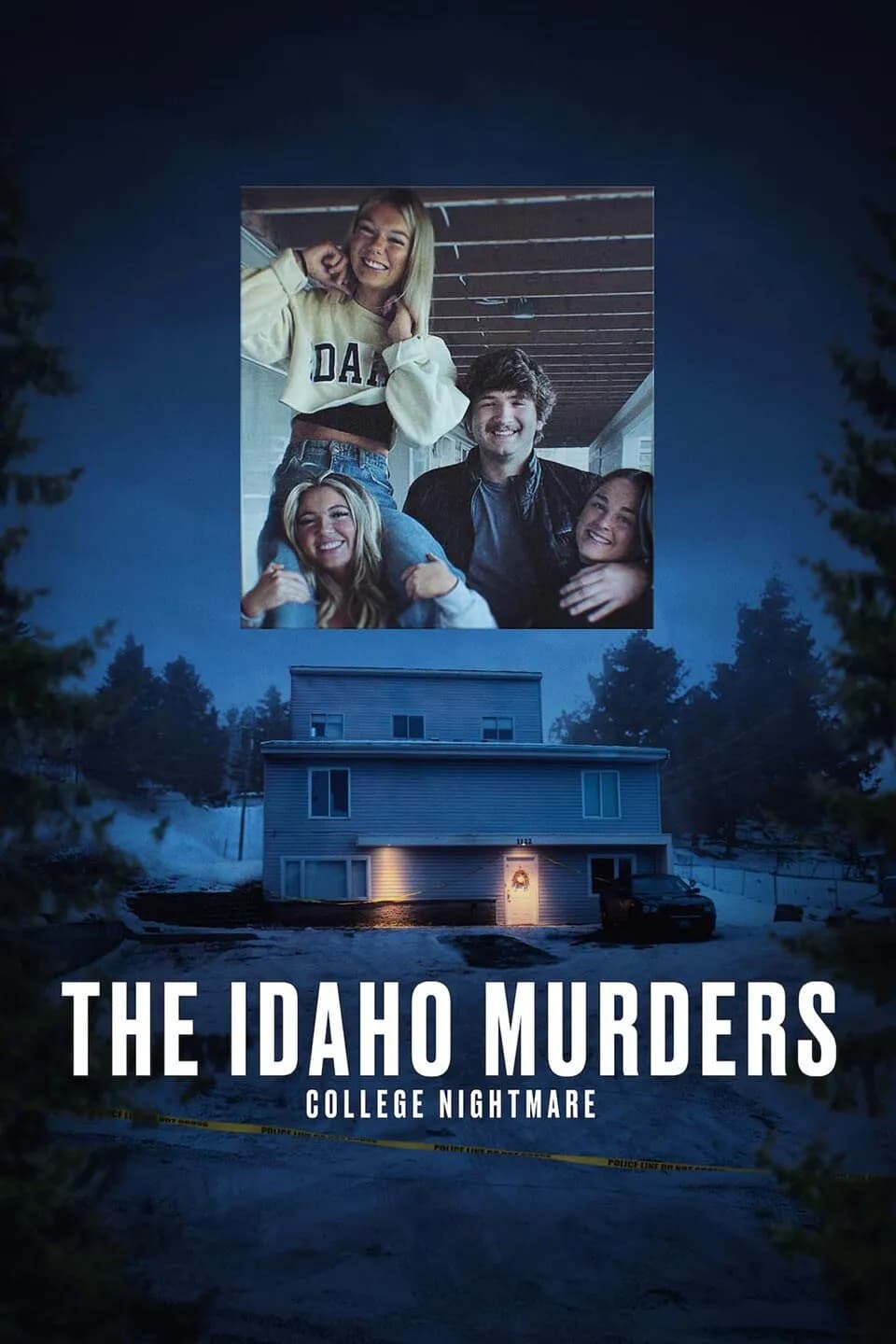
The Idaho Murders: College Nightmare
Netflix, 2026 — the quadruple murder of four University of Idaho students in 2022
What Is the Series About?
The Idaho Murders: College Nightmare is a Netflix documentary series directed by Skye Borgman that examines one of the most widely covered American murders in recent memory: the quadruple killing of four University of Idaho students on November 13, 2022, in Moscow, Idaho. Spread across three episodes and rated TV-MA, the series reconstructs the investigation through bodycam footage, police video, text messages, and interviews with the victims' families and law enforcement. It was released on July 29, 2026.
Unlike many true-crime productions that position the alleged perpetrator as the narrative center, this series consciously shifts focus toward the four victims — Madison Mogen, Kaylee Goncalves, Xana Kernodle, and Ethan Chapin — and the communities left behind by their deaths.
---
The Case
In the early morning hours of November 13, 2022, four University of Idaho students were stabbed to death inside an off-campus house on King Road in Moscow, Latah County, Idaho. The victims were Madison Mogen, Kaylee Goncalves, Xana Kernodle, and Ethan Chapin — all college-age students whose deaths sent shockwaves through the University of Idaho campus and quickly drew national media coverage.
The weeks following the murders were marked by intense public speculation and fear across the Moscow community as investigators worked without an early arrest. The breakthrough came in late December 2022, when authorities identified and arrested Bryan Christopher Kohberger, a Ph.D. student, as the suspect. Kohberger was extradited to Idaho and charged with four counts of first-degree murder.
The case drew extraordinary public interest due to a combination of factors: the youth of the victims, the university setting, the initial absence of a clear motive, and the identity of the suspect as a graduate student in criminology. DNA evidence and cell phone data were central to the investigation.
Kohberger's legal proceedings became complicated and prolonged. According to sources cited in coverage surrounding the documentary, Kohberger at one point admitted to the killings but subsequently sought to withdraw that admission and proceed to trial. As of the documentary's release, the case had not reached a final sentencing outcome, with trial proceedings still anticipated.
Critics of the series noted that it does not provide a definitive answer regarding motive — a gap that reflects the unresolved nature of the legal proceedings rather than a failure of the production itself.
---
Production
The series was directed by Skye Borgman, a documentary filmmaker with prior experience in true-crime storytelling. Borgman's approach, as reflected in critical coverage, prioritizes the human dimensions of the case over procedural spectacle. The production secured access to significant primary materials, including bodycam footage from law enforcement, police video from the investigation, text message records, and on-camera interviews with the families of the victims and with law enforcement personnel involved in the case.
The Netflix title identifier for the series is 81683870. The series carries a TV-MA rating, reflecting the gravity and graphic nature of the subject matter.
The three-episode structure allows the series to move through the discovery of the crime, the investigation and identification of the suspect, and the broader impact on the victims' families and the University of Idaho community, without rushing to conclusions that the legal process itself had not yet delivered.
---
Reception
Critical reception was broadly positive, if measured. Metacritic records a Metascore of 70 based on four critic reviews, placing it in generally favorable territory. Rotten Tomatoes lists an 82% Tomatometer score for Season 1, suggesting a strong critical consensus around the series' humane and victim-centered approach.
The Wall Street Journal review highlighted the series' decision to shift attention away from the killer and toward the lives of the victims as a meaningful editorial choice — one that distinguishes it from more sensationalist entries in the true-crime genre. Ready Steady Cut similarly praised the series for its inclusion of substantial family and police material, describing it as humane in its treatment of a deeply painful subject.
The most common criticisms from both professional reviewers and viewers centered on the series' lack of new revelatory information. Audiences already familiar with the case from years of news coverage found that the documentary largely consolidated known facts rather than uncovering fresh material. Some reviewers also noted that the series occasionally falls back on conventional true-crime suspense techniques — ominous music, dramatic pacing — that can feel at odds with its stated goal of victim-centered storytelling.
Viewer response, as reflected in aggregated snippets, was mixed: a portion of the audience appreciated the human focus and the access to family testimony, while others felt the series added little new insight to a case they had followed closely in real time.
---
The Case Today
At the time of the documentary's release in July 2026, the legal proceedings against Bryan Kohberger remained active and unresolved. The case had not produced a final verdict or sentencing outcome, and Kohberger's attempt to withdraw his admission of guilt and proceed to a full trial meant that a definitive courtroom conclusion was still pending.
The documentary does not claim to resolve these open questions. Instead, it positions itself as a record of the investigation and a tribute to the four victims — Madison Mogen, Kaylee Goncalves, Xana Kernodle, and Ethan Chapin — at a moment when the legal story remains unfinished. Whether a conviction and sentencing will follow, and what further details about motive may emerge during trial, remained unanswered as the series reached its audience.