Tokyo's Deadliest Terror: The Sarin Cult Attack of 1995
How Aum Shinrikyo's nerve gas massacre killed 12-14 and exposed Japan's vulnerability to chemical weapons
Published June 6, 2025
Case Details
Quick Facts
Classification:
Quick facts
On the morning of March 20, 1995, commuters on the Tokyo Metro had no warning of the horror about to unfold. At 8:10 a.m., members of Aum Shinrikyo—a Japanese doomsday cult—boarded five trains across three lines: the Chiyoda, Marunouchi, and Hibiya. They targeted lines running near Kasumigaseki and Nagatachō, the heart of Japan's government district. Each attacker carried a weapon wrapped in newspaper: bags of liquid sarin, a colorless, odorless nerve agent developed by Nazi chemists decades earlier.
As trains reached their destinations, the attackers punctured the bags and fled in getaway cars. Within minutes, the poison spread through the carriages. Victims collapsed in agony, coughing, choking, vomiting, and convulsing. Some foamed at the mouth before fainting. By day's end, 12 to 14 people were dead—sources vary slightly—and approximately 5,500 more were injured to varying degrees. Around 1,000 suffered vision problems from the gas exposure. Police responding to what was initially reported as an explosion found themselves unwitting victims; more than 30 officers were exposed to sarin before its identity was confirmed.
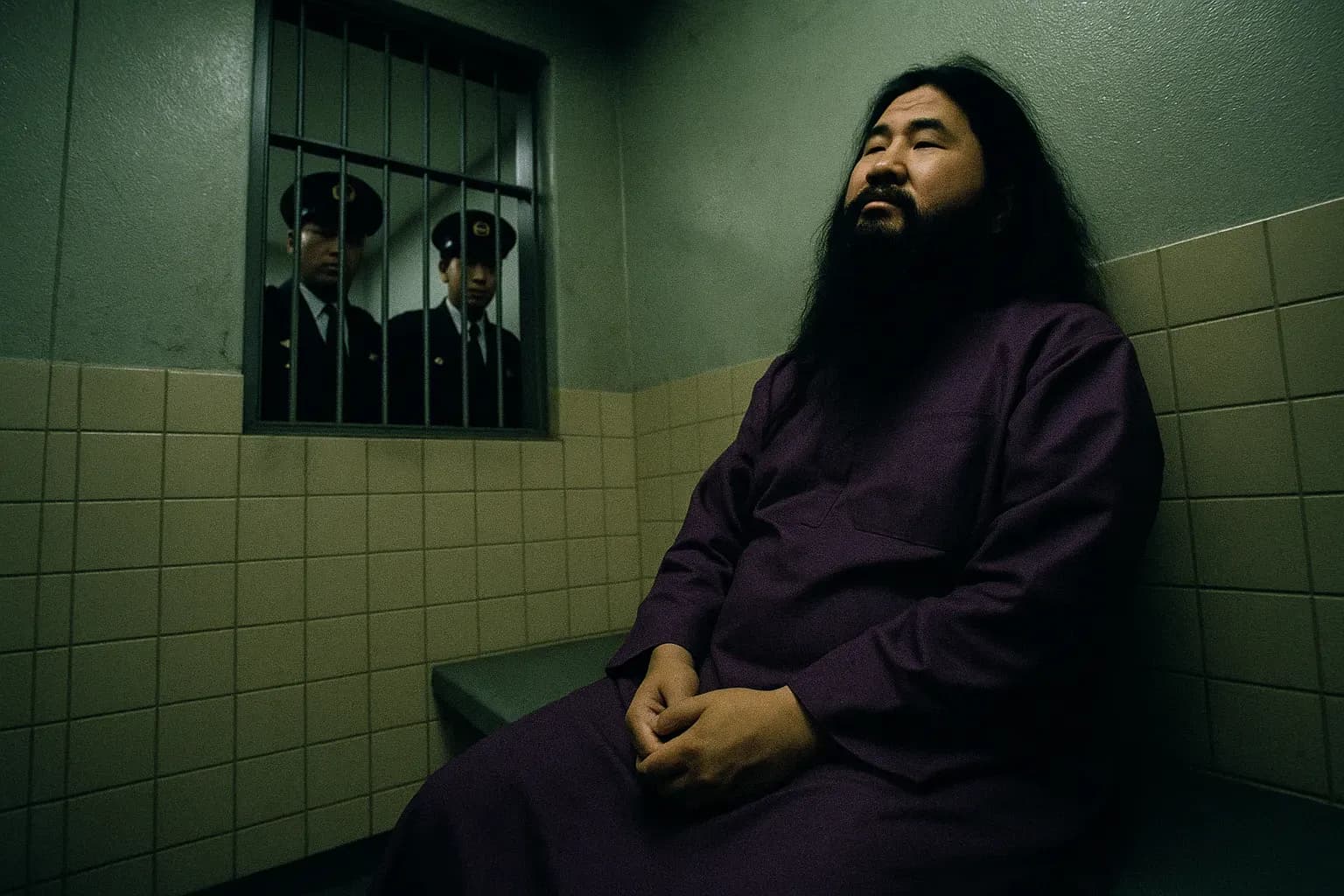
The mastermind behind the attack was Shoko Asahara, the charismatic but ruthless leader of Aum Shinrikyo. Blind and claiming divine powers, Asahara had built a cult blending Buddhist and Hindu teachings with apocalyptic prophecies. Under his command, the organization had evolved into something far darker: a criminal enterprise producing chemical and biological weapons, conducting unauthorized experiments, and committing murders. Ikuo Hayashi, the cult's top medical official, was among the 5-10 attackers who carried sarin bags that morning. Later, under interrogation, Hayashi would confess that he had acted on Asahara's direct orders.
Timeline
Founding of Aum Shinrikyo
Shoko Asahara founds the Aum Shinrikyo cult and begins gathering followers with apocalyptic doomsday visions.
Sarin attack in Matsumoto
The cult carries out a first sarin gas attack in the city of Matsumoto as a dress rehearsal for larger operations.
Poison gas attack on Tokyo subway
Five cult members release sarin gas on the Tokyo subway during rush hour. At least 13 people die, and thousands are injured.
Arrest of Shoko Asahara
Japanese police find Asahara hidden behind a wall in the cult's building and arrest him. In the following weeks, over 200 cult members are arrested.
Renamed to Aleph
The cult renames itself "Aleph" and continues its existence under a new name.
Execution of Asahara
Shoko Asahara is executed along with several cult members, marking the end of one of the darkest chapters in Japanese crime history.
Asahara's motive was twofold. He believed an imminent police raid threatened the cult's survival—and he was right to fear it. But more significantly, the cult leader saw the attack as part of his apocalyptic vision, a catalyst to trigger the end times. The March 20 assault was not Aum Shinrikyo's first venture into chemical terror. On June 27, 1994, cult members had sprayed sarin from a truck equipped with a fan, heater, and pump near a residential complex in Matsumoto. That attack killed seven people (an eighth victim died in 2008) and injured around 500.
Investigators moved quickly after the subway attack. By 10 a.m., sarin was confirmed through gas chromatography-mass spectrometry analysis—a technique refined by the earlier Matsumoto investigation. Forensic analysis would later reveal diisopropylmethylphosphonate in victims' blood and enzyme inhibition patterns in autopsies, cementing the chemical's identity. On March 22, police raided Aum facilities across Japan, uncovering sarin canisters, precursor chemicals, and evidence of the cult's clandestine laboratory operations. The raid had been delayed from an earlier planned date; cult intelligence had warned of police activity, allowing some evidence to be moved or destroyed.
Shoko Asahara was arrested in May 1995, along with more than 12 other cult leaders. The investigation also linked Aum to a parcel bomb sent to Tokyo city hall in May and to numerous other crimes including murders, disappearances, and attempted biological attacks using cyanide.
The Tokyo subway sarin attack shocked the world and exposed a terrifying reality: a small group of determined individuals armed with chemical weapons could strike at the heart of a modern metropolis. It remains the deadliest act of chemical terrorism ever committed and forced nations worldwide to reconsider their vulnerability to non-conventional attacks.
Sources: https://www.ebsco.com/research-starters/politics-and-government/terrorists-use-sarin-gas-tokyo-subway-attack https://en.wikipedia.org/wiki/Tokyo_subway_sarin_attack https://www.opcw.org/media-centre/news/2001/06/sarin-gas-attack-japan-and-related-forensic-investigation https://www.britannica.com/event/Tokyo-subway-attack-of-1995 https://pubmed.ncbi.nlm.nih.gov/9660289/
Ask about this case
Answers from KrimiNyt's coverage onlyFollow this case
Get an email when a new documentary, podcast or book about Tokyo's Deadliest Terror: The Sarin Cult Attack of 1995 appears, or when a verdict is reached.