Shoko Asahara: The Cult Leader Behind Japan's Deadliest Terror Attack
How a yoga instructor built Aum Shinrikyo into a doomsday cult that killed dozens and poisoned thousands with sarin gas
Published June 6, 2025
Case Details
Quick Facts
Classification:
Quick facts
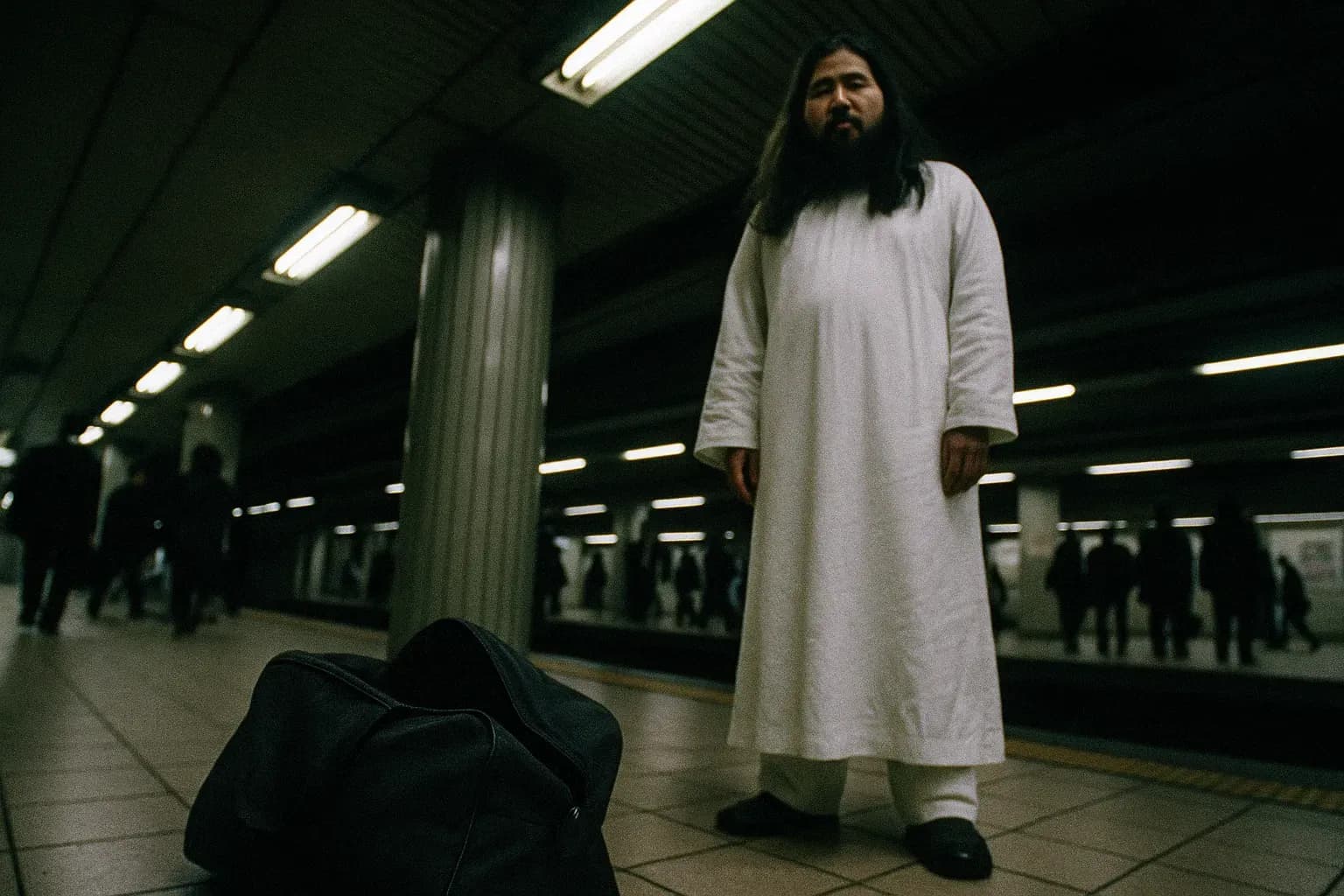
On July 6, 2018, Japan executed Shoko Asahara by hanging, bringing closure to one of the nation's most infamous criminal cases. The cult leader had orchestrated a campaign of terror that claimed dozens of lives, including the 1995 Tokyo subway sarin attack that left 13 dead and over 5,000 hospitalized—an act that shocked the world and redefined what modern terrorism could look like.
Asahara's path to infamy began in the mid-1980s when the blind yoga instructor started teaching what appeared to be spiritual practice. Born Chizuo Matsumoto on March 2, 1955, he adopted the name Shoko Asahara and established what would become Aum Shinrikyo—meaning "Supreme Truth"—as a formal religious organization in 1987. What started as a yoga school transformed into a doomsday cult that blended Buddhism, Hinduism, Christian apocalyptic theology, and science fiction into a twisted ideology that justified violence as "compassionate killing" in preparation for the end times.
The cult attracted an unusual following: young, well-educated recruits including scientists, chemists, and technical experts. By the early 1990s, Aum Shinrikyo had grown to approximately 50,000 members, with strongholds in Japan and Russia. Asahara positioned himself as a messiah figure and convinced followers that apocalyptic war was imminent, making their commitment to violence a spiritual imperative.
Timeline
Birth of Chizuo Matsumoto
Shoko Asahara is born as Chizuo Matsumoto in Japan.
Founding of Aum Shinrikyo
Asahara founds the apocalyptic cult Aum Shinrikyo and builds a loyal following.
Murder of lawyer Sakamoto and family
Cult members murder the lawyer Tsutsumi Sakamoto, his wife and their baby on Asahara's orders.
Murder of Kotaro Ochida
The pharmacist and former cult follower Kotaro Ochida is killed on Asahara's orders.
Sarin attack in Matsumoto
Aum Shinrikyo carries out a first sarin attack in Matsumoto, killing 8 people and injuring over 200.
Sarin attack on Tokyo subway
Five cult members release sarin gas on the Tokyo subway. 13 people die, up to 6,000 are injured.
Arrest of Shoko Asahara
Police arrest Asahara in a hiding place at the cult's headquarters.
Death sentence for Asahara
Shoko Asahara is sentenced to death for the subway attack and several murders.
Final appeal rejected
Asahara's final appeal is rejected by Japan's Supreme Court.
Execution of Shoko Asahara
Asahara is executed along with six other cult members. A dark chapter comes to an end.
Before the subway attack, Aum operatives carried out smaller but still deadly strikes. On June 27, 1994, cult members released sarin gas in Matsumoto, Nagano, targeting three judges involved in a real estate lawsuit against the group while simultaneously testing the weapon's effectiveness. That same year, in separate incidents, Asahara ordered the murder of pharmacist Kotaro Ochida, who had attempted to escape a sect compound, and the killing of Tadahito Hamaguchi, whom Asahara suspected of being a spy. Hamaguchi was poisoned with sarin applied to his neck and died 10 days later.
The Tokyo subway attack on March 20, 1995, represented Aum's most ambitious operation. Five cult members boarded trains during the morning rush hour and punctured bags of liquid sarin, releasing the deadly nerve agent into crowded cars. The attack killed 13 people and hospitalized more than 5,000 others—a toll that could have been far higher had the sarin dispersal been more effective. The incident sent shockwaves through Japan and the international community, marking the first large-scale use of chemical weapons in a terrorist attack.
Asahara was arrested weeks after the subway attack. His trial, beginning in 1996, became known as the "trial of the century" in Japan. Prosecutors charged him with 23 counts of murder and 16 other offenses. He was ultimately convicted of masterminding the Tokyo attack and 13 crimes that resulted in 27 to 29 deaths. Sentenced to death in 2004, Asahara's appeals were exhausted by 2011, though his execution was delayed as authorities continued arresting and prosecuting other cult members involved in the organization's crimes.
The full extent of Aum's criminal activities became clearer during the extended legal proceedings. Beyond the subway and earlier sarin attacks, the cult had attempted biological weapons development, produced VX nerve agent, and conducted assassination plots. Senior members like Masami Tsuchiya, who helped manufacture the chemicals used in attacks, received death sentences alongside Asahara.
On the day of Asahara's execution, six other Aum members were also hanged, marking a symbolic end to the most active phase of the cult's violence. Japanese authorities had officially disbanded Aum Shinrikyo following the 1995 attacks, but splinter groups including Aleph and Hikari no Wa emerged in the years that followed. Aleph has since been designated a terrorist organization by several countries.
Shoko Asahara's execution closed a dark chapter in Japan's modern history, but Aum Shinrikyo's legacy remains a cautionary tale about how charismatic ideology, access to technology, and commitment to apocalyptic beliefs can combine to create unprecedented violence.
Sources - https://www.aspistrategist.org.au/aum-shinrikyos-legacy-of-toxic-terror/ - https://en.wikipedia.org/wiki/Aum_Shinrikyo - https://www.tpr.org/2018-07-06/japan-executes-cult-leader-responsible-for-1995-sarin-gas-attack-on-tokyo-subway - https://www.britannica.com/biography/Asahara-Shoko - https://en.wikipedia.org/wiki/Shoko_Asahara
Ask about this case
Answers from KrimiNyt's coverage onlyFollow this case
Get an email when a new documentary, podcast or book about Shoko Asahara: The Cult Leader Behind Japan's Deadliest Terror Attack appears, or when a verdict is reached.