The Maze Prison Escape: Europe's Largest Jailbreak
How 38 IRA prisoners executed a meticulously planned escape from Britain's most secure detention facility in 1983
Published June 6, 2025
Quick Facts
On September 25, 1983, 38 Provisional Irish Republican Army (IRA) prisoners executed a coordinated escape from HM Prison Maze in Lisburn, County Antrim, Northern Ireland—the largest prison breakout in British and Irish history and the biggest in Europe since World War II.
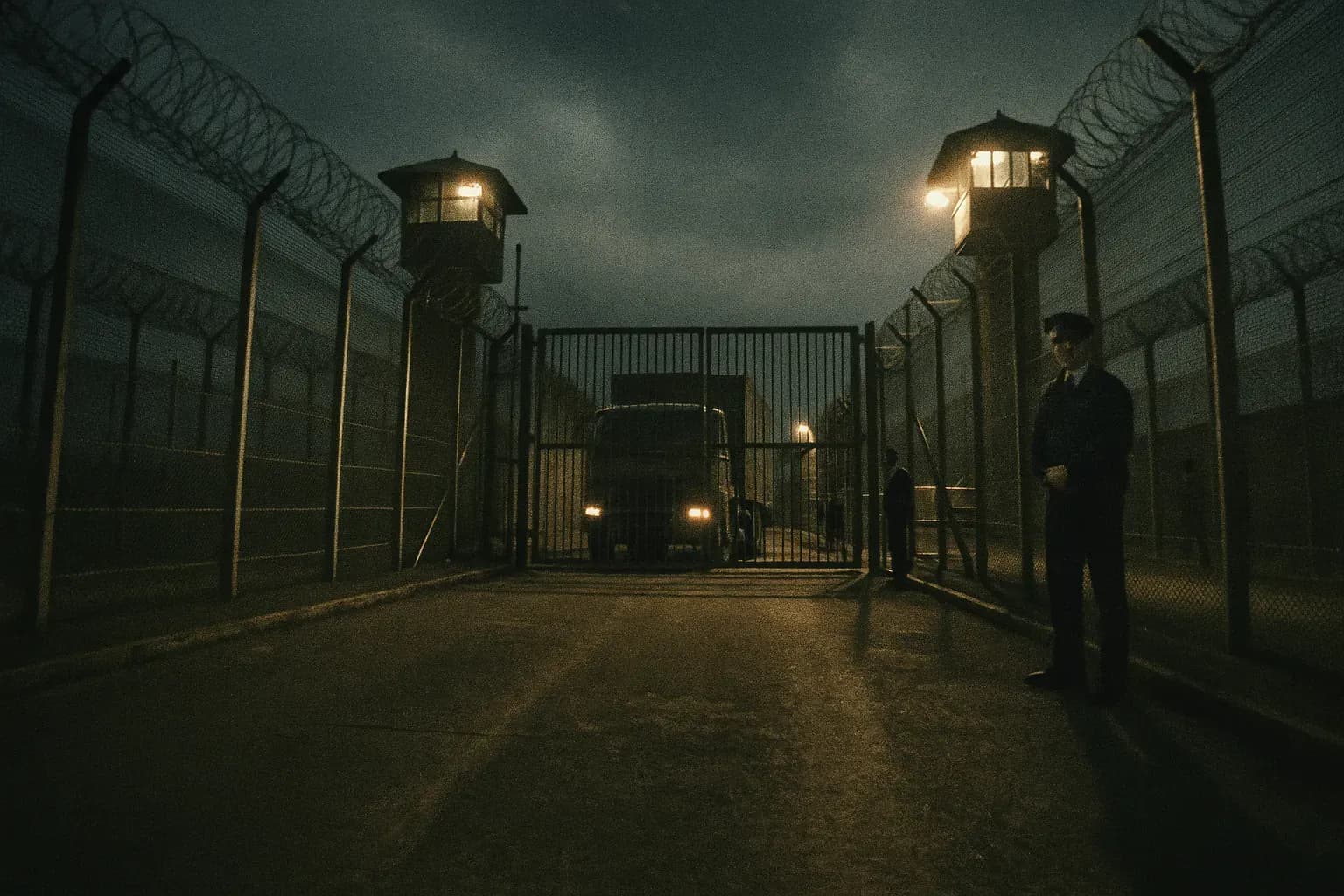
The Maze, also known as Long Kesh or the H-Blocks, was considered Europe's most secure detention facility at the time, a prison within a detention center within an army camp. Yet meticulous planning and months of preparation—some accounts suggest 18 months of preparation—allowed the inmates to breach its defenses in a matter of hours.
The prisoners' strategy relied on access and reconnaissance. Working as orderlies within the facility, they identified critical security weaknesses and managed to smuggle six handguns into the prison. On the day of the escape, they were ready to execute their plan with military precision.
Timeline
38 IRA prisoners escape HM Prison Maze
On 25 September 1983, 38 Provisional IRA prisoners break out of H-Block 7 using smuggled weapons and by taking prison staff hostage.
Prison officer James Ferris dies
James Ferris is stabbed during the escape and dies after suffering a heart attack later the same day.
International press coverage of the escape
On 26 September 1983, the New York Times and international media report on the unprecedented prison escape in British peacetime history.
Separate trials begin against recaptured prisoners
From 1983 onward, a series of independent trials are held against the recaptured prisoners for acts committed during and in connection with the escape.
16 prisoners acquitted of killing James Ferris
The prosecution cannot prove that the stabbing caused the heart attack – 16 defendants are acquitted of murder in subsequent trials.
Shortly after 2:30 pm, prisoners made their move. Using the code word "Bumper," they simultaneously took prison officers hostage at gunpoint in H7, preventing alarms from being raised. The operation was methodical and controlled—at least initially.
At 3:25 pm, the prisoners hijacked a food delivery lorry. The driver, David McLoughlin, was recognized by officers but taken hostage along with other occupants. Bobby Storey, a key IRA leader involved in the planning, delivered a chilling message to the driver: "This block is now in the hands of the IRA. All screws who obeyed our orders are safe. One who didn't was shot in the head. We will shoot anyone who endangers our planned escape, including you."
Storey added a second threat, pointing to fellow prisoner Gerry Kelly, who was serving 30 years: "That man will remain with you throughout the escape. He is doing 30 years and he'll shoot you without hesitation if he has nothing to lose."
The escape continued to unfold with coordinated precision. At nearly 4:00 pm, ten prisoners dressed in stolen guards' uniforms, armed with guns and chisels, seized control of the main gatehouse. They overpowered officers and held them hostage. At 4:05 pm, an officer who resisted managed to press an alarm—a critical moment that could have derailed the entire operation.
It didn't. By 4:18 pm, 35 prisoners had breached the prison perimeter, driving out through the front gates in the hijacked lorry and fleeing across the surrounding fields. The facility was secured, but the prisoners were gone.
The operation came at a cost. One prison officer died of a heart attack; twenty others were injured, including two who were shot with the smuggled firearms. One escaping prisoner was shot and wounded by a soldier, and another was captured after falling during the flight.
The external operation faltered, however. The IRA had planned a convoy of 100 armed members positioned outside the prison to provide transport, but a five-minute timing miscalculation meant the convoy wasn't in position when the escapees emerged. Many had to flee on foot across fields or commandeer civilian vehicles instead.
By 4:25 pm, the British Army and the Royal Ulster Constabulary (RUC) established checkpoints across the region. Three prisoners were captured during the escape itself, and one more was recaptured at 11:00 pm that evening. Over the following days, 19 more were apprehended. However, 19 prisoners remained at large—a significant propaganda victory for the IRA and an embarrassment for British authorities overseeing one of Europe's most heavily fortified prisons.
The Maze Prison escape remains a defining moment in Irish republican history, demonstrating both the determination of IRA prisoners and the vulnerabilities that existed even in the most secure facilities.
Sources: - https://www.irishcentral.com/roots/history/ira-maze-prison.amp - https://www.irishcentral.com/roots/history/ira-maze-prison - https://en.wikipedia.org/wiki/Maze_Prison_escape
Ask about this case
Answers from KrimiNyt's coverage onlyFollow this case
Get an email when a new documentary, podcast or book about The Maze Prison Escape: Europe's Largest Jailbreak appears, or when a verdict is reached.