Paul Ogorzow: The S-Bahn Murderer of Nazi Berlin
S-Bahn-morderen fra Berlin under 2. Verdenskrig
Published May 4, 2026
Case Details
Quick Facts
Classification:
Quick facts
Paul Ogorzow was a German railway worker and Nazi Party member who became one of the most notorious serial killers in German history. Born in 1912 in East Prussia, Ogorzow moved to Berlin where he worked as a signalman for the S-Bahn, the city's rapid transit railway. His position gave him intimate knowledge of the rail system, including isolated stretches of track and station layouts. He joined the Nazi Party and the SA (Sturmabteilung) in 1931, maintaining an outward appearance of a respectable family man with a wife and two children while harboring violent sexual impulses.
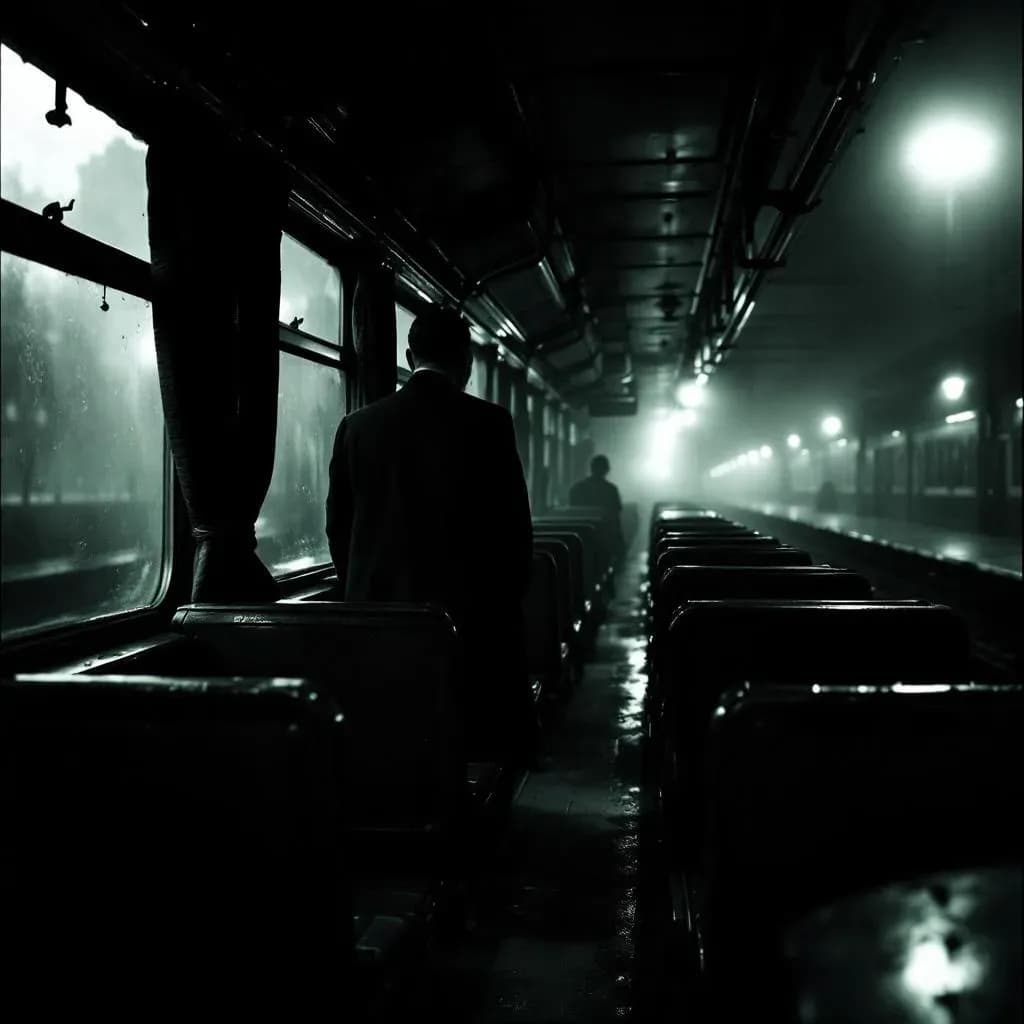
Ogorzow's victims were exclusively women, typically attacked during the wartime blackouts that plunged Berlin into darkness as protection against Allied bombing raids. His crimes began in 1939 with a series of sexual assaults near his home in the Friedrichsfelde district. By September 1940, he escalated to murder, attacking women on the S-Bahn trains themselves. He would wait for a moment when his victim was alone in a compartment, then beat and strangle them before throwing their bodies from the moving train. The darkness of the blackout conditions and the noise of the railway provided perfect cover for his attacks.
Between 1940 and 1941, Ogorzow killed at least eight women and attempted to murder many more. His victims ranged in age and background, unified only by their vulnerability as solitary female passengers. The attacks caused widespread panic among Berlin's female population, with women refusing to use the S-Bahn system alone. The Nazi regime, deeply embarrassed by a serial killer operating in their capital and particularly one within their own party ranks, suppressed media coverage of the crimes to prevent public hysteria and damage to their image of an orderly society.
Timeline
Joins NSDAP
Paul Ogorzow joined the Nazi party NSDAP and demonstrated his political loyalty to the regime.
Member of SA
Ogorzow became a member of the SA (Sturmabteilung), the Nazis' paramilitary organization.
Murder series begins
Ogorzow began his series of murders against women in Berlin. He exploited the wartime blackout requirement to attack women in empty S-Bahn compartments.
Last confirmed murder
Frieda Koziol became Ogorzow's last known victim. She was attacked and killed in the S-Bahn system.
Arrest
Paul Ogorzow was arrested by the Kriminalpolizei (Kripo) following a systematic investigation led by Wilhelm Lüdtke.
Death sentence
The Berlin Kammergericht sentenced Ogorzow to death for eight murders as well as numerous attempted murders and rapes.
Execution
Paul Ogorzow was executed by guillotine at Plötzensee Prison in Berlin, only two days after the sentence.
The investigation was led by Wilhelm Lüdtke, chief of the Berlin criminal police. The case proved exceptionally difficult due to the lack of witnesses and forensic evidence. Lüdtke employed an innovative approach, setting up female police officers as decoys on the S-Bahn lines. The breakthrough came through systematic investigation of railway employees who had access to the train system. Ogorzow was identified partly through his own bragging to colleagues about his knowledge of the attacks and inconsistencies in his alibis. When confronted with evidence, he confessed to the murders in July 1941.
Ogorzow was tried by a special Nazi court in a closed proceeding, as the regime sought to avoid publicity. He was found guilty of eight murders and numerous assaults. He was executed by guillotine at Plötzensee Prison on July 26, 1941, just weeks after his arrest. The Nazi authorities ordered all records of the case sealed, and the story remained largely unknown until after the war. His wife reportedly had no knowledge of his crimes, and his children grew up under assumed identities.
The case of Paul Ogorzow remains significant for several reasons. It demonstrated how wartime conditions, particularly the blackouts, created opportunities for predatory criminals. The investigation pioneered techniques that would later become standard in serial killer investigations, including offender profiling and the use of decoy officers. Perhaps most disturbingly, the case revealed how the Nazi regime prioritized its public image over public safety, suppressing information about a dangerous killer in their midst. Ogorzow's story also illustrates how seemingly ordinary individuals, even those embedded in authoritarian structures, can harbor monstrous impulses behind facades of normalcy.
Ask about this case
Answers from KrimiNyt's coverage onlyFollow this case
Get an email when a new documentary, podcast or book about Paul Ogorzow: The S-Bahn Murderer of Nazi Berlin appears, or when a verdict is reached.