Detention
A police detention cell or holding facility used for temporary custody of arrested or remanded suspects awaiting court proceedings or transfer to prison. The term refers both to the physical facility and the period of short-term police custody under Danish criminal procedure.

Definition
Arresten is the Danish term for a police detention cell or short-term holding facility where suspects are kept following arrest and during the initial phase of criminal proceedings. It serves as a temporary custody location before individuals are either released, transferred to a remand prison, or proceed through the court system. The term encompasses both the physical space within police stations and the practical period of confinement under police authority.
Unlike a prison sentence, time spent in arresten is not punishment but a procedural measure during investigation and pre-trial proceedings. Suspects may be held in arresten immediately after arrest while awaiting a custody hearing before a judge, typically within 24 hours as required by law. Those remanded in custody may remain in police detention facilities for short periods before transfer to formal remand institutions operated by the Prison and Probation Service.
The legal framework governing arresten custody is found in the Danish Administration of Justice Act rather than the Criminal Code itself. The Act distinguishes between anholdelse (arrest), where police may detain a suspect for up to 24 hours, and varetægtsfængsling (remand in custody), which requires a court order and can extend for longer periods. During time in arresten, detainees have specific rights including legal representation, notification of family, and protection from unlawful treatment.
In Danish true crime discourse, the phrase "i arresten" (in the arrest cell) commonly describes the immediate post-arrest phase when suspects first enter the criminal justice system. This period is often crucial for investigations, as initial interviews and evidence gathering typically occur while the suspect remains in police custody. The conditions and duration of detention in arresten are subject to oversight to ensure compliance with human rights standards and procedural safeguards.
Related entries
Read more
Escape King Ferrara Captured in Armed Belgian Police Raid
Antonio Ferrara, the French-Italian criminal infamous for two audacious prison escapes, was arrested on February 27, 2025, during an armed police operation in Eupen, Belgium. The 51-year-old was apprehended alongside multiple co-conspirators in a joint French-Belgian raid targeting an alleged plot to rob a German bank vault.
The Disappearance of Etan Patz — The Case That Changed America
On May 25, 1979, six-year-old Etan Kalil Patz disappeared in the SoHo neighborhood of Manhattan. Pedro Hernandez was convicted of the murder and kidnapping in 2017 following two trials.
Jack Sheppard: London's Notorious Escape Artist
Jack Sheppard, a 22-year-old carpenter turned burglar, escaped from London jails four times in 1724 before his execution at Tyburn. His remarkable feats of escapology made him a celebrity among the working classes and inspired popular ballads, plays, and prints across England.
Related articles
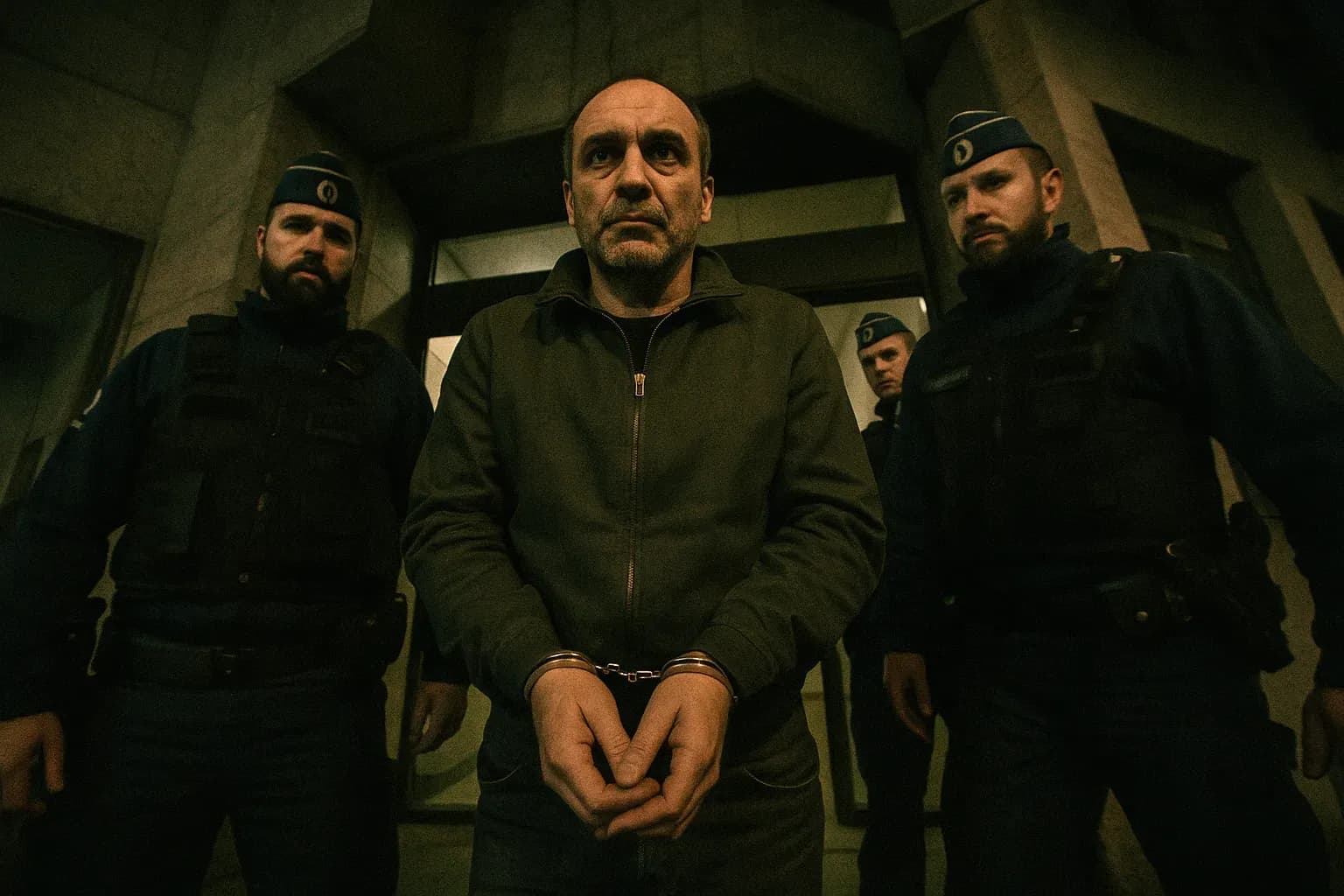
Escape King Ferrara Captured in Armed Belgian Police Raid
Antonio Ferrara, the French-Italian criminal infamous for two audacious prison escapes, was arrested on February 27, 2025, during an armed police operation in Eupen, Belgium. The 51-year-old was apprehended alongside multiple co-conspirators in a joint French-Belgian raid targeting an alleged plot to rob a German bank vault.

The Disappearance of Etan Patz — The Case That Changed America
On May 25, 1979, six-year-old Etan Kalil Patz disappeared in the SoHo neighborhood of Manhattan. Pedro Hernandez was convicted of the murder and kidnapping in 2017 following two trials.
Jack Sheppard: London's Notorious Escape Artist
Jack Sheppard, a 22-year-old carpenter turned burglar, escaped from London jails four times in 1724 before his execution at Tyburn. His remarkable feats of escapology made him a celebrity among the working classes and inspired popular ballads, plays, and prints across England.
Three Escapes, Three Methods: The Ingenuity of Richard Lee McNair
Richard Lee McNair, a former U.S. Air Force sergeant convicted of murder, escaped from custody three times between 1988 and 2006 using increasingly sophisticated methods—from lip balm to an ingeniously constructed escape pod—evading recapture for months each time.

The Great Escape: 76 Men, One Tunnel, 50 Deaths
On March 24-25, 1944, 76 Allied airmen escaped through a tunnel from Stalag Luft III near Sagan, Poland. Only three reached freedom. The other 73 were recaptured, and 50 were murdered on Adolf Hitler's orders in one of WWII's lesser-known war crimes.

The Great Escape: Colonel Rose's Tunnel Out of Libby Prison
On February 9, 1864, Colonel Thomas E. Rose of the 77th Pennsylvania Infantry led one of the Civil War's most audacious prison escapes from Libby Prison in Richmond, Virginia. Working in secret for 17 days, Rose and fellow officers dug a narrow 50-60 foot tunnel from the dungeon-like basement to freedom—an feat so remarkable that 109 men followed them out.

China's Monster Killer: The 67 Murder Spree That Shocked a Nation
Between 2000 and 2003, Yang Xinhai systematically murdered at least 67 people across rural China, earning the nickname 'Monster Killer.' Operating across Anhui, Hebei, Henan, and Shandong provinces, he targeted isolated farmhouses at night, killing entire families with axes and hammers before his capture in November 2003.

Manhunters: Fugitive Task Force — Inside America's Elite Marshals Unit
Manhunters: Fugitive Task Force premiered on A&E on December 9, 2008, offering viewers an unprecedented look at U.S. Marshals and local law enforcement pursuing some of America's most wanted fugitives across the New York and New Jersey region.

Street Cops: The Raw Reality of Policing Copenhagen
Gadebetjentene is a TV series following Copenhagen police officers on the job, using bodycam footage to offer an unfiltered look at daily street policing — and sparking significant public debate in Denmark.