Alabama Snake
HBO Max, 2020 — the attempted murder of Darlene Summerford by snake-handling preacher Glenn Summerford
Quick facts
What Is Alabama Snake?
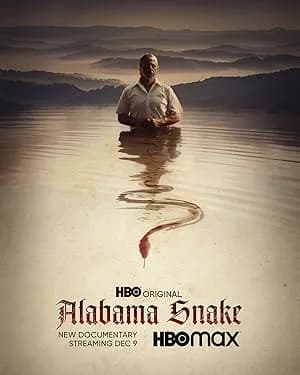
Alabama Snake is a feature-length true-crime documentary directed by Theo Love and released on HBO and HBO Max on December 9, 2020. Running approximately 84–85 minutes, the film examines one of the strangest and most disturbing criminal cases in American Southern history: the attempted murder of Darlene Summerford by her husband, Pentecostal snake-handling preacher Glenn Summerford, in Scottsboro, Alabama, in October 1991. The documentary reconstructs the crime, the controversial investigation, and the trial that resulted in a 99-year prison sentence — all set against the deeply unusual backdrop of a fundamentalist church where congregants handled venomous rattlesnakes as an act of faith.
The Case
On October 4, 1991, in Jackson County, Alabama, Darlene Summerford alleged that her husband Glenn — the pastor of the Church of Jesus Christ with Signs Following, located near Scottsboro — forced her to place her hand into a cage or bed containing rattlesnakes. She was bitten and suffered serious injury from the venom, but survived. After she recovered, Darlene accused Glenn of deliberately engineering the attack as an attempt on her life.
Glenn Summerford was no ordinary suspect. He was a practicing Pentecostal minister who incorporated serpent handling into his religious services, a tradition rooted in a literal interpretation of the Gospel of Mark, practiced in pockets of Appalachia and the Deep South. His congregation at the Church of Jesus Christ with Signs Following regularly handled venomous snakes during worship as a demonstration of faith. For investigators and prosecutors, the challenge was proving that what might superficially resemble a religious ritual or even a voluntary act was, in fact, a deliberate attempt to kill.
The defense disputed the attempted murder characterization and advanced an alternative explanation for the events of that night — a key point of contention that would make the case controversial long after the verdict was rendered. Nevertheless, a Jackson County jury convicted Glenn Summerford of attempted murder, and he was sentenced to 99 years in prison, an extraordinarily severe punishment that reflected both the jury's conclusions and the state's view of the crime's premeditated nature.
The legal saga did not end at sentencing. In 2002, while serving his sentence, Glenn Summerford escaped from a prison work detail. He was recaptured and subsequently received an additional 30-year sentence for second-degree escape. According to reporting, his minimum release date now stands at February 4, 2121 — meaning he is effectively imprisoned for life. A parole application was also rejected, confirming that as of recent reporting, he remains incarcerated.
Production
The documentary was directed by Theo Love, who approached the Summerford case as a quintessential piece of Southern Gothic true crime. Love and his production team traveled to Scottsboro and Jackson County to interview people connected to the case and to document the surviving snake-handling religious culture that gave the crime its extraordinary context. The filmmakers spoke with local residents, individuals familiar with the Church of Jesus Christ with Signs Following, and others who could speak to both the religious practices and the events surrounding the attack on Darlene.
The film is structured as a character study as much as a crime reconstruction. It situates the Summerford case within the broader tradition of Appalachian serpent-handling Pentecostalism, tracing how this fringe religious practice — which has periodically resulted in deaths and legal battles across several Southern states — created a world in which rattlesnakes became instruments of both worship and, allegedly, premeditated violence. The production leaned into the strangeness of the subject matter without exploiting it, according to several reviewers, grounding the narrative in the lived experience of the region.
According to the HBO Max and Apple TV listings, the film was made available for streaming on HBO Max as well as through other platforms carrying HBO content.
Reception
Alabama Snake holds an IMDb rating of 5.5/10, reflecting a mixed but engaged response from viewers. Critical reception was more positive, with reviewers consistently highlighting the film's unusual subject matter as its chief distinction within the crowded true-crime documentary genre.
Salon described the documentary as an immersion into an Appalachian world that feels remote from mainstream American experience, praising the film's atmospheric approach to a genuinely bizarre case. The Sun Break's review emphasized the creepiness and weirdness of the snake-handling milieu, noting that Love handles a potentially sensationalist topic with relative restraint. Alabama news outlet AL.com called it a "wild" documentary and spotlighted the Southern Gothic dimension of the story — a real-life drama involving faith, domestic violence, venomous snakes, and a prison escape that collectively defy easy categorization.
Audience response was more divided. Some viewers found the film deeply unsettling and compelling; others — as reflected in viewer commentary — found the pacing slow or the narrative insufficiently propulsive for the true-crime format. The mixed IMDb score likely reflects this split between those drawn to the film's documentary texture and those expecting a more conventional crime thriller structure.
The central controversy of the case — whether the events of October 4, 1991 constituted a calculated attempted murder or something else entirely — is embedded in the film's DNA and was noted by multiple reviewers as the source of its lingering unease. The defense's alternative explanation was never fully dispelled in the public mind, even after the conviction, and the documentary engages honestly with that ambiguity.
The Case Today
Glenn Summerford remains incarcerated as of the most recent available reporting. His combined sentences — 99 years for attempted murder and an additional 30 years for second-degree escape — place his minimum release date at February 4, 2121. A parole application was rejected, and there is no indication of any successful legal challenge to his conviction or sentence.
Darlene Summerford survived the 1991 attack and, through her testimony, was central to the prosecution that put her husband behind bars. The Church of Jesus Christ with Signs Following and the broader serpent-handling tradition in northeastern Alabama continue to exist, though in diminished form, as an enduring feature of a particular strain of Appalachian Pentecostalism.
The Summerford case remains one of the most unusual attempted murder prosecutions in Alabama history — a case in which the weapon was a living rattlesnake, the accused was a man of God, and the line between religious practice and criminal violence was fiercely contested in court. Alabama Snake ensures that story is not forgotten.