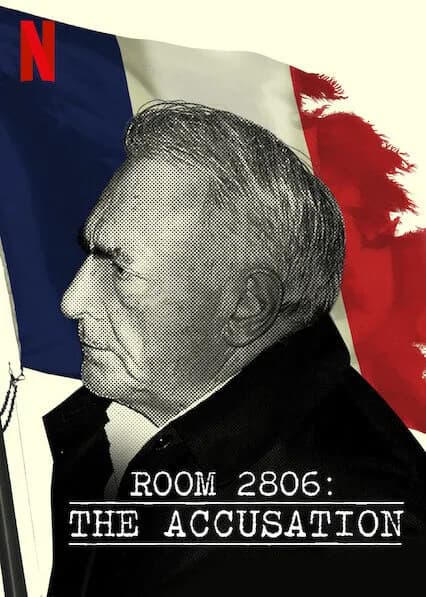
Room 2806: The Accusation
Netflix, 2020 — the sexual assault case against IMF chief Dominique Strauss-Kahn
Quick facts
What Is the Series About?
Room 2806: The Accusation is a four-part Netflix docuseries directed by Jalil Lespert and released on December 7, 2020. It revisits one of the most explosive sexual scandal cases of the early 21st century: the May 2011 accusation by Guinean hotel housekeeper Nafissatou Diallo against Dominique Strauss-Kahn — then Managing Director of the International Monetary Fund and a leading contender for the French presidency — of sexual assault and attempted rape in Room 2806 of the Sofitel New York hotel in Manhattan.
The series reconstructs the events of that day, the subsequent arrest, the New York criminal proceedings, and the broader social and political fallout, drawing on testimony from individuals directly involved in the case. It also situates the scandal within a wider conversation about power, class, race, and gender — themes that resonated strongly in the post-MeToo media landscape in which the documentary was released.
The Case
On the morning of May 14, 2011, Nafissatou Diallo, a 32-year-old Guinean immigrant working as a housekeeper at the Sofitel New York, entered Room 2806 to clean it. According to her account, she was subjected to a sexual assault and attempted rape by the room's occupant: Dominique Strauss-Kahn, known widely by his initials DSK, a powerful French Socialist Party politician who at the time led the IMF and was widely considered a likely candidate for the French presidency in the 2012 elections.
Diallo reported the incident to hotel security, who contacted the New York Police Department. Strauss-Kahn was arrested the same afternoon at JFK Airport, where he had boarded an Air France flight. The speed of the arrest — and the spectacle of one of Europe's most powerful politicians being led away in handcuffs — sent shockwaves through French and international political circles.
The criminal case, formally identified as New York v. Strauss-Kahn, proceeded through the New York courts but ultimately collapsed. Prosecutors raised concerns about the credibility of Diallo's account in certain details unrelated to the core allegation, and the charges were eventually dropped without a criminal conviction. Strauss-Kahn was never tried before a jury. Diallo subsequently pursued a civil case, and a settlement was later reached, the specific terms of which remain confidential.
The docuseries does not shy away from the complexity of the case. As The Guardian noted, the events in Room 2806 "remain a matter of dispute," and the series engages with that dispute directly — presenting Diallo's perspective and the structural context of her vulnerability as a Black immigrant domestic worker facing a globally connected and legally resourced public figure.
The broader framing of the series also touches on France's historically permissive attitude toward the private conduct of powerful men — a cultural dynamic that the documentary argues insulated Strauss-Kahn from accountability long before the Sofitel incident.
Production
The series was directed by Jalil Lespert, a French filmmaker. Lespert structured the four episodes as a detailed investigative reconstruction, incorporating accounts from people who were present for or directly involved in the criminal proceedings — including legal professionals and others close to the case. This approach gives the docuseries a procedural texture, walking viewers through the mechanics of the New York criminal justice system and how the case was built and ultimately dismantled.
Forbes described the series as a shocking and timely piece of investigative storytelling upon its release in December 2020, just as the series landed in a global streaming environment still shaped by the ongoing reckoning of the MeToo movement. The decision to return to the DSK case — which predated MeToo by several years — was clearly intentional, repositioning it within a framework that audiences in 2020 were newly equipped to interrogate.
Reception
Critical and academic response to Room 2806: The Accusation was broadly positive, with particular praise for its pacing and investigative rigour. An academic review described it as a riveting series in four installments, commending its willingness to engage with the social structures — including race, class, and gender dynamics — that shaped both the assault allegation and the subsequent legal process.
The Guardian's coverage framed the documentary as an exposure of France's stubborn resistance to the cultural shifts brought about by MeToo, noting that the case and its aftermath revealed a striking indifference within French public life to allegations of sexualized violence against women by powerful men.
However, the series was not without its critics. Some opinion coverage argued that the docuseries revisited a case that had been legally discredited and questioned the framing choices made by Lespert, suggesting the documentary presented a one-sided account of events that a court had declined to prosecute. This tension — between Diallo's lived experience and the legal outcome — sits at the unresolved heart of the series and much of the commentary surrounding it.
The IMDb page for the series records active audience discussion and reviews, though a verified aggregate star rating is not available from current sources.
The Case Today
Dominique Strauss-Kahn has never been criminally convicted in connection with the events of May 14, 2011. After the New York charges were dropped, he resigned as Managing Director of the IMF and his French presidential ambitions effectively ended. He has faced additional legal scrutiny in France in subsequent years related to separate allegations, but the Room 2806 case itself concluded with a civil settlement rather than any criminal judgment.
Nafissatou Diallo, who showed considerable courage in bringing her complaint forward against one of the world's most powerful men, has maintained a lower public profile since the settlement. Her case remains a reference point in discussions of the intersection of institutional power, immigration status, race, and gender in the legal treatment of sexual violence allegations.
Griot Magazine noted that the docuseries succeeds in keeping the focus on Diallo and the structural inequalities she faced, rather than reducing the story to a tale of a powerful man's political downfall. In that sense, Room 2806: The Accusation functions not only as a case study in one contested legal proceeding, but as a broader document of how systems of power shape who is believed and who is not.