New DNA Could Solve Italy's Most Notorious Serial Killer Case
Decades-old evidence from the Monster of Florence murders may finally identify the killer
Published June 6, 2025
Quick Facts
The Monster of Florence case has haunted Italy for over half a century. Between the 1970s and 1980s, at least 14 young people—predominantly couples—were murdered across the Tuscany region in a series of crimes that gripped the nation and baffled investigators. The case has seen three different men convicted and imprisoned for some of the murders, yet doubt persists about whether a single killer or multiple perpetrators were responsible.
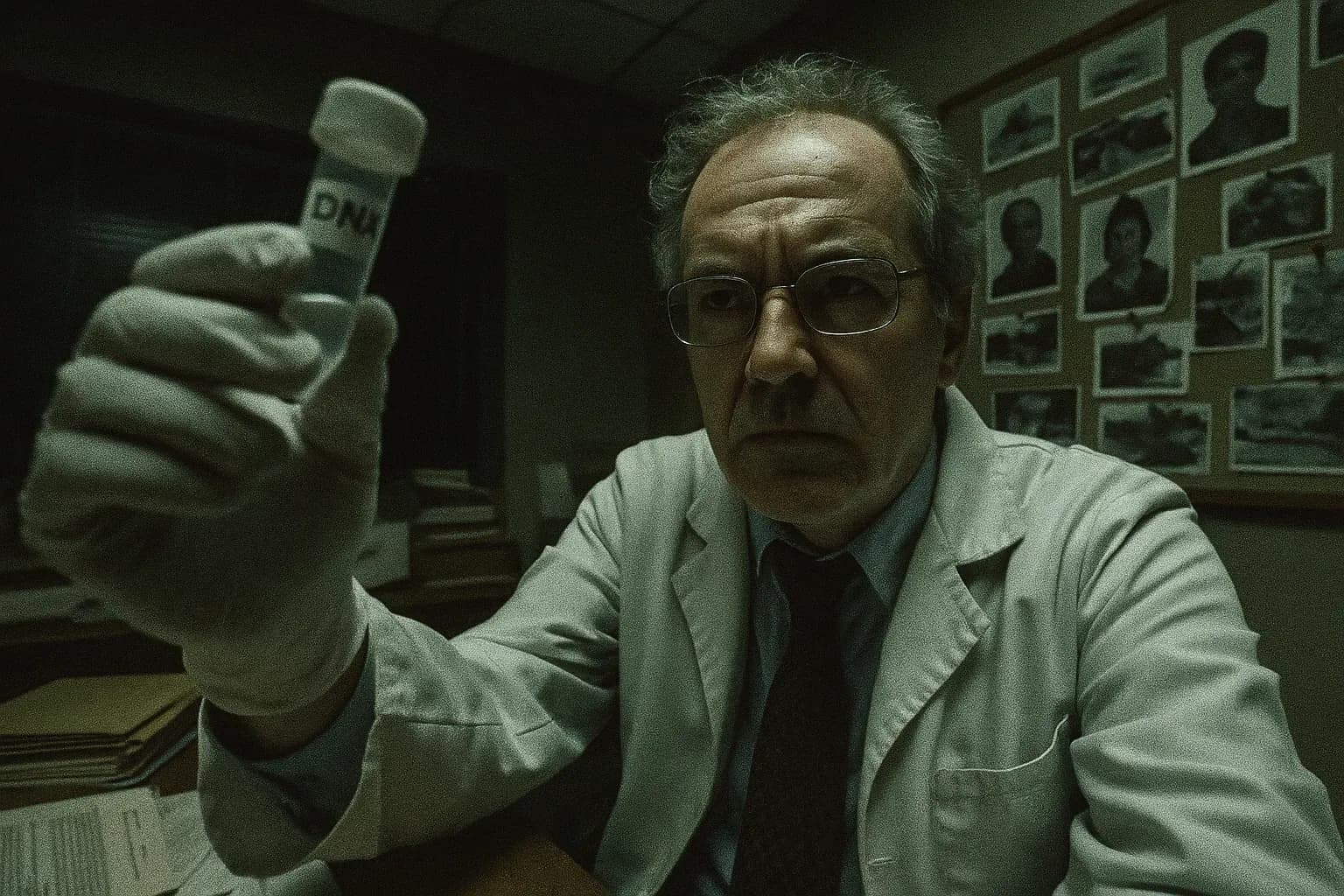
Now, newly identified DNA evidence may finally provide answers. Forensic investigators discovered DNA on bullets recovered from two separate murders committed five years apart—a potential breakthrough that has lawyers and investigators calling it "very important" for resolving the case.
The first DNA sample comes from bullets linked to the September 1983 murder of two German university students, Horst Wilhelm Meyer and Jens-Uwe Rusch, who investigators believe were mistaken for a romantic couple. The same DNA profile matches bullets recovered from the July 1984 murder of Italians Pia Rontini and Claudio Stefanacci. The matching profile across both crime scenes suggests a critical connection between the two killings.
Timeline
First murder in the documented series
The first known double murder in the modern documented series takes place in and around Florence in 1974. The perpetrator uses .22-caliber Winchester cartridges.
Double murder of German nationals in September 1983
Horst Wilhelm Meyer and Jens-Uwe Rüsch are killed in September 1983. The same unknown DNA is found in 2024 on bullets from this murder.
Pia Rontini and Claudio Stefanacci killed
On July 29, 1984, Pia Rontini and Claudio Stefanacci are killed. In 2024, the same unknown DNA profile is identified on bullets from this murder.
Last known double murder — Mauriot and Kraveichvili
Nadine Mauriot and Jean-Michel Kraveichvili are killed on September 8, 1985, near San Casciano. This is the last known murder in the series.
Pietro Pacciani acquitted on appeal
Pietro Pacciani, convicted in the first instance, is acquitted on appeal in 1996. He dies in 1998 before any new trial can take place.
Pietro Pacciani dies
Pietro Pacciani dies in 1998, before any new trial can be carried out. The overall investigation continues.
Mario Vanni and Giancarlo Lotti finally convicted
In 2000, the final verdict against Mario Vanni and Giancarlo Lotti for parts of the crimes is upheld. The serial killer remains officially unidentified.
Unknown DNA profile identified on bullets from 1985
In 2024, an unknown DNA profile is found on .22-caliber Winchester bullets from the 1985 murder. The same profile is also found on bullets from 1983 and 1984. It matches no known persons in the case.
Daniele Piccione, a lawyer who chaired a parliamentary inquiry commission into an unsolved aspect of the case until 2022, described the significance of this DNA as "very important." Legal representatives for civil parties in the case are now requesting that the DNA be compared against existing evidence and potentially against known suspects and convicted individuals.
The investigation has expanded beyond the DNA already discovered. Vieri Adriani, lawyer for the families of French victims, has filed a request to exhume the body of Stefania Pettini, who was murdered in September 1974 alongside her boyfriend Pasquale Gentilcore. According to the original medical examiner's report, evidence suggests Pettini may have fought her attacker, potentially leaving biological traces under her fingernails or elsewhere on her body.
"Biological evidence from that exhumation could prove crucial," Adriani stated in his request. Additionally, investigators plan to extract DNA from Gentilcore's clothing, which has been preserved from the original investigation. These efforts represent a coordinated push to leverage modern forensic techniques on evidence collected decades ago.
The Monster of Florence case has long fascinated criminologists worldwide. In 2007, an FBI behavioral analysis concluded that the murderer acted alone, suggesting the crimes were committed by a single serial killer rather than multiple perpetrators. However, the conviction of three different men for various murders in the case raised questions about investigative procedures and the possibility of wrongful convictions.
The newly discovered DNA evidence could validate or challenge previous convictions and investigative conclusions. If the DNA profile matches one of the currently imprisoned men, it would strengthen the case against him across multiple murders. Conversely, if the DNA belongs to someone not currently in custody, it could indicate that previous investigations went astray.
The timing of these breakthroughs reflects advances in forensic technology. DNA analysis techniques have improved dramatically since the original murders occurred more than 50 years ago. Evidence that could not yield useful genetic information decades ago can now be processed and analyzed effectively.
As Italian authorities move forward with the DNA comparisons and the potential exhumation of Stefania Pettini, the Monster of Florence case enters a new chapter. Families of victims and legal representatives remain hopeful that modern science will finally unmask the killer who terrorized Tuscany for so long.
Sources: https://www.cbsnews.com/news/monster-of-florence-serial-killer-cold-case-new-dna-mysterious-murders-couples/
Ask about this case
Answers from KrimiNyt's coverage onlyFollow this case
Get an email when a new documentary, podcast or book about New DNA Could Solve Italy's Most Notorious Serial Killer Case appears, or when a verdict is reached.