Dna evidence
Understanding the revolutionary 'genetic fingerprint' and its pitfalls
Definition
What is DNA evidence? Discover how blood, saliva, and hair become crucial 'genetic fingerprints' that solve crimes, but also harbor pitfalls.
Understanding the revolutionary 'genetic fingerprint' and its pitfalls
What is DNA evidence, and why is it vital in solving crime
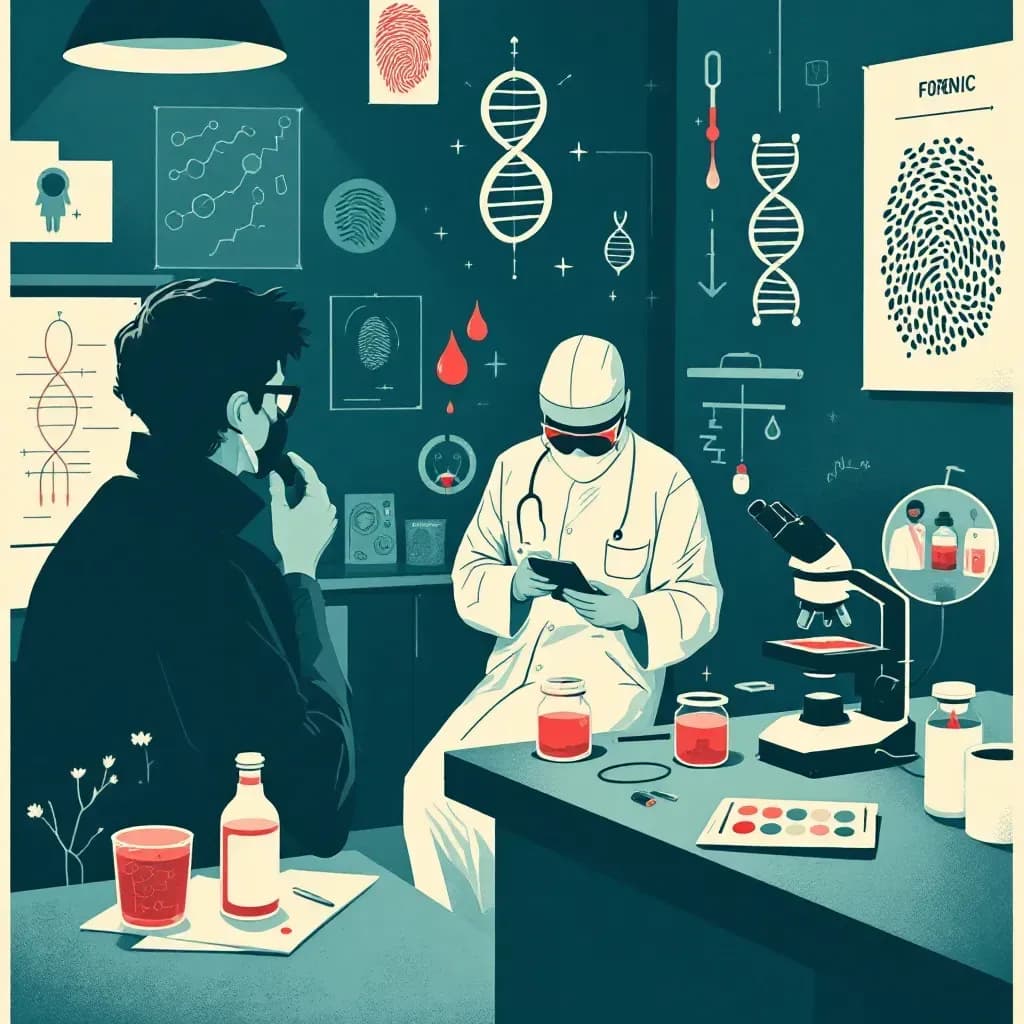
In true crime and criminal investigation, DNA evidence refers to biological material – such as blood, saliva, or hair – found at a crime scene, on a victim, or on a suspect. From this material, a unique genetic profile can be extracted, potentially linking a specific individual to a crime. This 'genetic fingerprint' is often considered one of the most compelling pieces of evidence in a modern trial, as it can, with high scientific certainty, place a person at a crime scene or, conversely, exonerate an innocent suspect.
DNA evidence revolutionizes crime solving from trace to trial
The use of DNA evidence has revolutionized modern criminal investigation and the solving of crimes, ranging from violent assaults and murders to burglaries and sexual assaults. Traces such as blood, semen, saliva, hair, or skin cells, often unintentionally left by a perpetrator at a crime scene, can be collected and subjected to thorough DNA analysis. The resulting DNA profile is then compared with profiles from suspects or with national DNA databases containing profiles of previously convicted individuals. This forensic genetic method has not only led to the conviction of the guilty but also to the exoneration of the wrongly convicted, even in cases that have remained unsolved for decades, underscoring the crucial role of DNA evidence in the pursuit of justice.
The pitfalls of DNA analysis: Contamination and transfer
Despite its strength, the handling, evidence collection, and interpretation of DNA evidence are not without challenges. The risk of sample contamination, either at the crime scene itself or later in the laboratory, the possibility of secondary DNA transfer (where a person's DNA is transferred to an object or location without direct contact), and the complexity of analyzing mixed DNA profiles from multiple individuals, demand extremely meticulous forensic procedures and specialized expertise. Understanding the potential and limitations of DNA evidence is therefore crucial for all parties in a legal proceeding, including investigators, prosecutors, defense attorneys, and courts. This is essential, as DNA continues to play a central and often decisive role in solving crimes and in efforts to ensure correct judicial outcomes within the legal system.
Interested in how DNA evidence solves complex murders and cold cases? Delve into real-life cases involving DNA evidence – find our exciting cases below.
Read more
Nora Dalmasso Murder — Unsolved by Statute of Limitations
The Nora Dalmasso case is an Argentine murder investigation in which a woman was strangled in her Río Cuarto home on November 26, 2006, and no one was ever convicted.
The Rocío Wanninkhof Case — wrongful conviction and DNA exoneration
The 1999 murder of 19-year-old Rocío Wanninkhof in Mijas, Spain, led to the wrongful conviction of Dolores Vázquez before DNA evidence identified British sex offender Tony Alexander King.
Austin Yogurt Shop Murders — 1991 Texas Quadruple Killing
The Austin Yogurt Shop Murders are a 1991 quadruple homicide in which four teenage girls were gagged, shot and burned inside a Texas yogurt shop; DNA identified the killer in 2025.
Related articles

Alt om Killer Clown-sagen: dokumentarer, bøger og podcasts
John Wayne Gacy myrdede mindst 33 unge mænd og drenge mellem 1972 og 1978 i Norwood Park Township uden for Chicago. Den amerikanske seriemorder blev kendt som 'Killer Clown', fordi han arbejdede som frivillig klovn til velgørende arrangementer, mens han førte et dobbeltliv fyldt med mord, voldtægt o

MURDERED: Dorothy “Toby” Tate
The episode covers how detectives reopened the 1983 murder of Toby Tate, and how preserved DNA evidence finally revealed a surprising twist.

07 Lies in Lismore | The black top
The episode covers a new inquest into Simone's murder, alleged confessions, and DNA evidence tied to her clothing, plus a parents' statement disputing witness accounts.
Criminally Obsessed
Criminally Obsessed is a true-crime documentary brand on YouTube covering real murder cases including Lindsay Clancy, Taylor Parker, Celeste Beard Johnson, and Casey Pitzer.
Nora Dalmasso Murder — Unsolved by Statute of Limitations
The Nora Dalmasso case is an Argentine murder investigation in which a woman was strangled in her Río Cuarto home on November 26, 2006, and no one was ever convicted.
BTK Part 3: The Final Mistake
Episode of Post Mortem: CBS News' 48 Hours Podcast Companion covering how Dennis Rader's ego finally led to his capture after more than 30 years as BTK.

The Rocío Wanninkhof Case — wrongful conviction and DNA exoneration
The 1999 murder of 19-year-old Rocío Wanninkhof in Mijas, Spain, led to the wrongful conviction of Dolores Vázquez before DNA evidence identified British sex offender Tony Alexander King.

Austin Yogurt Shop Murders — 1991 Texas Quadruple Killing
The Austin Yogurt Shop Murders are a 1991 quadruple homicide in which four teenage girls were gagged, shot and burned inside a Texas yogurt shop; DNA identified the killer in 2025.

When Justice Fails: 10 Wrongful Convictions That Shook Two Nations
Selected by the truecrime.news editorial team as the cases that most powerfully exposed the systemic failures behind wrongful convictions, this list spans two nations and decades of injustice — from fabricated evidence and coerced confessions to tunnel-vision investigations and prosecutorial misconduct.
Golden State Killer: Final Chapter: Joseph DeAngelo and 40 Years of Terror
Golden State Killer: Final Chapter (Crown, 2025) documents Joseph James DeAngelo's reign of terror in California from the 1970s to the 1980s. The book depicts the over 50 rapes and 13 murders committed by the former police officer, who was caught through groundbreaking DNA genealogy.
JonBenét Ramsey: 28 Years of Mystery
On December 26, 1996, six-year-old JonBenét Ramsey was reported missing from her family home in Boulder, Colorado. Seven hours later, she was found dead in the basement. Nearly three decades on, her killer remains unknown.

The 10 Best Cold Case Podcasts for True Crime Fans
Cold cases are the haunting heart of true crime: cases that went cold, witnesses who stayed silent, and evidence that waited decades to speak. This curated selection from the truecrime.news editorial team brings together ten standout podcast episodes that dig into some of history's most stubborn mysteries — from Australian disappearances and American DNA breakthroughs to Danish historical murders and British cold-case convictions.