Pablo Escobar: The Cocaine King's Reign of Terror
How a Colombian drug lord murdered thousands and nearly toppled a nation before his violent end in 1993
Published June 6, 2025
Quick Facts
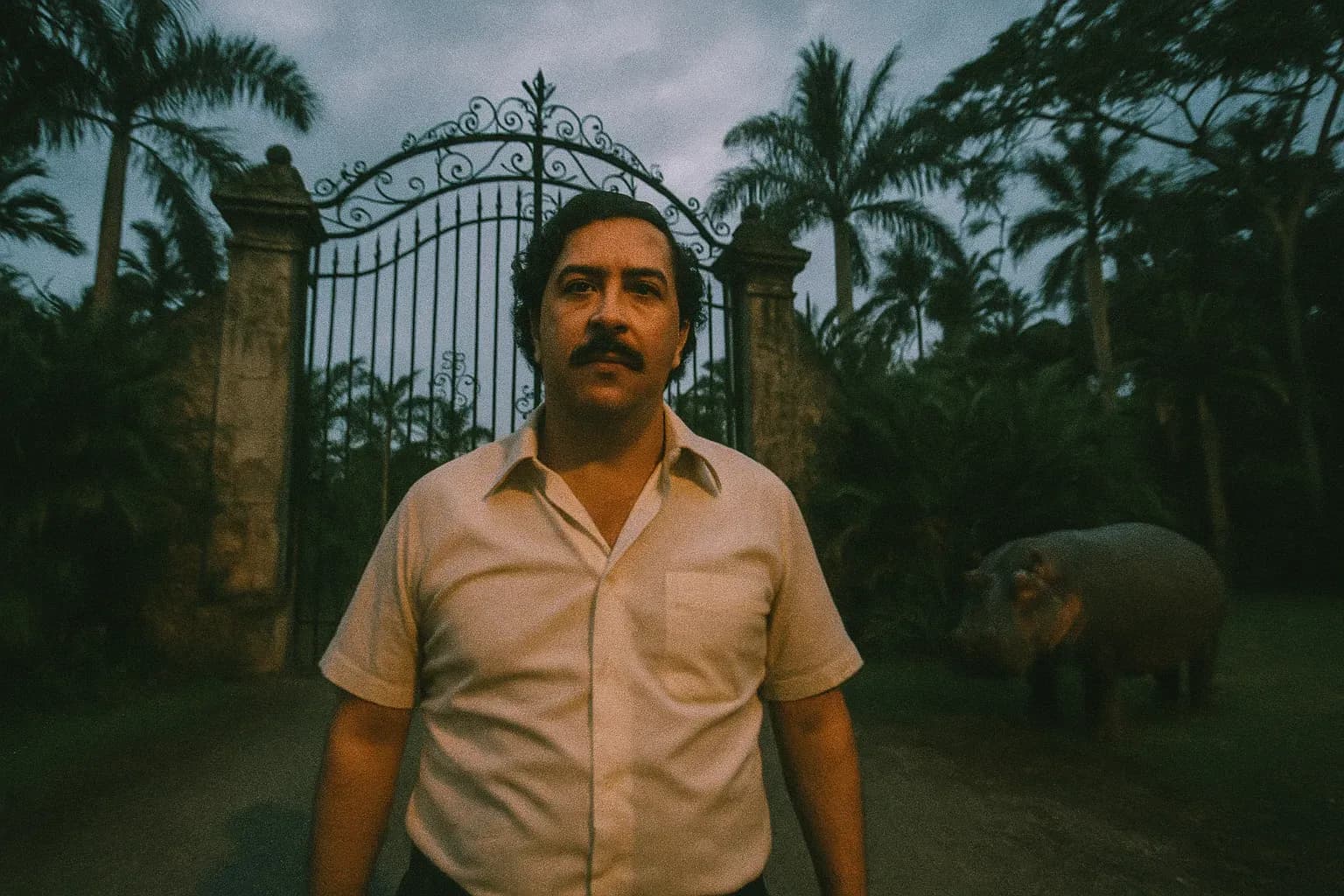
Pablo Escobar, born December 1, 1949, in the Colombian town of Rionegro, would become the world's most powerful drug trafficker and one of history's deadliest criminals. By the early 1980s, his Medellín Cartel controlled an estimated 80 percent of the global cocaine trade, generating a personal fortune of approximately $30 billion—enough wealth to make him briefly an alternate member of Colombian Congress.
But Escobar's influence rested not on business acumen alone. It was built on systematic violence and extortion enforced through a doctrine known as "plata o plomo"—"money or lead." Politicians, judges, police officers, and anyone who threatened his operation faced a simple choice: accept bribes or die. Those who refused paid with their lives.
The cartel's terror campaign intensified dramatically after Colombian authorities and the U.S. Drug Enforcement Administration raided Escobar's Tranquilandia cocaine processing complex in 1984, destroying massive drug labs. The raid triggered a wave of narcoterrorism that would claim thousands of lives over the next decade.
Timeline
Pablo Escobar killed in police operation in Medellín
On December 2, 1993, Colombian special police forces (Search Bloc) killed Pablo Escobar in the Los Olivos neighborhood of Medellín as he tried to flee across a rooftop.
Bodyguard El Limón killed in same operation
Escobar's bodyguard Álvaro de Jesús Agudelo, alias 'El Limón', was killed in the same police operation on December 2, 1993, in Los Olivos, Medellín.
Medellín cartel effectively collapses after Escobar's death
In the wake of Escobar's death on December 2, 1993, the Medellín cartel effectively collapsed as a coherent criminal organization.
On November 27, 1989, Escobar's operatives bombed Avianca Flight 203 in an attempt to assassinate presidential candidate César Gaviria Trujillo. Gaviria missed the flight, but 107 passengers and crew members did not. Nine days later, a truck bomb detonated outside the headquarters of the Colombian secret police (DAS) in Bogotá, killing more than 50 people and injuring over 2,200.
The violence reached its apex in 1990. After briefly negotiating a truce, Escobar resumed full-scale operations with even greater brutality. He placed a bounty of $660 on the life of every Colombian police officer. Between April and July 1990 alone, narco-hitmen assassinated over 215 police officers. Hundreds more civilians died in car bombings, kidnappings, and street executions. In total, Escobar's reign was responsible for the deaths of more than 5,000 people—including three presidential candidates, the attorney general, over 200 judges, and over 1,000 police officers.
By 1991, mounting pressure forced Escobar to negotiate a surrender deal. Rather than face extradition to the United States, he agreed to prison in exchange for leniency. Colombian authorities constructed a luxurious facility called La Catedral specifically for his incarceration, which Escobar essentially ran as his personal headquarters, continuing to direct cartel operations from behind bars.
The arrangement collapsed in July 1992 when authorities attempted to transfer Escobar to a conventional prison. He escaped—evading capture for 16 months while resuming smuggling and violence from the streets of Medellín. A special police unit called Search Bloc, supported by U.S. agencies and informants, pursued him relentlessly through the city's neighborhoods.
On December 2, 1993—one day after his 44th birthday—Escobar's fugitive existence ended on a rooftop in a middle-class Medellín neighborhood. While attempting to escape across rooftops with his bodyguard, Alonso de Jesús Agudelo Acosta (alias "Limón"), Search Bloc officers opened fire. A gunshot through the ear proved fatal. Three shots in total ended the cocaine king's reign.
Escobar's death marked the beginning of the end for the Medellín Cartel's dominance. His corpse, photographed by the police unit that killed him, became an iconic image of the violent drug war that had ravaged Colombia. Yet his legacy—the thousands dead, the institutions corrupted, the nation destabilized—would haunt the country for decades to come.
Sources: https://medellin-tours.com/life-and-death-pablo-escobar/ https://www.ranker.com/list/pablo-escobar-facts/nathan-gibson https://www.biography.com/crime/pablo-escobar https://humanidades.com/en/pablo-escobar/ https://www.toptenz.net/10-fascinating-facts-about-the-narcoterrorist-pablo-escobar.php
Media coverage
TV series
- Escobar by Escobar(2026)
Ask about this case
Answers from KrimiNyt's coverage onlyFollow this case
Get an email when a new documentary, podcast or book about Pablo Escobar: The Cocaine King's Reign of Terror appears, or when a verdict is reached.