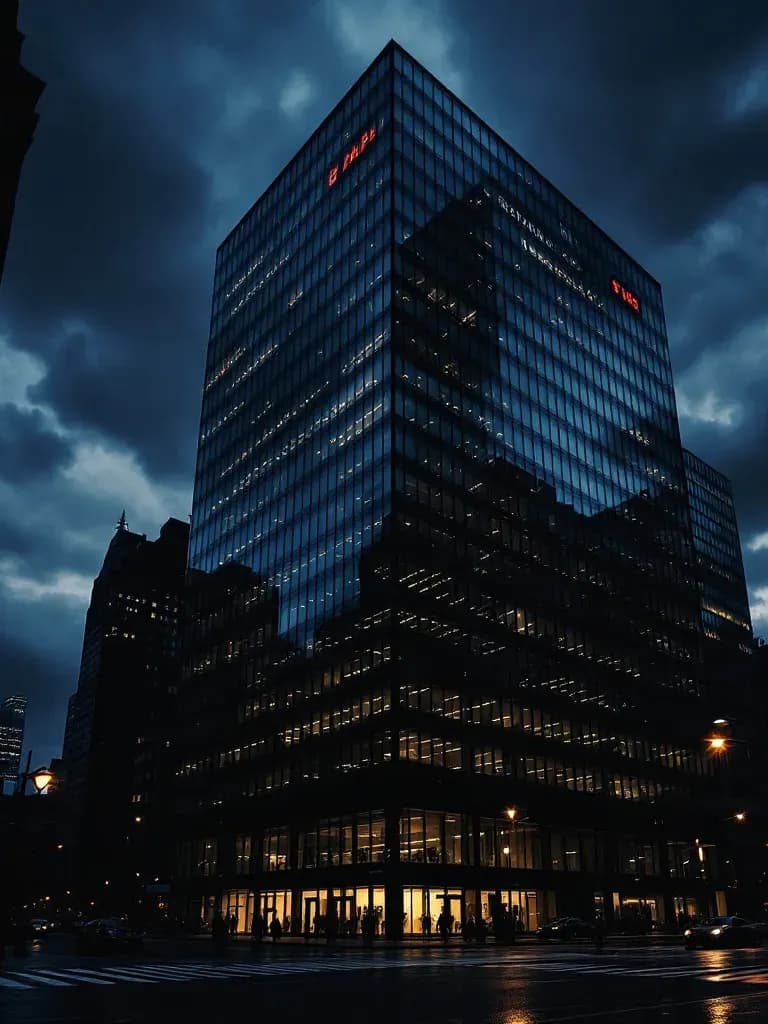
Lehman Brothers: The Bankruptcy That Shattered the World
How a 160-year-old investment bank's collapse on September 15, 2008, triggered the global financial crisis
Published June 6, 2025
Quick Facts
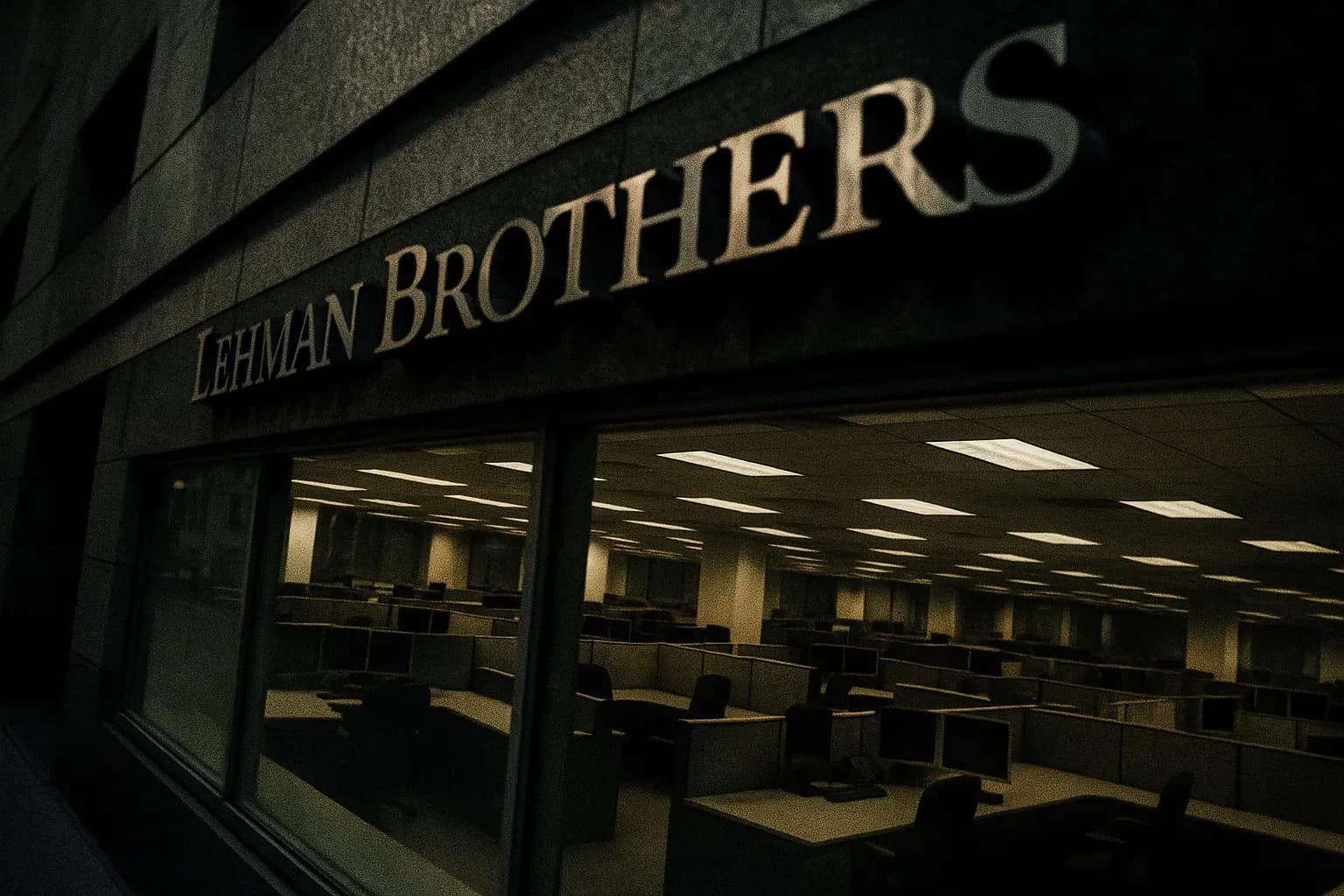
On September 15, 2008, Lehman Brothers—a powerhouse of American finance for 158 years—ceased to exist as an independent entity. The firm's Chapter 11 filing represented the largest bankruptcy in U.S. history, a moment that would reverberate across every corner of the global economy.
The numbers alone tell a story of catastrophic overreach. Lehman carried $639 billion in assets and $613 billion in liabilities on its books. But size wasn't the problem—leverage was. The firm had positioned itself with real estate holdings 30 times greater than its capital. A mere 3 to 5 percent decline in real estate values could have wiped out all shareholder equity. When values fell further than that, there was nowhere left to hide.
The path to collapse began years earlier with aggressive bets on subprime mortgages, mortgage-backed securities, and collateralized debt obligations—the toxic financial instruments at the heart of the housing bubble. As the market unraveled, Lehman found itself sitting on increasingly worthless assets. By June 9, 2008, the firm reported its first quarterly loss in 14 years: $2.8 billion. The hemorrhaging had begun in earnest.
Timeline
Lehman Brothers files for bankruptcy
On September 15, 2008, Lehman Brothers files for bankruptcy at the US bankruptcy court in New York under Chapter 11 protection – the largest bankruptcy in American history at the time.
Global financial crisis accelerates sharply
The collapse on September 15, 2008 is described as a decisive trigger for the acute phase of the global financial crisis, hitting markets, banks and households worldwide.
Bankruptcy estate's creditor payouts conclude
On September 28, 2022, the bankruptcy estate's creditor payouts are formally concluded – nearly 14 years after the original bankruptcy filing – reflecting the case's extraordinary complexity and scope.
In the final days before collapse, desperation set in. Federal Reserve officials summoned competing banks to explore a rescue financing arrangement. It failed. Unlike Bear Stearns months earlier—which had received a Fed-backed rescue—or AIG, which would receive an $85 billion government bailout just one day after Lehman's filing, there would be no last-minute lifeline for Lehman Brothers. Manhattan bankruptcy judge James Peck approved the filing after a seven-hour hearing, calling it the most momentous case he had ever seen.
The immediate aftermath was brutal. On the day of the announcement, the Dow Jones Industrial Average plummeted 4.5 percent—the largest single-day drop since September 11, 2001—losing 500 points. Lehman's stock, once a blue-chip holding, lost 93 percent of its market value. Nearly 25,000 employees worldwide lost their jobs in an instant. But the human and financial toll extended far beyond those pink slips.
The bankruptcy triggered a full-scale financial panic. Money market fund withdrawals accelerated. Banks stopped lending to each other. The interbank lending market, essential to modern finance, seized up. Credit markets froze. What had been a housing crisis became a banking crisis, and then a systemic threat to the entire global economy.
Governments scrambled to respond. The U.S. Treasury rushed forward the Troubled Asset Relief Program (TARP)—a $700 billion lifeline designed to stabilize the financial system. Other nations launched their own rescue packages. The damage, however, was already spreading. Global stock markets lost roughly $10 trillion in value. The Great Recession had begun in earnest, and it would take years for economies to recover.
The Lehman collapse exposed regulatory failures that prompted lasting change. The 2010 Dodd-Frank Act imposed new restrictions on derivatives, interest-only loans, and balloon payments—attempts to prevent similar leverage buildups. Banking stress tests became routine. Capital requirements were tightened.
Yet the core lesson remained uncomfortable: a single firm, however large, could still bring down the world's financial system. Lehman Brothers' failure wasn't just a corporate bankruptcy. It was the moment when the global economy lost its footing.
Sources:
https://en.wikipedia.org/wiki/Bankruptcy_of_Lehman_Brothers
https://ccp-global.org/the-lehman-case
https://www.library.hbs.edu/special-collections-and-archives/exhibits/lehman/global-impact-of-the-collapse
https://www.economicsobservatory.com/why-did-lehman-brothers-fail
https://sites.lsa.umich.edu/mje/2024/01/29/unraveling-the-lehman-brothers-catalyst-of-the-2008-financial-crisis-and-global-ramifications/
Media coverage
TV series
- Eat the Rich: The GameStop Saga(2026)
Ask about this case
Answers from KrimiNyt's coverage onlyFollow this case
Get an email when a new documentary, podcast or book about Lehman Brothers: The Bankruptcy That Shattered the World appears, or when a verdict is reached.