Jolly Jane: The Hospital Angel Who Poisoned Her Patients
How a beloved Massachusetts nurse became one of America's most prolific serial killers
Published June 6, 2025
Classification:
Quick Facts
In the closing years of the 19th century, Jane Toppan earned a reputation as one of Massachusetts's finest private nurses. Warm, capable, and utterly devoted to her patients, 'Jolly Jane' became the most sought-after caregiver in Cambridge and Lowell. What her employers never knew was that she was systematically poisoning them.
Born Honora Kelley on March 31, 1854, to Irish immigrant parents, Toppan's early life gave little hint of the horrors to come. Her mother died of consumption when she was young. Around age six, she was indentured to the Toppan family of Lowell, where she took her adopted surname and worked as a household servant until her late teens. She attended local schools and seemed destined for an ordinary working life.
In 1883, Toppan entered nursing training at Cambridge Hospital, where colleagues immediately warmed to her cheerful demeanor. The nickname 'Jolly Jane' stuck. In 1889, she was recommended to Massachusetts General Hospital—one of the nation's most prestigious medical institutions. But her time there ended abruptly in 1890 when she was fired, officially for leaving a ward without permission, though she had passed her exams. Her dismissal hinted at a darker reality: she was recklessly administering opiates to patients and mistreating staff.
Timeline
First known killing takes place
According to her own confession, Jane Toppan begins a series of poisonings in Massachusetts. The exact timing within 1895 is not verified.
Jane Toppan arrested in Amherst, New Hampshire
Toppan is arrested on October 29, 1901, in Amherst, New Hampshire, in connection with the investigation into Mary Gibbs' death.
Criminal period comes to an end
The known killing spree, spanning from 1895 to 1901, is brought to an end by Toppan's arrest that same year.
Verdict handed down at Barnstable County Courthouse
On June 23, 1902, Jane Toppan is found not guilty by reason of insanity and is committed for life to Taunton Insane Hospital.
Jane Toppan dies while committed
Toppan dies in 1938, still committed to Taunton Insane Hospital, almost 37 years after her arrest. The exact date is not verified.
Undeterred, Toppan returned to Cambridge Hospital in a brief supervisory role before being dismissed again for dangerous opiate administration. By 1891, she reinvented herself as a private duty nurse—a role that offered far less oversight. Despite occasional complaints about theft, she quickly became regarded as the finest nurse in the region. Patients' families competed for her services.
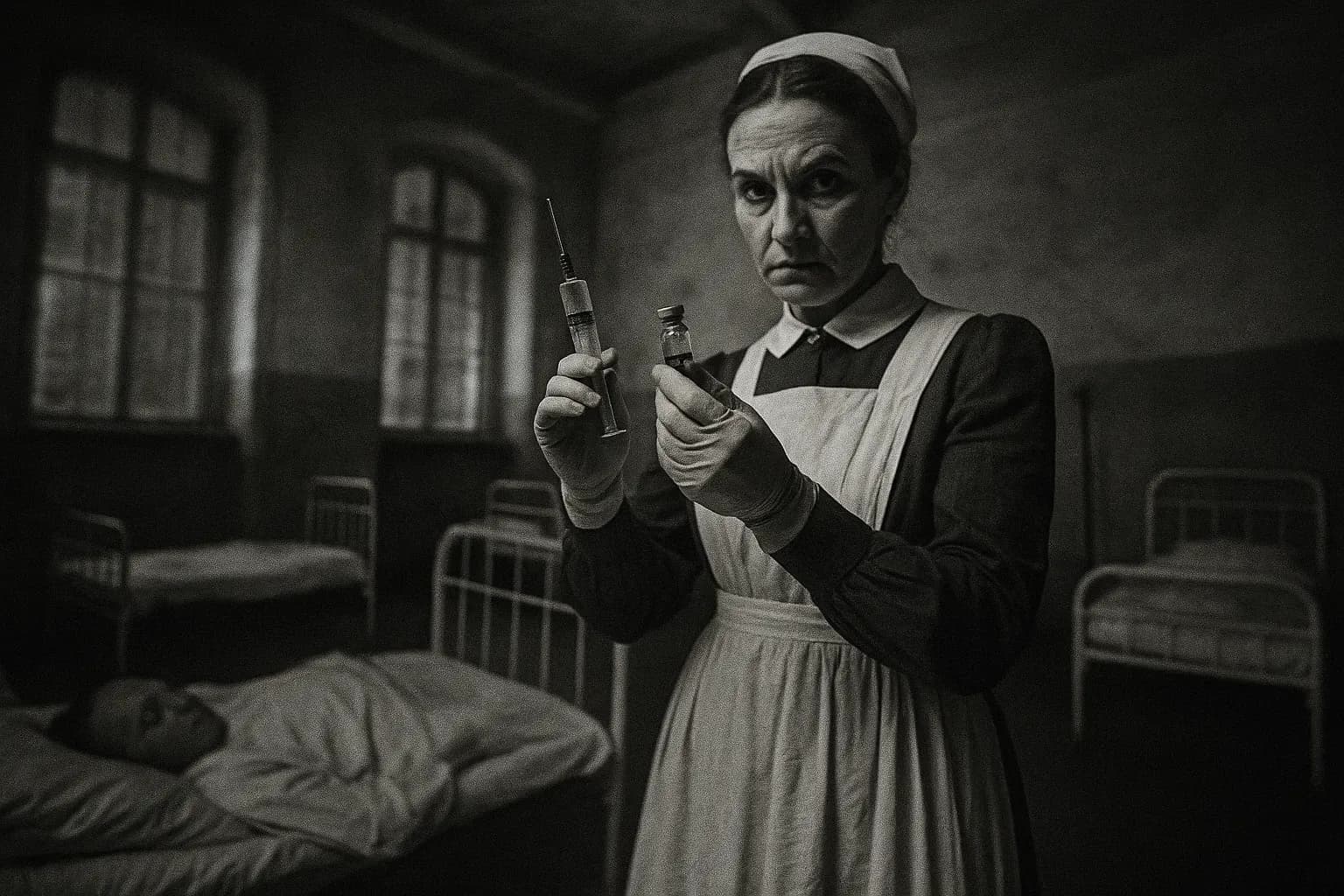
What made Toppan so valuable to her employers also made her lethal. As a live-in private nurse, she had complete access to vulnerable patients and no institutional oversight. She began experimenting with poisons—primarily opium and strychnine—on the elderly and infirm who welcomed her care. She would falsify medical records to justify prolonged stays, stage 'miraculous recoveries' from illnesses she had induced, and sometimes crawl into bed with dying patients to witness their final moments.
The killing spree lasted at least six years. In 1895, she poisoned her landlord Israel Dunham and his wife. In 1899, she used strychnine to kill Elizabeth Brigham, her own foster sister. Throughout the late 1890s, other victims fell: elderly patients, family members, anyone who became the focus of her twisted attention.
The end came in the summer of 1901. Toppan had moved into the home of Alden Davis, an elderly widower, ostensibly to care for him. Over the following weeks, she systematically poisoned Davis, his sister Edna, and his daughters Mattie, Minnie, and Genevieve. The deaths were initially attributed to natural causes, but a daughter's husband grew suspicious and alerted authorities. Toxicology tests confirmed strychnine poisoning.
Arrested in 1901, Toppan confessed to 31 murders, though investigators suspected the true number might exceed 100. She was convicted of twelve murders in Massachusetts between 1895 and 1901. Declared insane and deemed unfit for execution, she was committed to the Taunton State Hospital, where she remained until her death on August 17, 1938, at age 84.
Jane Toppan represents a chilling paradox: the trusted caregiver as predator. Her case fundamentally changed how hospitals managed nursing staff and patient safety, establishing new oversight protocols that remain standard today.
Sources: https://en.wikipedia.org/wiki/Jane_Toppan https://thewestendmuseum.org/history/era/immigrant-neighborhood/jolly-jane-toppan-the-mgh-nurse-turned-mass-murderer/ https://www.alcatrazeast.com/crime-library/serial-killers/jane-toppan/ https://maamodt.asp.radford.edu/Psyc%20405/serial_killers/Toppan,%20Jane%20-%202005.pdf https://www.lowellhistoricalsociety.org/lowells-ties-to-jolly-jane-massachusetts-female-serial-killer/
Ask about this case
Answers from KrimiNyt's coverage onlyFollow this case
Get an email when a new documentary, podcast or book about Jolly Jane: The Hospital Angel Who Poisoned Her Patients appears, or when a verdict is reached.