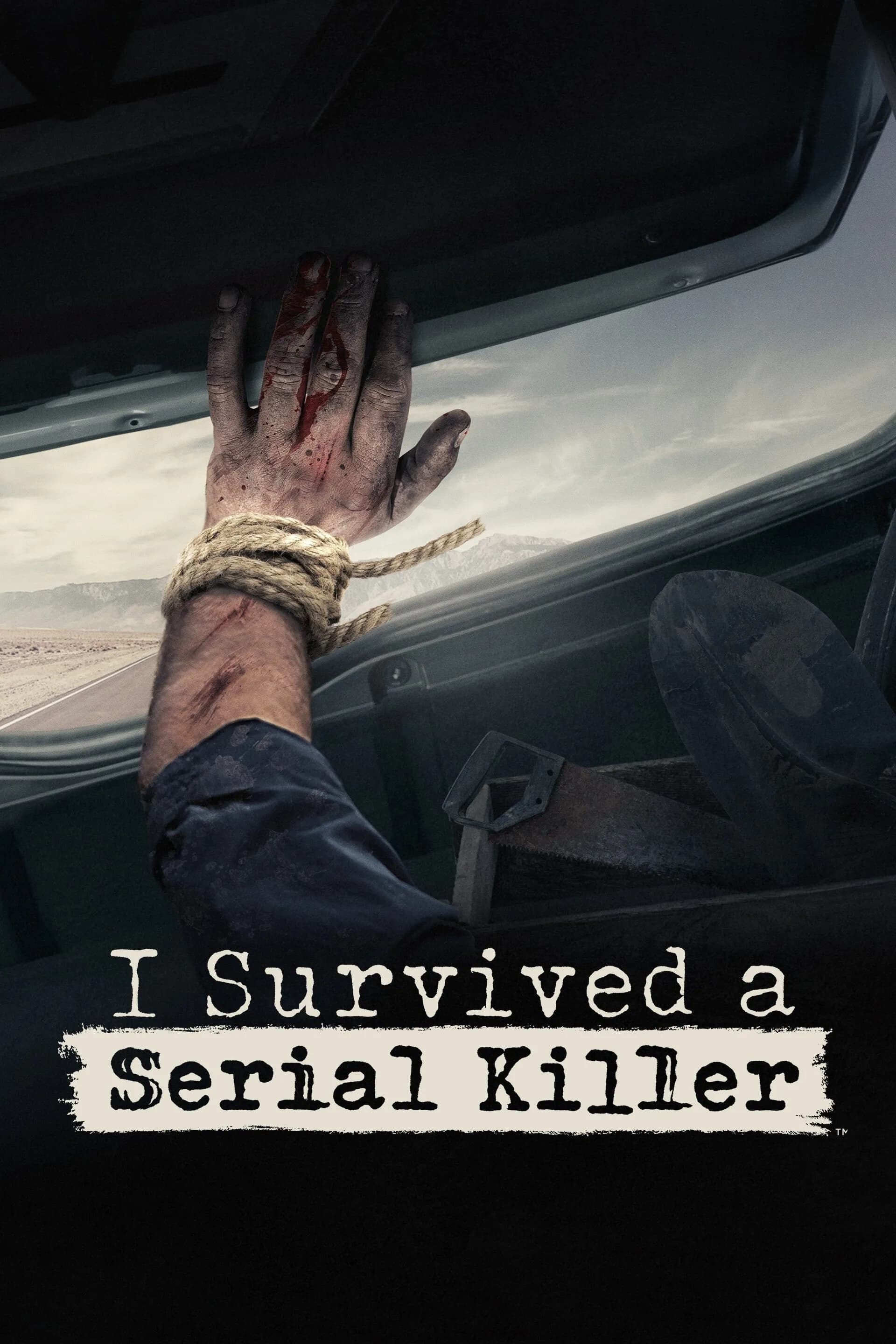
I Survived a Serial Killer
A&E, 2021 — Survivors recount face-to-face encounters with America's most dangerous serial killers
Quick facts
What Is the Series About?
I Survived a Serial Killer is an A&E true-crime documentary series that places survivors of serial killers at the center of the narrative. Rather than focusing solely on the perpetrators, the show gives voice to the men and women who came face-to-face with some of America's most dangerous killers — and lived to tell the story. Premiering on August 18, 2021, the series spans 16 episodes and draws on first-person testimony, archival footage, and expert analysis to reconstruct each harrowing encounter.
The premise is deceptively simple but emotionally powerful: let the survivors speak. Each episode or story arc follows a different killer and a different victim who escaped — by luck, by cunning, or by sheer determination. The result is a series that sits at the intersection of true-crime procedural and human-interest storytelling, earning an IMDb rating of 7.6/10 from viewers who responded strongly to its survivor-centered approach.
The Cases
The series does not limit itself to a single case. A&E structured I Survived a Serial Killer as an anthology, with each narrative block dedicated to a specific killer and the survivor or survivors who escaped them. Four killers are confirmed by A&E's own series description as featured subjects.
Angel Resendiz — The Railway Killer
Angel Maturino Resendiz earned his grim nickname by travelling across the United States via freight trains, attacking victims in homes near railway lines. Authorities linked him to at least nine murders across Texas, Kentucky, Illinois, and Georgia between 1997 and 1999. He turned himself in at the U.S.-Mexico border on June 1, 1999, after his sister negotiated his surrender with Texas Ranger Sergeant Drew Carter. Resendiz was convicted of capital murder in Texas and executed by lethal injection on June 27, 2006.
David Parker Ray — The Toy Box Killer
David Parker Ray operated a custom-built, soundproofed torture trailer near Elephant Butte, New Mexico, which he called his "toy box." Investigators believe he abducted, tortured, and may have killed dozens of women over two decades, though only a handful of murders could be proven. He was arrested in March 1999 after a survivor, Cynthia Vigil, escaped and flagged down help. Ray was convicted and sentenced to 224 years in prison. He died of a heart attack in custody on May 28, 2002, before serving a meaningful portion of his sentence. The true death toll of his crimes remains unknown.
Richard Beasley — The Craigslist Killer
Ohio's Richard Beasley exploited the anonymity of the early internet age by posting fraudulent farm-job listings on Craigslist, luring unemployed men to remote locations in Noble County, Ohio, where he and a teenage accomplice robbed and shot them. At least three men were murdered in 2011. A fourth victim survived by escaping into the woods despite being shot. Beasley was convicted in 2013 and sentenced to death. As of the series' release, he remained on death row in Ohio.
Andrew Urdiales
Former U.S. Marine Andrew Urdiales was convicted of murdering at least eight women across Illinois and California between 1986 and 1996. Victims were primarily sex workers or women encountered in bars and clubs. Urdiales was sentenced to death in California in 2018 — but died by suicide on death row that same year, denying both the justice system and his victims' families the conclusion of an execution.
Production
The series is produced for A&E and is also available on Prime Video, reflecting A&E Networks' broader distribution strategy for its true-crime programming. The showrunners and specific director credits have not been confirmed in publicly available production documentation, which is not unusual for episodic true-crime television produced by a major cable network. The series relies heavily on first-person survivor interviews, which were presumably conducted with considerable editorial care given the trauma-sensitive nature of the material. Reenactments, crime scene photography, and law enforcement testimony supplement the survivor accounts to provide factual grounding and narrative structure across the 16-episode run.
The choice to foreground survivors rather than killers was a deliberate editorial decision that distinguishes the series from a crowded true-crime field that has frequently been criticized for glamorizing perpetrators at the expense of victims and those who escaped.
Reception
I Survived a Serial Killer holds a 7.6/10 rating on IMDb, based on viewer ratings collected since its 2021 premiere. That score places it comfortably within the upper range of true-crime documentary series on the platform. Audience response has been notably positive regarding the series' decision to center survivor testimony, with many reviewers praising the emotional honesty of the accounts presented.
The Irish Film Critic noted that the series "offers a glimmer of hope under the most ominous of circumstances" — a phrase that captures the tonal balance the series attempts to strike between the darkness of serial violence and the resilience of those who survived it. Critics have generally applauded the format as a meaningful corrective to the perpetrator-obsessed strain of true-crime content that dominates streaming platforms.
No major controversies or legal challenges to the series have been documented in available sources since its premiere.
The Cases Today
Of the four killers featured, none remain alive and incarcerated. Angel Resendiz was executed in 2006. David Parker Ray died in custody in 2002. Andrew Urdiales died by suicide on death row in 2018. Richard Beasley remains on death row in Ohio as of the time of writing, though no execution date has been confirmed in publicly available records since the series aired.
For the survivors who appeared in the series, the act of public testimony is itself a significant milestone. True-crime advocacy groups have increasingly emphasized the therapeutic and social value of survivor-centered storytelling, and I Survived a Serial Killer sits within that broader cultural shift — one that prioritizes the voices of those who endured over those who perpetrated.