Bloodline Detectives
Tubi / Roku Channel / Plex, 2020 — cold cases cracked by genetic genealogy, hosted by Nancy Grace
Quick facts
What Is the Series About?
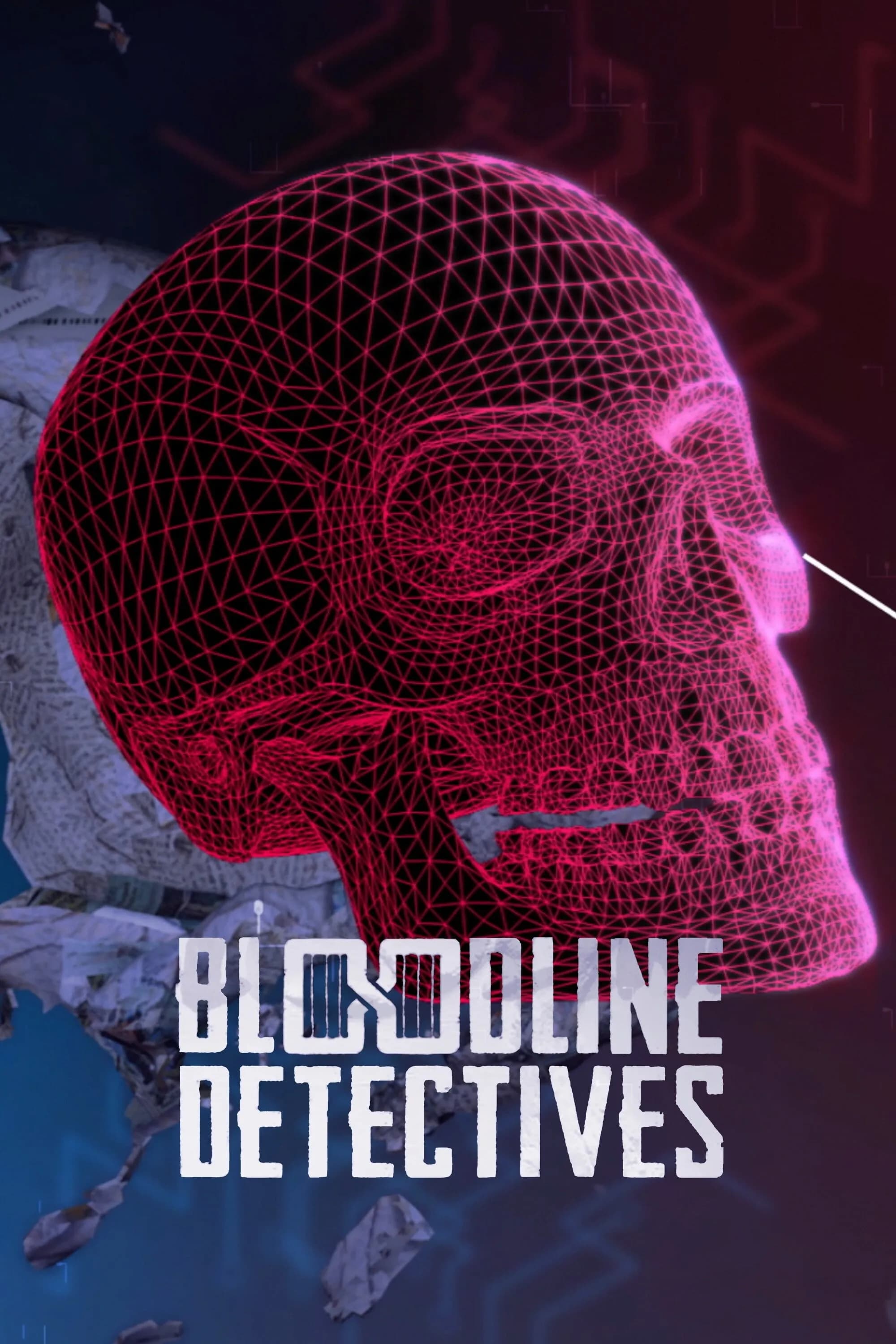
*Bloodline Detectives* is a true crime documentary series hosted by Nancy Grace — former prosecutor and prominent legal analyst — that examines some of the most stubborn unsolved cold cases in American history. First released on September 30, 2020, and available to stream free on Tubi, The Roku Channel, and Plex, the series is built around a single transformative investigative tool: investigative genetic genealogy. Rather than following one crime, the show functions as an anthology, devoting each episode (running approximately 41–45 minutes) to a distinct victim, a distinct killer, and a distinct community left waiting for justice — sometimes for more than three decades.
The series' central thesis is deceptively simple: a criminal always leaves behind a bloodline. Even when a suspect has no DNA profile in law enforcement databases, their distant relatives may. By uploading crime scene DNA to public genealogy databases and painstakingly constructing family trees, modern investigators can triangulate toward an unknown perpetrator with remarkable precision. Bloodline Detectives translates that often highly technical process into accessible, emotionally grounded television.
---
The Cases
Melissa Lee — Bothell, Washington (1993 / Solved 2020)
In April 1993, fifteen-year-old Melissa Lee vanished from her home in Bothell, Washington. What followed was nearly three decades of dead ends. The breakthrough came in April 2020, when forensic investigators matched DNA recovered from a cigarette butt to DNA found on the victim's shorts. That cigarette butt had been dropped by Alan Dean, who was subsequently arrested and confirmed as the killer. A preview of the case is available on YouTube, offering a glimpse of how the episode reconstructs the long road from 1993 to Dean's identification.
Krista Martin — Wichita, Kansas (1989 / Solved 2020)
In 1989, Krista Martin, age 20, was murdered — and raped — by an intruder in Wichita, Kansas. For 34 years, the case yielded no named suspect. Investigators ultimately turned to investigative genetic genealogy, building a family tree from old crime scene DNA until the branches converged on Paul Hart, who was confirmed as the perpetrator through DNA evidence from relatives. The Krista Martin episode stands as one of the series' most striking demonstrations of how genealogical detective work can succeed where conventional methods failed entirely.
Sarah Yarborough — 1991
Sixteen-year-old Sarah Yarborough was murdered outside her school in 1991. Her case is featured in Season 6, Episode 4, subtitled "A Forensic Gamechanger." The episode is described as "heartbreaking" by those who have watched it, and it illustrates how the same genealogical toolkit applied to the Lee and Martin cases was deployed to bring resolution to yet another family that had waited for answers for the better part of thirty years.
Christy Mirack
The series also dedicates an episode — titled "Ice Cold Murder" — to the case of Christy Mirack, whose killer was traced using DNA evidence. While fewer details from this episode appear in available synopses, it reinforces the anthology's consistent theme: no cold case is truly cold when a biological family tree exists somewhere in a database.
---
How Genetic Genealogy Works in These Investigations
The investigative method at the heart of every Bloodline Detectives episode follows a recognizable structure. Detectives begin with unidentified DNA recovered from an old crime scene. That DNA profile is uploaded to a public genealogy database — such as GEDmatch — where it may match partial profiles belonging to distant cousins or other relatives of the unknown perpetrator. Genealogists then build outward family trees from those matches, narrowing the field of candidates by cross-referencing age, geography, and physical characteristics. Once a likely suspect is identified, investigators obtain a discreet DNA sample — from a discarded item like a cigarette butt, as in the Melissa Lee case — to confirm the match before making an arrest. The series walks viewers through each step, giving families, investigators, and forensic scientists the opportunity to narrate the process in their own words.
---
Production
The series is hosted by Nancy Grace, whose background as a felony prosecutor and victims' rights advocate makes her a natural fit for material centered on justice long denied. No single director is credited prominently in available sources. Each episode runs approximately 41 to 45 minutes and combines archival footage, crime scene imagery, interviews with detectives and family members, and forensic explainers. The show had grown to at least six seasons by 2025, demonstrating a sustained appetite from audiences for this type of forensic-focused storytelling. A full playlist of episodes can be explored here.
The series is also available through Apple TV, expanding its reach beyond its core free-streaming home.
---
Reception
Bloodline Detectives holds an IMDB rating of 6.5/10 based on 161 ratings at the time of writing — a modest score that nonetheless reflects a dedicated viewer base. Audience reviews have described the series as a "great public service," praising it for spotlighting both the real suffering of victims' families and the painstaking work of the investigators who refused to close these cases. Viewers have noted that the show's strength lies not just in the "whodunit" resolution but in its careful attention to what it costs — in years, in grief, in professional obsession — to get there.
No significant controversies have been reported in connection with the series. The ethical questions surrounding public genealogy databases and investigative genetic genealogy more broadly — debates that have played out in academic, legal, and journalistic forums — are acknowledged implicitly by the cases the show features, though the series itself does not adopt a critical stance toward the methodology.
---
The Cases Today
The cold cases featured in Bloodline Detectives were, by definition, resolved before or around the time of their respective episodes — that is precisely what makes them suitable subjects. Alan Dean's arrest in the Melissa Lee case and Paul Hart's identification in the Krista Martin case both occurred in 2020, the same year the series launched. As of this writing, no new major legal developments in these specific cases have been reported beyond what is documented in the series itself.
The broader story, however, continues to evolve. Investigative genetic genealogy has become an increasingly mainstream forensic tool since the high-profile identification of the Golden State Killer in 2018, and law enforcement agencies across the United States have adopted variations of the methodology. Bloodline Detectives serves as a running record of that quiet revolution — one episode, one family, one solved cold case at a time.