Video X: The Dwayne & Darla-Jean Story
Apple TV Store, 2007 — a found-footage mockumentary about fictional Kentucky killers
Quick facts
What Is the Series About?
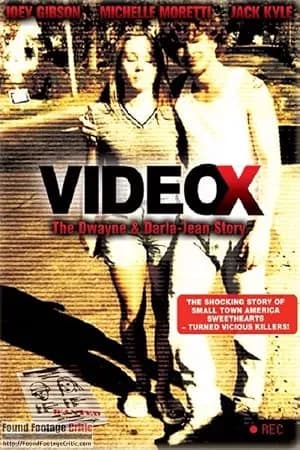
*Video X: The Dwayne & Darla-Jean Story* is a 2007 found-footage mockumentary directed by James D. Mortellaro and available on the Apple TV Store. Its marketing positions it as a shocking piece of true-crime journalism: an investigative crew, we are told, tracks down a suppressed videotape — dubbed "Video X" — that allegedly documents a murderous multi-state crime spree carried out by a couple from Kentucky named Dwayne Foote and Darla-Jean Stanton. The promotional framing invokes the mythology of Bonnie and Clyde, promises "actual home video footage," and claims authorities are actively concealing the tape's existence.
However, the evidence overwhelmingly indicates that no such case exists. There are no verified police records, indictments, trial transcripts, or contemporaneous news coverage of anyone named Dwayne Foote or Darla-Jean Stanton committing the crimes described. The film is, by all credible assessments, a mockumentary — a deliberately constructed fiction designed to be mistaken for a genuine true-crime documentary.
The (Fictional) Case
According to the film's own synopsis and marketing materials, Dwayne Foote and Darla-Jean Stanton were a Kentucky-based couple responsible for 11 murders and 17 armed robberies across six states, primarily in the South. The narrative device driving the film is a missing videotape — "Video X" — which the investigative crew believes captures the crimes firsthand and which, the story insists, law enforcement has suppressed.
As documented on IMDb (tt1016256), the plot follows filmmakers attempting to locate this tape, presenting talking-head interviews and grainy footage in a style closely mimicking real true-crime journalism. The effect is intentional: the production leans heavily into found-footage aesthetics — shaky cameras, degraded video quality, earnest on-screen titles — to blur the audience's sense of what is real.
Yet when viewers and researchers attempt to corroborate the central claims, they find nothing. No Kentucky crime spree matching these details appears in public court records. No victims are named with verifiable identities. No law enforcement agency is on record investigating or prosecuting Foote or Stanton. A Reddit thread examining the film concluded that "the premise appears fabricated," noting the structural hallmarks of a mockumentary rather than a factual case study. The absence of any corroborating external record is, at this point, the most telling fact about the film.
For editorial clarity, truecrime.news classifies the "perpetrators," "victims," and "crimes" depicted in this film as fictional constructs, not documented real-world events.
Production
The film was directed by James D. Mortellaro, as confirmed by its Tubi listing and its Rotten Tomatoes page. Mortellaro also appears connected to the companion project Murder in the Heartland: The Search for Video X, which review sources describe as part of the same creative universe — a pair of interlocking mockumentaries designed to feel like suppressed investigative journalism.
The runtime is listed as 1 hour 28 minutes on the Apple TV Store and 2 hours 30 minutes on IMDb, a discrepancy that may reflect different cuts or a version that includes supplementary material. The film appears to be a single feature, not an episodic series, based on all available catalog pages.
The production values are deliberately low-fi. The found-footage aesthetic — grainy video, unstable camera work, ambient audio — is a creative choice designed to authenticate the fiction. This technique has precedents in the genre (most famously The Blair Witch Project, 1999), but Video X applies it specifically to the true-crime documentary format, mimicking the visual grammar of real investigative films.
Reception
Public reception to Video X: The Dwayne & Darla-Jean Story has been shaped almost entirely by the central question: is this real or fake? The film's deliberate ambiguity generates the bulk of its discussion, with viewers divided between those who accept the premise at face value and those who quickly identify the absence of any verifiable case details.
Online forums reflect this split. Some commenters insist the events are based on true incidents; others, after conducting basic searches, conclude the narrative is wholly invented. The LocalNow listing and other streaming catalog pages reproduce the film's marketing language without editorial qualification, which has contributed to ongoing viewer confusion.
No verified IMDb rating score was retrievable from the supplied research data, though the film carries the IMDb title ID tt1016256. Critical reviews in formal publications appear minimal, consistent with the film's limited distribution footprint.
The principal controversy is ethical rather than aesthetic: the film presents fictional content as if it were a suppressed true-crime document, without clear disclaimers. Critics of the mockumentary genre have long argued that this approach — particularly when it involves invented murders and invented victims — risks causing distress to real people who may share names with characters, and misleads audiences who trust the documentary format as a marker of factual content.
The Case Today
There is no "case today" in the conventional true-crime sense, because no verified criminal case underpins the film. Dwayne Foote and Darla-Jean Stanton do not appear in any accessible public court record, law enforcement database summary, or contemporaneous news archive as real individuals convicted of the crimes described.
What does persist is the film itself, available for digital purchase or rental through the Apple TV Store and other platforms, continuing to generate occasional viewer debate about its authenticity. In the broader context of true-crime media, Video X serves as a useful case study in how the found-footage mockumentary format can exploit audience trust in documentary conventions — and why editorial transparency about a film's fictional nature matters, both for viewers and for the integrity of genuine investigative journalism.