The House of Suh
Apple TV Store, 2010 — the sibling murder conspiracy behind the 1993 killing of Robert O'Dubaine in Chicago
Quick facts
What Is The House of Suh?
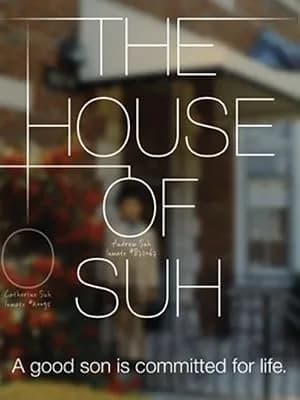
The House of Suh is a feature-length true-crime documentary directed by Iris K. Shim and released in 2010, available through the Apple TV Store. The film centers on one of Chicago's most chilling sibling conspiracy cases: the 1993 murder of Robert O'Dubaine, a nightclub owner shot dead in the garage of his own home at the alleged direction of his fiancée, Catherine Suh, and by the hand of her teenage brother, Andrew Suh. Beyond reconstructing the crime itself, Shim's documentary reaches further back into the family's past, examining the earlier unsolved 1987 killing of the siblings' mother, Elizabeth Suh, to build a portrait of a household shaped by trauma, secrecy, and deadly loyalty.
Despite being described by some viewers as one of Chicago's most famous murder cases, the story remained relatively obscure for years — an obscurity the documentary directly challenges.
---
The Case
On the night of September 25, 1993, Robert O'Dubaine — a 31-year-old nightclub owner and the fiancé of Catherine Suh — was shot and killed in the garage of the Bucktown, Chicago home he shared with Catherine. He was 31 years old. Initial police suspicion pointed toward a random carjacking gone wrong, a plausible explanation in a neighborhood that had seen its share of street crime. But as investigators dug deeper into O'Dubaine's relationship with Catherine and the role of her younger brother Andrew, the case transformed into something far more calculated.
Andrew Suh was 19 years old at the time of the shooting — a Korean-American college student from a first-generation immigrant family. Prosecutors argued that Catherine, Robert's own fiancée, had orchestrated the killing and directed her younger brother to carry it out. The motive, as explored in the documentary, was rooted in a complex and deeply dysfunctional sibling bond, one that prosecutors said Catherine exploited to use Andrew as a weapon.
According to sources cited in coverage by Character Media, Andrew initially refused to testify — apparently in an effort to shield his sister from prosecution. The investigation also revisited the unsolved 1987 death of Elizabeth Suh, the siblings' mother, though no charges in that case are confirmed in available sources.
Verdicts and sentences:
- Andrew Suh was convicted of first-degree murder and sentenced to 100 years in prison, later reported as reduced to 80 years. He is incarcerated in Illinois and is reported to be eligible for parole in 2034 or 2035.
- Catherine Suh was convicted of conspiracy to commit murder and sentenced to life without parole. At least one source indicates she fled before trial and was convicted in absentia before ultimately surrendering to Illinois authorities. She is currently serving her life sentence in Illinois.
---
Production
Director Iris K. Shim brought an unusually personal approach to the material. According to the Chicago Reader, Shim had conducted prison visits with Andrew Suh prior to making the film — a level of access that lends the documentary much of its emotional and psychological depth. Rather than treating the case purely as a crime procedural, Shim frames it within the broader context of the Korean-American immigrant experience: the pressures of assimilation, the weight of family obligation, and the way those forces can curdle into something catastrophic.
The film is a feature-length documentary, not a multi-episode series, though it is catalogued as a discrete title within the Apple TV Store streaming ecosystem. It premiered in connection with 2010 festival screenings and received wider broadcast and streaming availability in 2011, including a screening at SFIAAFF 2011 reviewed by Hyphen Magazine.
Shim's approach gives considerable screen time to the question of culpability — not just legal guilt, but the moral architecture of a family in which one sibling could ask another to commit murder, and that sibling would comply.
---
Reception
The House of Suh holds an IMDb rating of 6.9/10 (IMDb title ID: tt1653696). Critical reception praised the documentary for being gripping and emotionally complex, with particular recognition for its intimate access to Andrew Suh and its refusal to reduce the story to a simple narrative of evil.
Slant Magazine noted a pointed irony in the case's cultural afterlife: the story had been dramatized in a later Anglo television movie that critics described as "whitewashed," stripping the Korean-American identity from the story and raising questions about how racialized true-crime cases are handled by mainstream media.
Audience reaction has been notably strong, particularly in online communities. A Reddit discussion thread described the case as "one of Chicago's most famous murder cases" that had been "whitewashed into obscurity" — a sentiment that underscores both the documentary's value as a corrective historical record and the ongoing conversation about representation in true crime.
Reviewers consistently highlight the documentary's strength in situating the crime within its cultural context: the experience of Korean-American immigrant families navigating identity, expectation, and belonging in 1990s Chicago. For viewers encountering the case for the first time, the film functions as both a crime documentary and a meditation on how family structures can become vectors for violence.
---
The Case Today
As of the most recent available reporting, both Andrew and Catherine Suh remain incarcerated in Illinois. Andrew Suh, whose sentence was reportedly reduced from 100 to 80 years, is projected to be eligible for parole around 2034 or 2035. Catherine Suh continues to serve her life without parole sentence.
The unsolved 1987 killing of their mother, Elizabeth Suh, remains an open question — one that the documentary raises but that has not, according to available sources, resulted in any charges or resolution.
The case has gained renewed attention in true-crime communities in the years since the documentary's release, with many viewers expressing surprise that a crime of this magnitude remained as little-known as it did for so long. The House of Suh stands as one of the few sustained examinations of the case from within the Korean-American community's perspective — and as a reminder that the stories true crime tells, and the stories it ignores, are never neutral choices.