Jonestown: Terror in the Jungle
Viaplay, 2018 — the story of Jim Jones and the 1978 Jonestown mass murder
Quick facts
What Is the Series About?
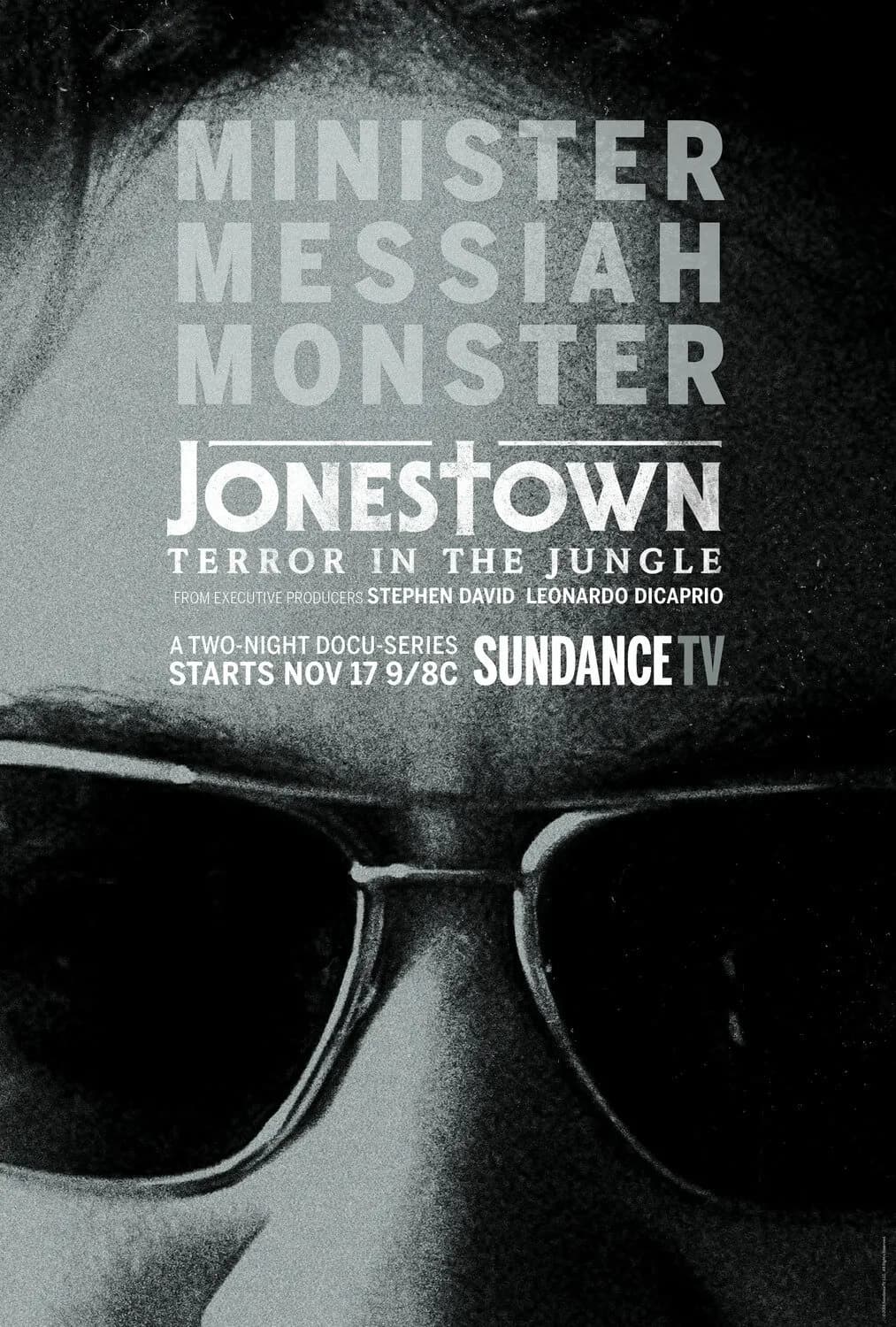
*Jonestown: Terror in the Jungle* is a four-part documentary series directed by Shan Nicholson and released in 2018 to mark the 40th anniversary of one of the deadliest single-day losses of American civilian life in the 20th century. The series examines how Jim Jones, a charismatic American preacher, built the Peoples Temple into a mass movement, relocated hundreds of followers to a remote settlement in north-western Guyana, and ultimately presided over the deaths of more than 900 men, women, and children on 18 November 1978. Available on Viaplay as well as SundanceTV, BBC Four, and Apple TV, the series draws on previously unreleased recordings, classified FBI and CIA documents, unpublished photographs, personal letters, and new testimony from survivors and members of Jones's own family.
The Case
The Jonestown massacre remains one of the most extensively documented and debated mass-death events in modern history. Jim Jones founded the Peoples Temple in the United States during the 1950s, presenting himself as a faith healer and social progressive who attracted followers across racial and economic lines. As scrutiny from journalists, relatives of members, and government officials intensified during the 1970s, Jones relocated the core of his congregation to a remote agricultural commune in Guyana that he called Jonestown.
On 18 November 1978, U.S. Congressman Leo Ryan arrived in Guyana to investigate reports of abuse and imprisonment within the settlement. After Ryan and his delegation — including journalists and concerned family members — attempted to fly home with a group of defectors, Peoples Temple gunmen attacked the party at the Port Kaituma airstrip, killing Ryan and four others. That same evening, back at Jonestown, Jones ordered his followers to consume a cyanide-laced fruit drink. According to the BBC, Jones described the act as "revolutionary suicide," carried out either voluntarily or by force.
The Guardian's reporting, informed by survivor testimony, draws a sharp distinction between the official "suicide" framing and what witnesses describe as mass murder: adults who refused were injected with poison, and children — more than 300 of them among the dead — were given the lethal mixture by adults in positions of authority. The total death toll across Jonestown, Georgetown, and Port Kaituma reached 918 people.
Jim Jones was found dead at Jonestown on 18 November 1978. He was never tried for any crime. The only individual criminally convicted in connection with the events was Larry Layton, a Peoples Temple member who opened fire on defectors at the Port Kaituma airstrip. Layton was convicted of conspiracy and aiding and abetting the murder of Congressman Ryan, as well as the attempted murder of U.S. diplomat Richard Dwyer. He was paroled in 2002.
Production
Director Shan Nicholson built the series around materials that had not previously been seen or heard by the public. As described by the BBC, these include unreleased recordings made inside Jonestown, previously classified FBI and CIA documents, unpublished photographs, and personal letters. Rotten Tomatoes similarly highlights the use of archival footage, secret government recordings, and new testimony from survivors and Jones's family members as central to the series' approach.
The four-episode format allowed Nicholson to trace the full arc of the story — from Jones's early ministry in the United States, through the construction of the Jonestown settlement, to the congressional investigation led by Leo Ryan, and finally to the events of 18 November 1978. The series premiered on SundanceTV on 17 November 2018, one day before the 40th anniversary of the massacre, before reaching further audiences through BBC Four and other platforms.
The DOC NYC festival also featured the series, underlining its reception within the serious documentary community rather than purely as genre true crime entertainment.
Reception
*Jonestown: Terror in the Jungle* holds an IMDb rating of 8.0/10, reflecting strong audience appreciation for the depth of its archival research and the weight of its survivor testimony. The series was reviewed in The Guardian upon its BBC Four broadcast in January 2020, where critics noted the power of hearing survivors reject the word "suicide" and insist on the word "murder" to describe what happened to their community.
A later Guardian piece, published in June 2024 in the context of renewed Jonestown documentary coverage, reinforced this point: many of those who lived through 18 November 1978 continue to resist the "mass suicide" framing that dominated early news coverage and has persisted in popular culture for decades. This terminological controversy — suicide versus murder — has become one of the defining critical and ethical questions surrounding any documentary treatment of Jonestown, and Nicholson's series engages with it directly through survivor voices.
BBC and Guardian coverage characterised the series as a serious, investigative retelling rather than sensationalized true crime, with the previously classified materials and firsthand testimony lending it a documentary weight that distinguishes it from earlier treatments of the subject.
The Case Today
Decades after the massacre, Jonestown continues to generate historical, legal, and cultural debate. The question of whether the deaths constitute suicide or murder remains unresolved in public discourse, even as survivor testimony and forensic evidence increasingly support the mass-murder interpretation. Larry Layton, the only person convicted in criminal proceedings related to the events, was paroled in 2002 and has since spoken publicly about his role and his years of reflection.
Jim Jones's legacy is scrutinized as a case study in cult dynamics, charismatic authority, and the manipulation of socially marginalized communities. Jonestown memorials, survivor organisations, and academic research continue to reconstruct the individual stories of the 918 people who died — an effort that Nicholson's documentary series contributes to by placing unreleased primary sources and survivor voices at the centre of the historical record.