Cult Massacre: One Day in Jonestown
Disney+ / Hulu, 2024 — the Peoples Temple mass murder-suicide in Guyana, 1978
What Is the Series About?
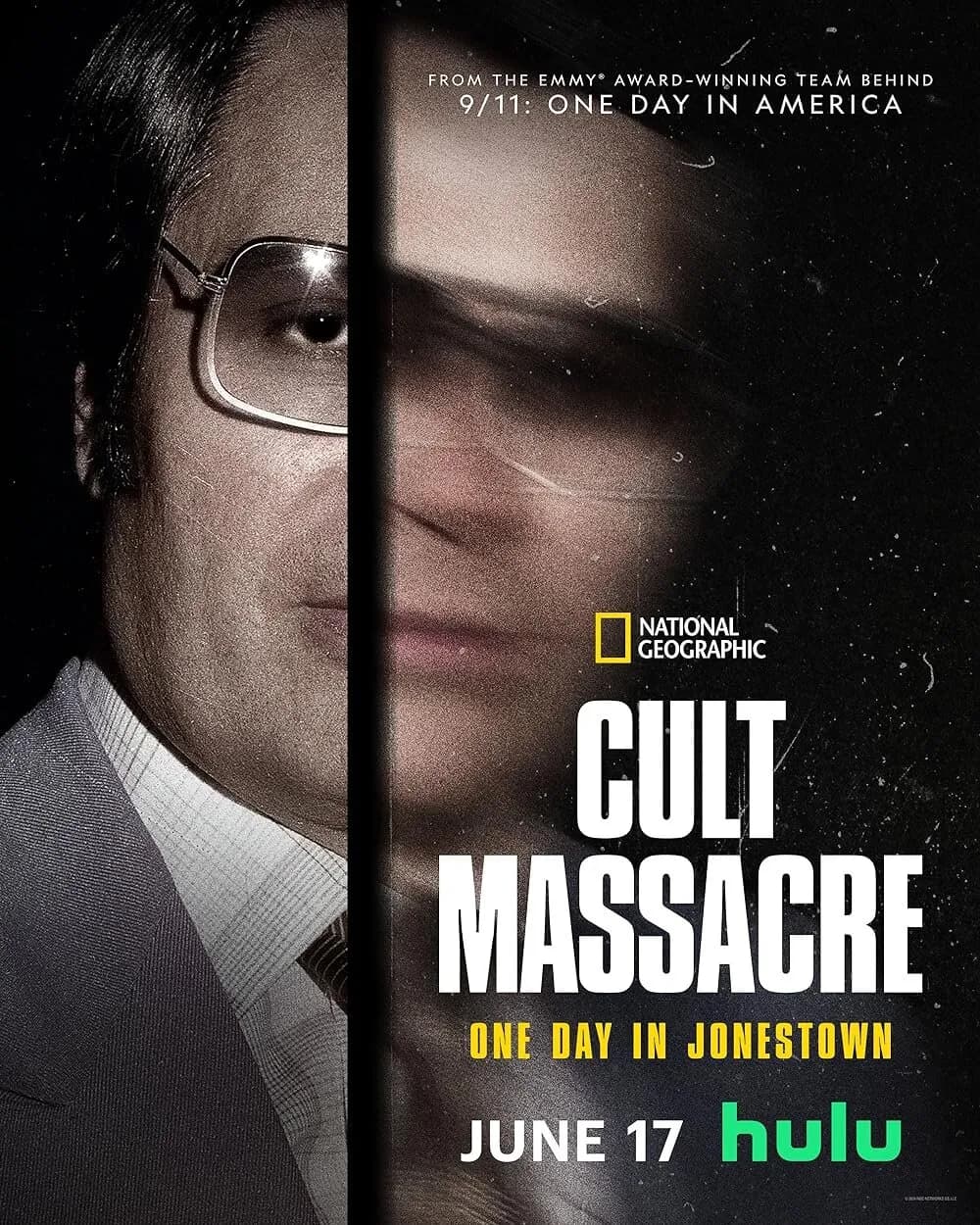
Cult Massacre: One Day in Jonestown is a three-part documentary series streaming on Disney+ and Hulu that covers one of the deadliest mass casualty events in modern American history: the Peoples Temple massacre in Jonestown, Guyana, on 18 November 1978. Directed by Marian Mohamed and produced by 72 Films for National Geographic, the series focuses on the final hours of the Jonestown community and the deaths of 918 people who either died by forced poisoning or were murdered outright under the orders of cult leader Jim Jones.
Rather than relying solely on archival news footage, the series foregrounds the testimonies of survivors and eyewitnesses, many of whom have rarely spoken publicly about what they experienced. The result is a ground-level account of how an idealistic religious and social movement collapsed into a single catastrophic day of mass death.
The Case
Jim Jones and the Peoples Temple
James Warren Jones was born on 13 May 1931 and founded the Peoples Temple of the Disciples of Christ, a religious movement that blended evangelical Christianity, faith healing, and left-wing social politics. The Peoples Temple attracted thousands of followers drawn by Jones's messages of racial equality and communal living. At its peak, the organisation had active congregations in Indianapolis, San Francisco, and Los Angeles.
By the mid-1970s, investigative journalists and former members were raising serious allegations of abuse, financial exploitation, and psychological manipulation inside the Temple. Facing mounting scrutiny, Jones moved the inner circle of his congregation to a remote agricultural settlement in northwestern Guyana that had been constructed by Temple members.
The Events of 18 November 1978
On 17-18 November 1978, U.S. Congressman Leo J. Ryan travelled to Jonestown with a delegation of journalists and concerned relatives to investigate conditions there. When a group of Temple members attempted to leave with Ryan's delegation, Jones ordered his security detail to intercept the group. At the Port Kaituma airstrip, gunmen opened fire, killing Congressman Ryan and four others — the only sitting U.S. congressman to be killed in the line of duty in American history.
Within hours, back at Jonestown, Jim Jones convened his community and ordered the administration of a cyanide-laced punch. Those who refused were forcibly injected. A total of 918 people died at Jonestown that day, the majority of them American citizens. Jim Jones was found dead of a gunshot wound to the head. No criminal proceedings were ever brought against him.
No Trial, No Conviction
Because Jones died on the same day as the massacre, he faced no criminal trial. The absence of any formal legal reckoning has made the Jonestown case distinctive in true-crime history: accountability was absorbed entirely by the event itself, leaving survivors and families without the closure a courtroom might have provided.
Production
Cult Massacre: One Day in Jonestown was produced by 72 Films for National Geographic and directed by Marian Mohamed. The series spans three episodes and draws heavily on rare archival recordings and footage from Jonestown itself, including the infamous death-tape audio, as well as new interviews with survivors who recount the final hours of the settlement in close, harrowing detail.
The production's decision to concentrate the narrative on a single day, rather than offering a broad biographical survey of Jim Jones's life, gives the series a tight, almost real-time urgency. This structural choice distinguishes it from earlier documentaries on the subject and places the human experience of those 918 victims at the centre of the story.
The series premiered on Hulu on 17 June 2024 in the United States and is available internationally through Disney+.
Reception
Cult Massacre: One Day in Jonestown holds an IMDb rating of 7.5/10, reflecting broadly positive audience engagement with the material. The series carries a TV-14 rating on Rotten Tomatoes.
Coverage from regional outlets noted that the docuseries offered Jonestown survivors a platform to detail the final hours of the community, with MLive reporting on survivor testimonies featured in the series. Viewer discussion online confirmed strong interest across all three episodes.
No significant production-specific controversies have been recorded in available coverage. The subject matter is, by its nature, profoundly sensitive: the series revisits the deaths of 918 people, including a large number of children, and presents audio and visual documentation of one of the most traumatic events in modern American history.
The Case Today
More than four decades after the events of 18 November 1978, Jonestown remains one of the defining episodes of twentieth-century American religious and social history. The site in Guyana has long since returned to jungle. Archives in the United States, including collections at San Diego State University, preserve testimony, documents, and recordings from the Peoples Temple.
Survivors of the Jonestown massacre continue to speak publicly about their experiences. For many, documentaries like Cult Massacre: One Day in Jonestown represent an opportunity not only to bear witness but to complicate the reductive narrative of Jonestown as simply the story of a madman. The 918 people who died were, in the majority, people who had sought community, social justice, and spiritual meaning — and were systematically trapped, isolated, and killed.
The broader question of institutional accountability — including the failure of U.S. government agencies to act on early warning signs about conditions inside the Peoples Temple — remains a subject of ongoing historical debate.