The Jonestown Massacre — Mass Murder–Suicide in Guyana
Jonestown and Port Kaituma, Guyana, November 1978 — solved as mass murder–suicide led by Jim Jones
Published June 2, 2026
Case Details
Quick Facts
Classification:
The Case
The Jonestown Massacre is a 1978 mass murder–suicide in which 909 members of the American religious movement Peoples Temple, including 304 children, died at a remote agricultural settlement in northwestern Guyana, while five more people — among them a sitting U.S. congressman — were shot dead at a nearby airstrip the same day. The event was orchestrated by Peoples Temple founder Jim Jones and remains one of the largest single-day losses of American civilian life prior to September 11, 2001.
The Crime
On November 18, 1978, U.S. Representative Leo Ryan of California was preparing to leave Guyana after a fact-finding visit to the Peoples Temple Agricultural Project, known as Jonestown. Ryan had traveled with journalists and relatives of Temple members amid mounting reports of abuse, coerced labor, and people being held against their will. As Ryan's party boarded planes at the Port Kaituma airstrip, armed Peoples Temple gunmen opened fire. Ryan and four others — including journalists and a defecting member — were killed, and several more were wounded.
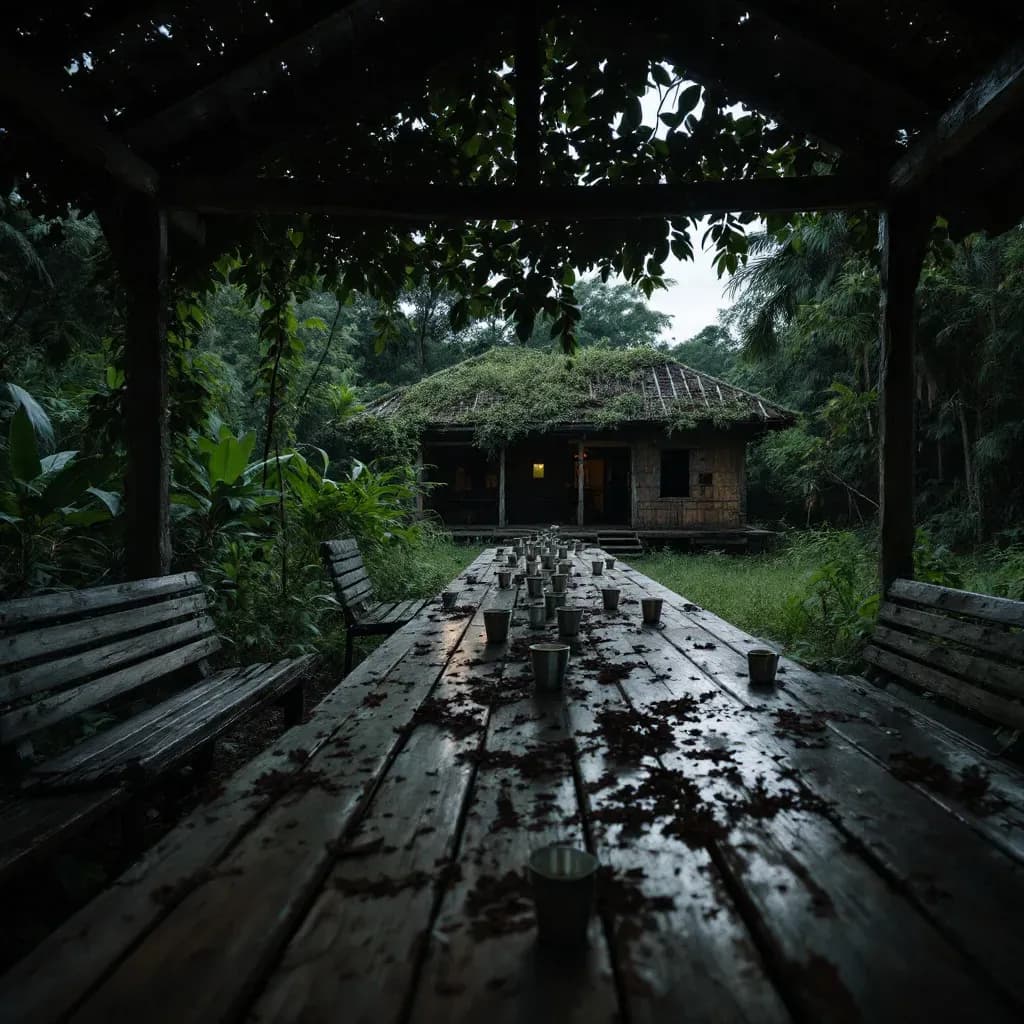
Hours later, inside the Jonestown compound itself, Jones gathered his followers and ordered what he called "revolutionary suicide." Members were directed to drink a fruit drink laced with potassium cyanide. According to contemporary accounts and forensic analysis, children were often injected or forced to drink first, with adults following under the watch of armed guards. Pathology later confirmed cyanide poisoning, and analysis of the vat showed a mixture of tranquilizers, potassium cyanide and potassium chloride. Jones himself was found dead of a gunshot wound to the head.
Timeline
Peoples Temple founded
Jim Jones founds Peoples Temple in Indianapolis, building a racially integrated congregation that later moves to California.
Move to Guyana
Jones and hundreds of followers move to the Peoples Temple Agricultural Project in northwestern Guyana, known as Jonestown.
Congressman Ryan visits Jonestown
U.S. Representative Leo Ryan arrives with journalists and concerned relatives to investigate allegations of abuse at the camp.
Shooting at airstrip in Port Kaituma
Armed Peoples Temple members attack Ryan's departing group at the airstrip in Port Kaituma, killing the congressman and four others.
Mass death in Jonestown
909 members, including 304 children, die after drinking or being injected with a cyanide-laced fruit drink; Jim Jones is found dead of a gunshot wound.
Discovery by Guyanese forces
Troops from the Guyanese Defence Force reach Jonestown and find hundreds of bodies throughout the camp.
Layton extradited to the U.S.
Larry Layton is returned to Miami and taken into FBI custody to face federal charges related to the attack at the airstrip.
Layton convicted
A U.S. federal jury convicts Larry Layton of conspiracy and aiding in the murder of Congressman Leo Ryan, as well as attempted murder of a U.S. official.
The Victims
The death toll at Jonestown was 909, a number that includes 304 children, according to Britannica's summary of the event. The community was racially and generationally diverse: many members were African American, including a significant number of Black women and elders who had been drawn to Peoples Temple's message of racial equality, as discussed in academic work on Black women and the Peoples Temple. At Port Kaituma, the dead included Congressman Leo Ryan — the only U.S. congressman killed in the line of duty — along with NBC correspondent Don Harris, NBC cameraman Bob Brown, San Francisco Examiner photographer Greg Robinson, and Temple defector Patricia Parks.
Investigation
Because the perpetrators and most witnesses died at the scene, there was no conventional criminal investigation into the mass deaths in Guyana. Guyanese Defence Force soldiers reached the compound on November 19, 1978, and recovered hundreds of bodies. Investigators secured key physical evidence including the vat of poisoned drink, syringes, firearms, and the so-called "death tape," an audio recording capturing Jones urging followers toward "revolutionary suicide." American officials, including the FBI, coordinated with Guyanese authorities on the identification and repatriation of remains and the pursuit of surviving suspects.
The principal criminal focus shifted to the airstrip attack. According to the ADST oral history of the response, Peoples Temple member Larry Layton, who had posed as a defector to board one of the planes, was detained in Guyana and later transferred to U.S. custody in Miami.
Trial and Verdict
Larry Layton was tried in U.S. federal court for his role at Port Kaituma. He was ultimately convicted of conspiracy and aiding and abetting in the murder of Congressman Leo Ryan and the attempted murder of a U.S. official, becoming the only person prosecuted in the United States in connection with the Jonestown and airstrip killings. Jim Jones and most of his lieutenants died on November 18, 1978, and therefore never faced charges.
No broader prosecutions followed in Guyana, where the deaths were treated as a mass casualty incident rather than a multi-defendant criminal case, as reflected in encyclopedic research summaries of the Peoples Temple mass deaths.
Today
More than four decades later, Jonestown remains a defining case study in cult dynamics, coercive control, and the dangers of unchecked charismatic authority. The phrase "drinking the Kool-Aid" entered popular language, though survivors and scholars have long pointed out that this idiom trivializes what was, for most victims, a coerced or forced death rather than a freely chosen suicide. Survivors, defectors and family members continue to advocate for accurate remembrance, and academic and journalistic projects have worked to recover the names and life stories of the dead, especially the children and the many Black members of Peoples Temple. The case continues to be revisited in documentaries, books, and podcasts, and remains a touchstone in debates about new religious movements, government oversight, and the obligations of journalism in reporting on closed communities.
Media coverage
TV series
- Cult Massacre: One Day in Jonestown(2026)
- Jonestown: Terror in the Jungle(2026)
Ask about this case
Answers from KrimiNyt's coverage onlyFollow this case
Get an email when a new documentary, podcast or book about The Jonestown Massacre — Mass Murder–Suicide in Guyana appears, or when a verdict is reached.