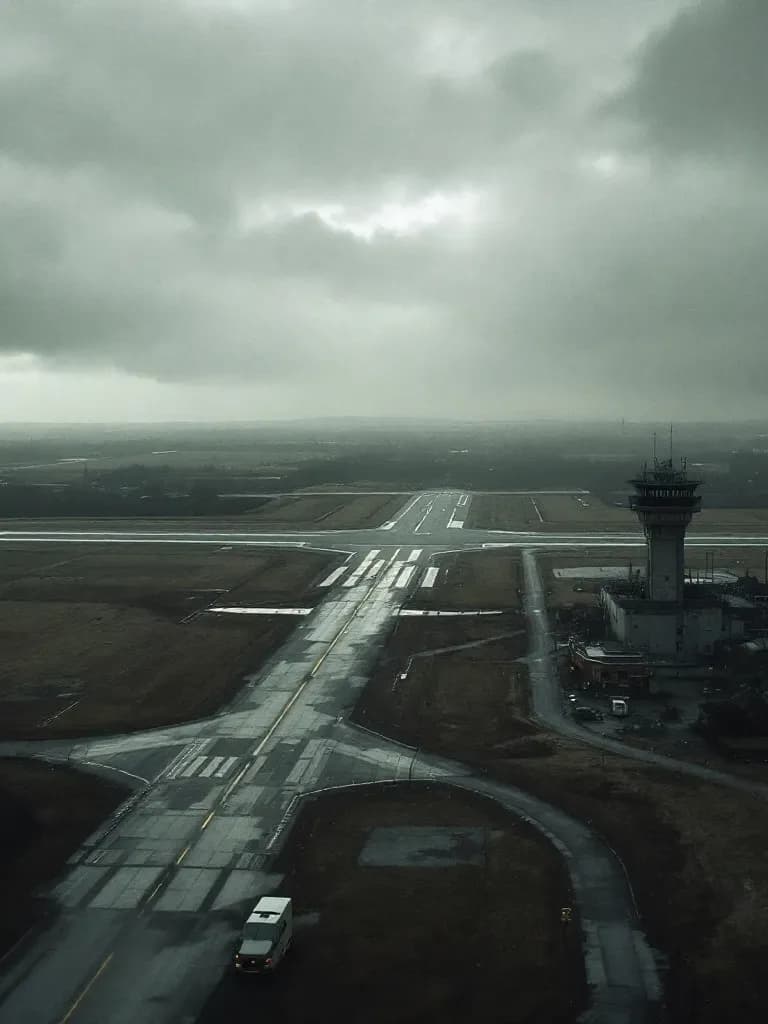
TAM Airlines Flight 3054 — Brazil's Deadliest Air Disaster
São Paulo, Brazil, 2007 — Criminal accountability proceedings concluded
Published July 29, 2026
Quick Facts
The Case
TAM Airlines Flight 3054 is Brazil's deadliest aviation disaster — a catastrophic runway overrun at São Paulo's Congonhas Airport on July 17, 2007, that killed all 187 people aboard an Airbus A320 and 12 more on the ground, for a total of 199 fatalities. The crash was not a criminal homicide in the conventional sense; it was an accident rooted in compounding technical, human, and regulatory failures. What followed was a years-long investigation that ultimately led to criminal negligence proceedings against senior figures in both Brazil's civil aviation regulator and the airline itself.
The Crime
On the evening of July 17, 2007, Flight JJ3054 was operating a routine domestic route from Porto Alegre's Salgado Filho Airport to São Paulo's Congonhas Airport, one of the busiest and most operationally challenging airports in South America. Congonhas sits in the heart of a dense urban area, its runways flanked by major roads and commercial buildings, leaving almost no margin for error on landing.
At approximately 18:50 local time, the Airbus A320 touched down on runway 35L in moderate rain. The runway surface, notorious among pilots for poor drainage, was wet. According to investigators, the flight crew failed to correctly handle the throttle during the landing roll — a critical error in such conditions. Compounding the situation was a mechanical fault that had been known prior to the flight: the aircraft's right-engine thrust reverser was inoperative, significantly reducing the plane's ability to decelerate after touchdown.
Timeline
Crash at Congonhas Airport — 199 killed
At approximately 18:50 local time, the Airbus A320 overruns runway 35L in wet conditions, crosses Avenida Washington Luís, and slams into a TAM Express warehouse near a Shell gas station, triggering a catastrophic fire. All 187 on board and 12 people on the ground are killed.
Brazilian authorities open investigation
Brazil's aeronautical accident investigation body CENIPA and federal police launch parallel technical and criminal investigations into the crash causes and regulatory failures.
Inoperative thrust reverser confirmed
Investigators confirm that the aircraft's right-engine thrust reverser was inoperative at the time of the landing, a finding that becomes central to the investigation into whether the aircraft should have been cleared to fly.
CENIPA technical report published
Brazil's official accident investigation concludes that the crash resulted from a combination of pilot error in throttle handling, the inoperative right-engine thrust reverser, and inadequate runway drainage at Congonhas Airport.
Criminal charges filed against three officials
Brazilian prosecutors formally charge Denise Abreu (former ANAC president), Alberto Fajerman (former TAM vice-president for operations), and Marco Aurélio dos Santos de Miranda e Castro (former TAM safety director) with negligence-related offenses.
Tenth anniversary commemorations
Brazil holds official tributes marking ten years since the disaster, with victims' families, government officials, and the aviation community attending ceremonies in São Paulo.
Unable to stop within the available runway length, the aircraft overran the end of runway 35L at speed, crossed the busy Avenida Washington Luís, and ploughed into a TAM Express cargo warehouse located adjacent to a Shell gas station. The collision triggered an immediate and violent fire. There were no survivors among the 187 people on board. Twelve people on the ground — warehouse workers and bystanders — also perished in the inferno.
The disaster was the worst aviation accident in Brazilian history and one of the most deadly single-aircraft accidents in the world at that time.
The Victims
The 187 people aboard Flight 3054 included passengers traveling between Brazil's two largest cities, as well as the aircraft's flight crew and cabin staff. No complete verified roster of all names and ages is available from official public records in the sources reviewed for this article; the crash happened quickly and utterly, leaving no survivors to provide accounts.
The twelve victims on the ground were associated with the TAM Express warehouse facility — employees and others present in and around the building at the moment of impact. Their deaths underscored the severe risk posed by Congonhas Airport's tight urban footprint, an issue that aviation safety advocates had raised repeatedly before the disaster.
Victims' families formed advocacy groups in the aftermath, pressing both the airline and Brazil's civil aviation authorities for accountability and systemic reform. Their campaigns played a role in sustaining political pressure for the criminal proceedings that followed years later. On the tenth anniversary of the crash in 2017, official tributes were paid across Brazil, with families, government representatives, and aviation professionals gathering to honor those who died.
Investigation
Brazil's Centro de Investigação e Prevenção de Acidentes Aeronáuticos (CENIPA), the national aeronautical accident investigation body, led the technical inquiry. Federal police conducted a parallel criminal investigation.
The technical conclusions that emerged identified a convergence of factors. The flight crew's throttle handling during the landing roll was deemed incorrect — specifically, investigators found that the thrust on one engine was not reduced as required during the deceleration phase. This pilot error was compounded by the known inoperative state of the right-engine thrust reverser, which had been documented before the flight departed but had not grounded the aircraft. Additionally, the runway's drainage infrastructure was found to be inadequate, meaning the wet surface offered even less braking friction than a properly maintained runway would have provided.
Critical questions arose about the regulatory framework. Was the airline permitted to fly the aircraft with the thrust reverser deactivated? What oversight did Brazil's Agência Nacional de Aviação Civil (ANAC) exercise over the airworthiness condition of the fleet? Were runway safety standards at Congonhas enforced rigorously? Investigators concluded that systemic failures at both the airline and the regulator had contributed to conditions that made the crash possible.
This was also the period immediately after Brazil's so-called "aviation crisis" — a turbulent period triggered in part by the Gol Transportes Aéreos Flight 1907 mid-air collision in September 2006, which had exposed deep dysfunction within Brazil's air traffic control and aviation regulation systems. Flight 3054 struck at a moment when public and political patience with aviation safety failures was already exhausted.
Trial and Verdict
Brazilian prosecutors brought criminal negligence charges against three individuals identified as bearing institutional responsibility for the conditions that led to the crash:
- Denise Abreu, former president of ANAC, Brazil's civil aviation authority, was charged in her capacity as the regulator responsible for overseeing airline airworthiness and airport safety standards.
- Alberto Fajerman, former vice-president for operations at TAM Linhas Aéreas, was charged for his role in operational decision-making at the airline.
- Marco Aurélio dos Santos de Miranda e Castro, former safety director at TAM, was charged for failures in the airline's internal safety management.
The proceedings focused on negligence rather than intentional wrongdoing — prosecutors argued that the combination of regulatory failures, inadequate oversight of a known mechanical defect, and poor safety culture at multiple levels created the conditions for 199 deaths. The case was legally and procedurally complex, involving questions of corporate liability, regulatory duty of care, and the chain of causation in a multi-factor accident.
Publicly available records do not confirm a final criminal conviction with specific sentences for all three accused. The proceedings reflected Brazil's broader struggle to assign individual criminal accountability for systemic institutional failures — a challenge common to major aviation disaster prosecutions worldwide. Air France Flight 447 and Crossair Flight 498 are among other major aviation disasters where similar questions of criminal accountability arose in parallel to technical investigations.
Today
The legacy of Flight 3054 is felt most directly in Brazilian aviation safety regulation. In the years following the crash, Congonhas Airport underwent runway improvements including enhanced drainage systems and arresting systems at runway ends. ANAC was restructured and its oversight procedures overhauled. Brazil's broader aviation regulatory framework was reformed, partly in response to the compounding crises of 2006 and 2007.
For the families of the 199 victims, the disaster has never fully receded into the past. Commemorations continue to be held annually, and victims' family organizations have remained active voices in Brazilian civil aviation safety advocacy.
The case also endures as a reference point in international aviation safety literature, cited alongside other major runway excursion accidents as evidence of how multiple compounding failures — mechanical, human, and systemic — can align to produce catastrophic outcomes. The Italian and international aviation safety communities have included the Congonhas crash in training curricula and safety reviews examining runway contamination risks and thrust reverser inoperability protocols.
As of the time of writing, the disaster remains the deadliest aviation accident ever to occur on Brazilian soil.
Media coverage
TV series
- A Tragedy Foretold: Flight 3054 (Congonhas: Tragédia Anunciada)(2026)
Ask about this case
Answers from KrimiNyt's coverage onlyFollow this case
Get an email when a new documentary, podcast or book about TAM Airlines Flight 3054 — Brazil's Deadliest Air Disaster appears, or when a verdict is reached.