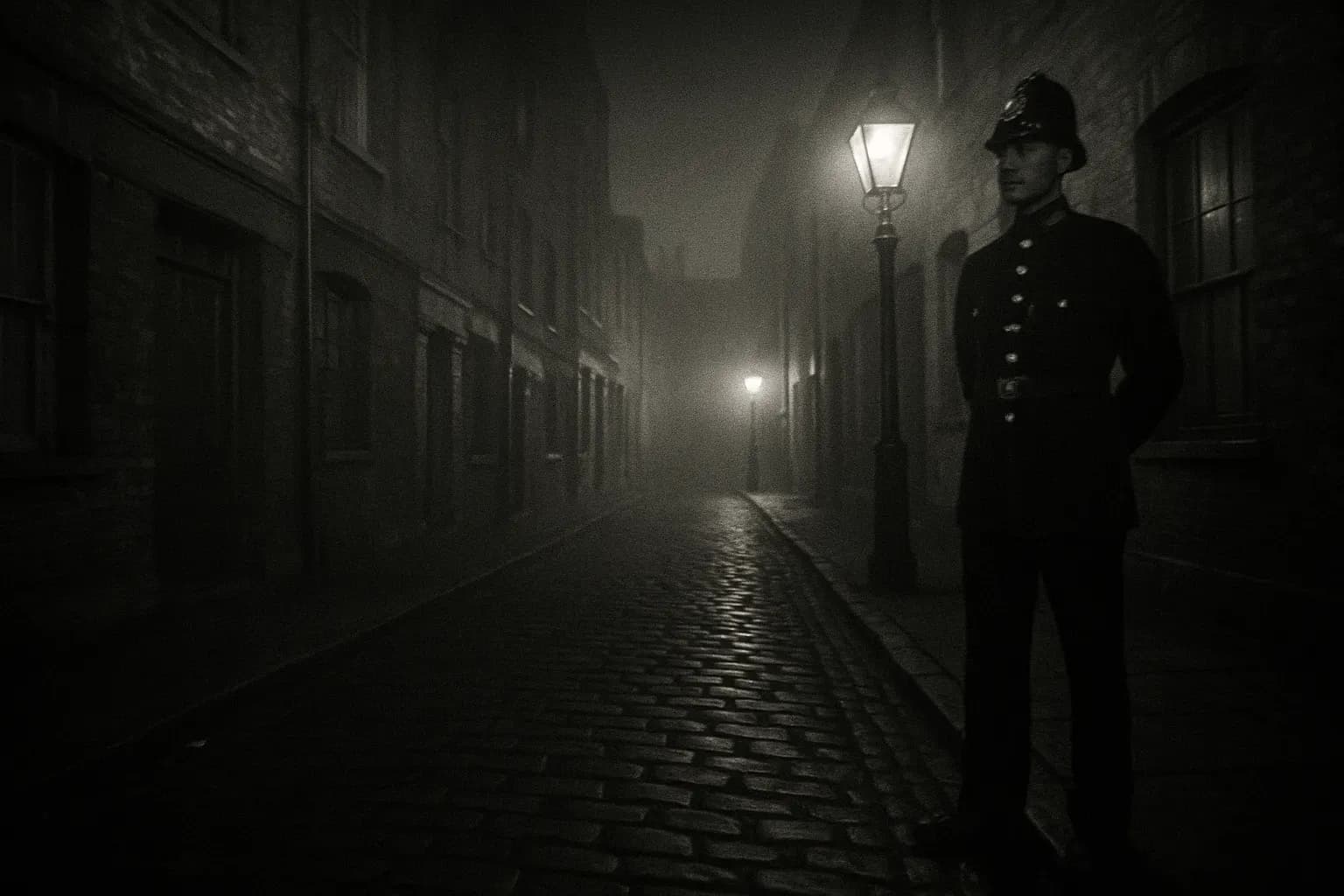
Defining Cases in European Crime History
The cases that shaped law, justice, and public conscience across the continent
Quick facts
These fifteen cases — selected by the truecrime.news editorial team as the crimes that most profoundly shaped European criminal justice, public policy, and collective memory — range from wartime atrocities prosecuted decades later to jihadist attacks that redefined national security. Together they form a defining portrait of crime on the continent.
---
1. The Lockerbie Bombing — Pan Am Flight 103 over Scotland (1988)
On 21 December 1988, a bomb destroyed Pan Am Flight 103 over the Scottish town of Lockerbie, killing all 259 people on board and 11 on the ground. The attack was one of the deadliest acts of terrorism in European history. Libyan intelligence officer Abdelbaset al-Megrahi was convicted in 2001 by a Scottish court sitting in the Netherlands. The case transformed international aviation security, reshaped UK-Libya diplomatic relations, and remains a touchstone for cross-border terrorism prosecution.
2. The Georgi Markov Assassination — Cold War Umbrella Murder (1978)
Bulgarian dissident and BBC journalist Georgi Markov was stabbed with a specially modified umbrella on Waterloo Bridge, London, in September 1978. The weapon delivered a tiny platinum pellet filled with ricin into his leg. He died three days later. No one was ever convicted. The case became the defining symbol of Cold War state-sponsored assassination on Western soil, and the investigation — periodically reopened — remains officially unsolved.
3. 2015 Paris Attacks — ISIS Coordinated Mass Casualty Terror
On the night of 13 November 2015, ISIS-linked attackers struck six locations across Paris — including the Bataclan concert hall — in a coordinated assault that killed 130 people and wounded hundreds more. The attacks triggered a state of emergency in France, accelerated EU counter-terrorism legislation, and led to a years-long trial of surviving perpetrators. The sole surviving attacker, Salah Abdeslam, was convicted in 2022. The case remains the deadliest terrorist attack on French soil in modern history.
4. 2017 Barcelona & Cambrils Attacks — Coordinated Jihadist Terror
On 17 August 2017, a van was driven into crowds on Las Ramblas in Barcelona, killing 13 people. Hours later, a second attack was foiled in the nearby town of Cambrils. The cell responsible had links to a wider network in Ripoll. The attacks shocked Spain and the wider European Union, prompting major reviews of vehicle-attack prevention and counter-radicalisation policy. Most of the cell members were killed by police; survivors faced prosecution in Spain.
5. The Eirik Jensen Case — Norway's Worst Corruption Scandal
Eirik Jensen, one of Norway's most senior and decorated police officers, was arrested in 2013 and ultimately convicted of facilitating large-scale hashish smuggling in collaboration with biker gang leader Gjermund Cappelen. Jensen received a 21-year sentence in a case that exposed catastrophic systemic corruption at the heart of Norwegian law enforcement and triggered sweeping reforms of police oversight across the country.
6. Karl Hass & the Ardeatine Caves Massacre — War Crime Conviction
In March 1944, SS officer Karl Hass participated in the massacre of 335 Italian civilians and prisoners in the Ardeatine Caves outside Rome — a reprisal ordered by the Nazi command. Hass evaded justice for decades before a dramatic 1997 trial in Italy. His conviction, alongside that of Erich Priebke, was one of the most significant Nazi war crimes prosecutions in post-war European legal history and reignited debate about the statute of limitations for crimes against humanity.
7. The Fred and Rose West Murders — House of Horrors
Between the 1960s and 1980s, Frederick and Rosemary West tortured, sexually abused, and murdered at least twelve young women and girls, burying many of the victims beneath their home at 25 Cromwell Street, Gloucester. Fred West took his own life before trial in 1995. Rose West was convicted of ten murders and sentenced to life imprisonment. The case remains one of the most disturbing examples of domestic serial killing in British criminal history.
8. The Lucy Letby Case — Neonatal Nurse Serial Killer Conviction
Lucy Letby, a neonatal nurse at the Countess of Chester Hospital, was convicted in August 2023 of murdering seven babies and attempting to murder six more between 2015 and 2016. She is the most prolific child killer in modern British criminal history. The case prompted a major public inquiry into how hospital management suppressed the concerns of doctors who had flagged Letby's ward as dangerous, raising profound questions about institutional accountability in the NHS.
9. The Saguto Anti-Mafia Corruption — Judge Turned Racketeer
Silvana Saguto, a Palermo judge who headed Sicily's anti-mafia asset administration office, was convicted in 2019 of corruption, extortion, and abuse of office. Rather than safeguarding assets seized from the Mafia, she had allegedly turned the system into a personal patronage network. The case was a seismic scandal in Italy — a guardian of anti-Mafia justice revealed as a racketeer — and prompted comprehensive reform of asset-management oversight across the Italian judiciary.
10. The Alberto Genovese Case — Milan Startup Mogul Convicted of Rape
Tech entrepreneur Alberto Genovese was arrested in October 2020 after a 18-year-old woman escaped from his Milan penthouse alleging she had been drugged and sexually assaulted. Further victims came forward, and Genovese was convicted in 2022 and sentenced to eight years in prison. The case exposed a culture of impunity among Italy's startup elite, prompted national debate on drug-facilitated sexual violence, and was widely compared to the international #MeToo reckoning.
11. The San Patrignano Case — Murder Inside a Rehab Community
San Patrignano, one of Europe's largest drug rehabilitation communities in the Emilia-Romagna region of Italy, became the subject of intense criminal scrutiny following allegations of violence, coercive confinement, and a murder within its walls. The case — involving the death of community member Roberto Maranzano — led to prosecutions and an ongoing reckoning with the boundaries of therapeutic authority, informed by the Netflix documentary series SanPa.
12. The Brønderslev Case — Decade of Child Abuse in North Jutland
In one of Denmark's gravest child-protection failures, a couple in Brønderslev was convicted of systematic physical and sexual abuse of their own children over a period of approximately ten years. The case, which unfolded in the 2010s, prompted sweeping reforms of Danish child welfare legislation and oversight of municipal social services. It remains a defining moment in Scandinavian debates about institutional failure and the protection of vulnerable children.
13. The 2015 Copenhagen Terror Attacks — Krudttønden and the Synagogue
On 14–15 February 2015, Omar Abdel Hamid El-Hussein carried out two attacks in Copenhagen: a shooting at the Krudttønden cultural centre during a free-speech event that killed filmmaker Finn Nørgaard, and a subsequent attack on the Great Synagogue that killed security guard Dan Uzan. El-Hussein was killed in a confrontation with police. The attacks forced Denmark to confront domestic radicalisation and led to major expansions of the country's counter-terrorism framework.
14. The Rachel Nickell Murder — Wimbledon Common 1992
Rachel Nickell was stabbed to death on Wimbledon Common in July 1992 in front of her two-year-old son. The Metropolitan Police's subsequent undercover operation against suspect Colin Stagg — in which an officer posed as a romantic interest — was ruled inadmissible and became a landmark case in the law of entrapment. Stagg was acquitted. Robert Napper was eventually convicted of the killing in 2008 after DNA evidence linked him to the crime, making the case a watershed in both forensic science and police ethics.
15. Peter Madsen Killed Journalist Kim Wall on Submarine (2017)
In August 2017, Swedish journalist Kim Wall boarded the self-built submarine UC3 Nautilus in Copenhagen harbour to interview its inventor, Peter Madsen. She was never seen alive again. Madsen dismembered her body and disposed of it at sea. Convicted of premeditated murder and sexual assault in 2018, he was sentenced to life imprisonment. The case drew worldwide attention, sparked debates about journalistic safety, and became one of the most shocking criminal cases in modern Scandinavian history.