The Bombing of Pan Am 103
BBC One/Netflix, 2025–2026 — the Lockerbie bombing investigation and trial
What Is the Series About?
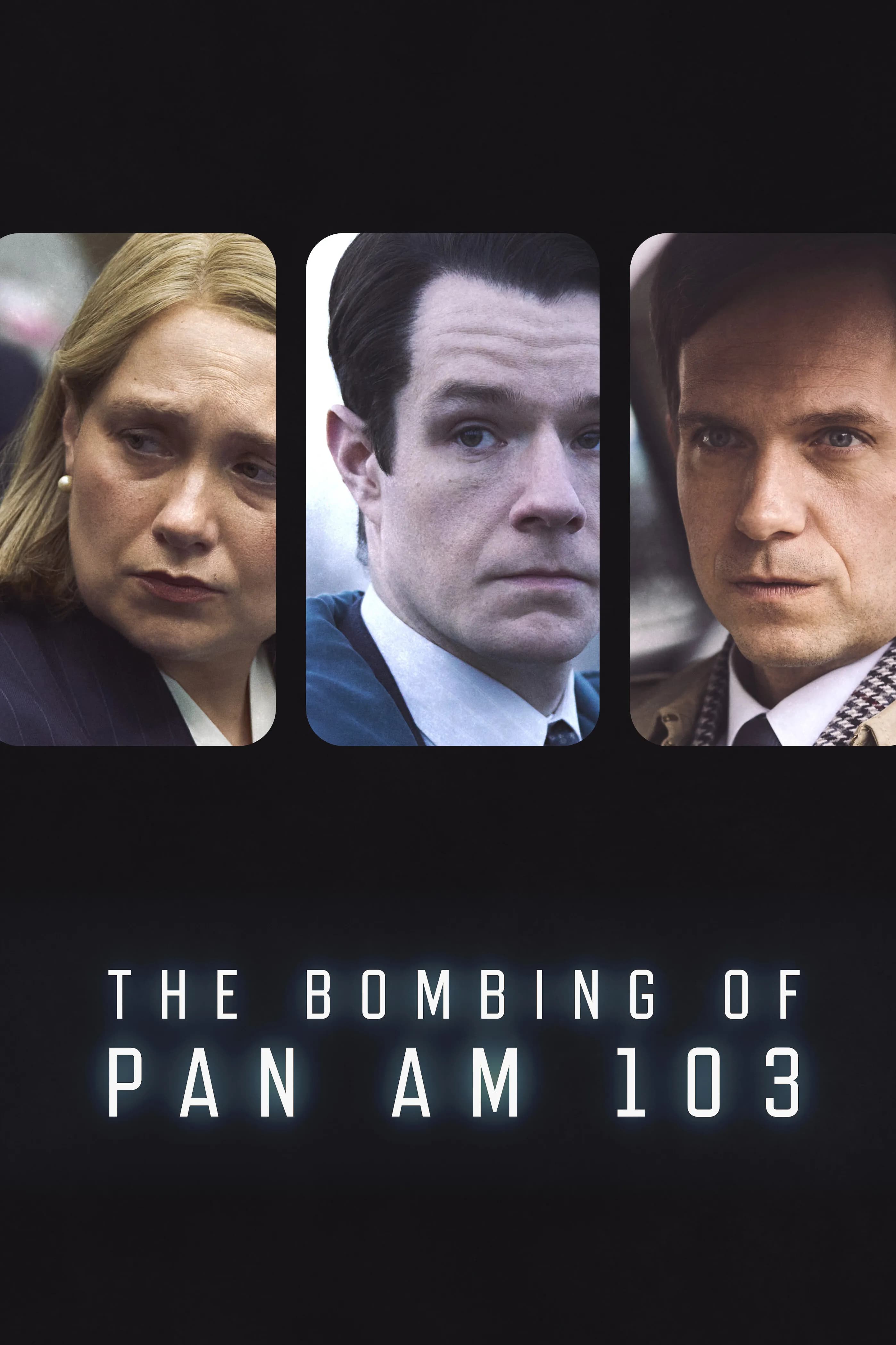
The Bombing of Pan Am 103 is a six-part BBC One factual drama that reconstructs one of the deadliest acts of terrorism in aviation history and the extraordinary multinational investigation that followed. Written by Jonathan Lee, the series tracks the joint effort by Scottish police and the FBI to identify those responsible for the destruction of Pan Am Flight 103 over Lockerbie, Scotland, on 21 December 1988 — an attack that killed 270 people and triggered what BBC has described as the largest murder investigation in the history of Scottish policing. The series aired on BBC One and is scheduled for international release on Netflix on 30 July 2026.
The drama is positioned as a prestige true-crime production grounded in factual reconstruction rather than fiction. It follows investigators, prosecutors, and — crucially — the families of victims across multiple jurisdictions and decades, from the frozen fields of Lockerbie in December 1988 through the landmark Camp Zeist trial in 2000 and into the most recent legal developments of the early 2020s.
---
The Case
The Attack
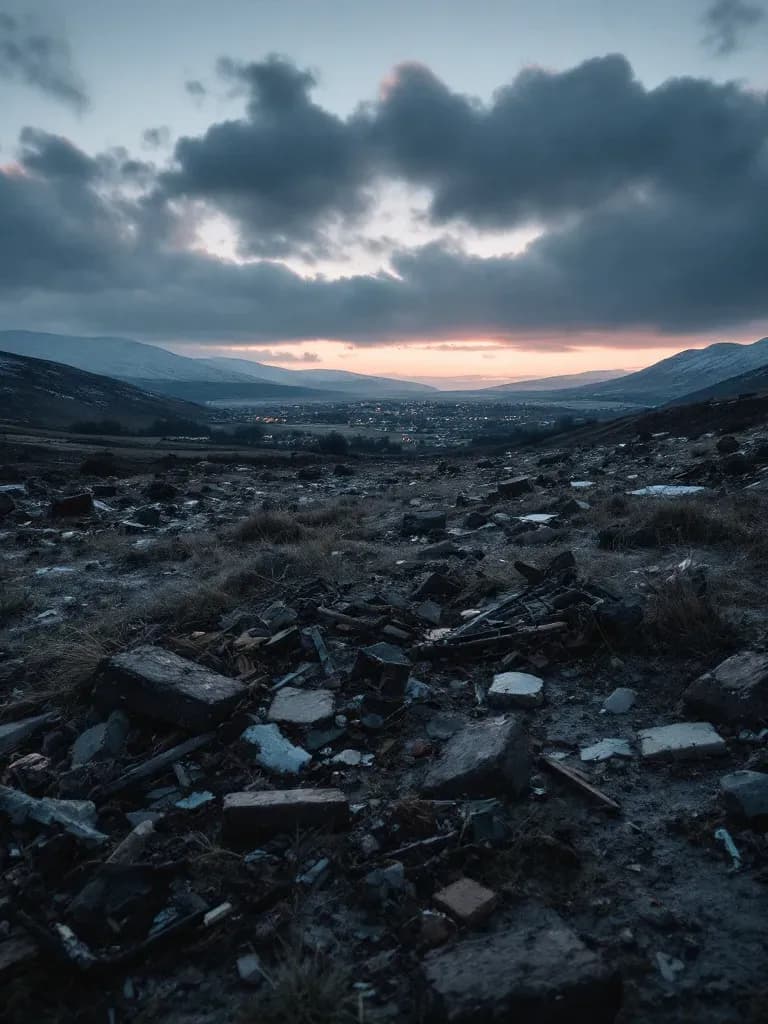
On the evening of 21 December 1988, Pan Am Flight 103 — a Boeing 747 named *Maid of the Seas* — departed London Heathrow bound for New York John F. Kennedy International Airport. Approximately 38 minutes after takeoff, a bomb concealed within a Samsonite suitcase in the forward cargo hold detonated at an altitude of roughly 31,000 feet. The explosion caused catastrophic structural failure. The aircraft broke apart over the Scottish Borders, with the main fuselage and wings crashing into the town of Lockerbie.
All 259 people aboard — 243 passengers and 16 crew members — were killed instantly or in the immediate aftermath. Eleven residents of Lockerbie died on the ground as wreckage, including a wing section loaded with tens of thousands of pounds of jet fuel, demolished homes in the Sherwood Crescent neighbourhood. The total death toll stood at 270.
Among the passengers were 189 American citizens, many of them students returning home for the Christmas holidays after studying abroad in Europe. The attack remains the deadliest terrorist incident ever to occur on British soil.
The Investigation
Scottish police, working under the jurisdiction of Dumfries and Galloway Constabulary, launched an immediate and vast evidence recovery operation across an area of more than 845 square miles. Investigators recovered more than four million pieces of wreckage and personal property. Critical forensic breakthroughs came from a tiny fragment of a circuit board — later identified as part of a Mebo MST-13 timer used to detonate the device — and a fragment of clothing traced to a shop in Malta.
The joint Scottish police and FBI investigation gathered evidence across three continents. Malta emerged as a key location: investigators concluded that the suitcase containing the bomb had been introduced to the baggage system at Luqa Airport in Malta, transferred to a feeder flight to Frankfurt, and then loaded onto Pan Am 103 in London without a corresponding passenger.
The investigation pointed firmly toward Libyan intelligence. In November 1991, prosecutors in both Scotland and the United States indicted two Libyan nationals: Abdelbaset Ali Mohmed al-Megrahi, a Libyan Arab Airlines security chief and alleged intelligence officer, and Al Amin Khalifa Fhimah, the former Libyan Arab Airlines station manager in Malta. Both men were charged with 270 counts of murder, conspiracy to murder, and violations of Britain's Aviation Security Act.
For nearly a decade, Libya refused to surrender the two men for trial, and UN-mandated international sanctions were imposed on the Libyan state. A diplomatic breakthrough in 1998–1999 resulted in an agreement under which the accused would stand trial before a Scottish court sitting under Scots law, but convened at a neutral venue — Camp Zeist, a former United States Air Force base in the Netherlands.
Trial and Verdict
The Camp Zeist trial began in May 2000 and concluded on 31 January 2001. A panel of three Scottish judges — sitting without a jury, as agreed under the special arrangements — found al-Megrahi guilty of the murder of all 270 victims and sentenced him to life imprisonment with a minimum recommendation of 27 years. Fhimah was acquitted on all charges and returned to Libya.
Al-Megrahi was imprisoned in Scotland. He lodged an appeal that was still ongoing when, in August 2009, the Scottish government released him on compassionate grounds after he was diagnosed with terminal prostate cancer. His early release provoked intense anger among American victims' families and the US government. Al-Megrahi returned to Libya, where he died on 20 May 2012, having consistently maintained his innocence.
Ongoing Legal Proceedings
The case did not end with al-Megrahi's death. Investigators and prosecutors continued to pursue other individuals believed to have been involved in planning and executing the attack. In December 2022 — more than 34 years after the bombing — a new indictment was issued, demonstrating that the Lockerbie investigation remains legally active. The BBC series covers these later developments alongside the original investigation, giving the drama a contemporary dimension that extends well beyond the 2000 trial.
---
Production
The Bombing of Pan Am 103 was written by Jonathan Lee, identified in BBC's own media materials as the principal writer of the series. The BBC describes the production as a factual drama — a hybrid form that reconstructs documented events with dramatic performance — rather than a straightforward documentary. No director's name was confirmed in available pre-release materials.
The series spans six episodes and was commissioned as Series 1 on BBC One, with individual episodes listed on BBC iPlayer. Its international distribution deal with Netflix — with a scheduled streaming debut of 30 July 2026 — signals significant investment in the project and confidence in its global appeal. The series carries the IMDb identifier tt13592494.
BBC's own description frames the production around three pillars: the factual reconstruction of the investigation, the experiences of the Lockerbie community and victims' families, and the long road to — and beyond — the Camp Zeist courtroom. The use of Malta, Scotland, and the United States as key settings reflects the genuinely international scope of both the crime and the investigation.
---
Reception
The series drew fierce criticism even before broadcast, according to BBC News reporting on the new Lockerbie drama. Much of the controversy centres on the enduringly contested nature of al-Megrahi's conviction. A substantial body of legal opinion — including the findings of the Scottish Criminal Cases Review Commission, which in 2007 referred the conviction back to the Court of Appeal — has questioned whether al-Megrahi received a fair trial and whether the evidence was sufficient to sustain the guilty verdict beyond reasonable doubt. Campaigners for al-Megrahi's posthumous exoneration and members of the Libyan diaspora have objected to dramatisations that, in their view, treat a contested conviction as settled fact.
On the other side, many families of the 270 victims have expressed support for productions that keep public and political pressure on governments to ensure full accountability. The fact that a new indictment was issued in late 2022 has been cited by those who argue the story is not only unresolved but actively progressing.
No aggregate critic score or verified audience rating was available in pre-broadcast materials. The series' IMDb page (tt13592494) was active prior to broadcast, but no confirmed rating had been published at time of writing.
---
The Case Today
The Lockerbie bombing occupies a unique position in the landscape of unresolved mass-casualty terrorism. Despite al-Megrahi's 2000 conviction — the only conviction ever secured in connection with the attack — doubt about his guilt has never fully dissipated, and the question of broader Libyan state responsibility remains unresolved in any court of law.
The December 2022 indictment represents the most significant recent legal development. Its existence confirms that Scottish prosecutors and international investigators have not accepted al-Megrahi's conviction as the end of the matter. The political backdrop has also shifted considerably since 1988: Libya under Muammar Gaddafi formally accepted responsibility for the bombing in 2003 as part of a diplomatic settlement with the United States and United Kingdom, and paid compensation to victims' families — yet that acceptance was political and financial rather than judicial, and Gaddafi's subsequent overthrow and death in 2011 complicated any further state-level accountability.
For the 270 families who lost loved ones on 21 December 1988 — and for the community of Lockerbie, which has carried the weight of that night for more than three decades — the series represents both a renewed reckoning with catastrophic loss and a reminder that justice, in this case, has never been fully or unambiguously delivered.