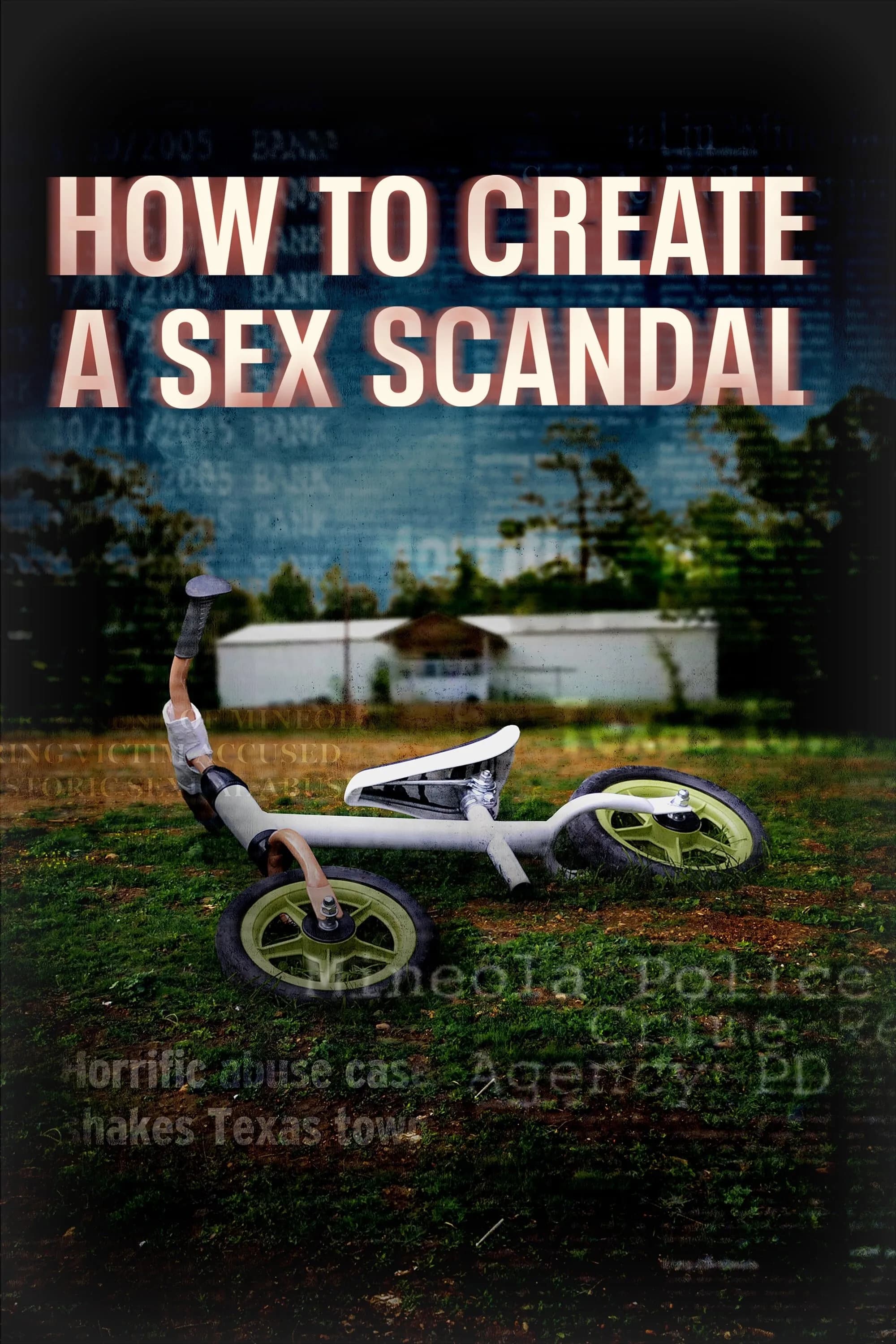
How to Create a Sex Scandal
HBO Max, 2023 — The fabricated 'sex kindergarten' case that sent innocent people to prison in Mineola, Texas
Quick facts
What Is the Series About?
How to Create a Sex Scandal is a three-part HBO Max docuseries directed by Julian P. Hobbs that examines one of the most disturbing miscarriage-of-justice cases in recent Texas legal history. Premiering on May 23, 2023, the series investigates the 2005 Mineola, Texas child-sex-abuse scandal in which children under seven years old made lurid accusations against a group of local adults — accusations that sent at least six people to prison. The docuseries' central argument is stark: it never happened. The alleged abuse, the series contends, was a fabricated hoax manufactured through the manipulation of young, vulnerable children by adults in positions of trust.
The Case
In 2005, in the small East Texas town of Mineola, a shocking set of allegations emerged involving a site described as a former swingers club. Children — most under the age of seven — told investigators they had been transported to a so-called kindergarten at the location, where they were given silly pills believed to be some form of sedative, made to dance provocatively, and forced to perform and witness sexual acts. The claims triggered one of the most sensational child-abuse prosecutions in Texas history.
According to People magazine's coverage of the documentary, the children at the center of the case were foster and biological children associated with the household of Margie and John Cantrell, who served as foster parents. The docuseries identifies Margie Cantrell as the central alleged architect of the false accusations — the person who, the series argues, manipulated the children into making their statements.
The adults prosecuted and convicted include Shelia Sones, Jimmy Sones, Jamie Pittman, Shauntel Mayo, Patrick Kelly, and Dennis Pittman. All were found guilty and sentenced to prison. Some secondary sources report that life sentences were handed down in at least some cases, though precise sentencing terms and current incarceration or appellate status require verification against official court records. One discrepancy in secondary coverage is worth noting: while People identifies six convicted individuals, an IMDb news item states the case sent seven people to prison — a discrepancy that underscores the importance of checking trial records directly.
The named child accusers in the documentary are the Mayo siblings: Hunter Mayo, Shelby Mayo, and Carly Mayo. The docuseries examines how their testimony came to form the backbone of a prosecution that critics argue was built on coerced memories, suggestive interviewing techniques, and the kind of moral panic that has historically produced wrongful convictions in child-abuse cases.
The case proceeded through arrests, trials, and appeals in Smith County and Wood County courts in East Texas. Local coverage from KETK noted the community impact of the story when the docuseries premiered, reflecting how raw the subject remains nearly two decades later.
Investigative Background
The documentary draws explicitly on the investigative journalism of Michael Hall, whose Texas Monthly series Mineola's Swingers Club examined the same case years before cameras arrived. Hall's reporting raised foundational questions about the evidence: Why was physical corroboration so limited? How were the children's accounts gathered, and by whom? Were the interviewing techniques used with the young children consistent with established forensic protocols designed to avoid contamination of memory?
These questions about weak physical evidence, coerced testimony, and the psychology of mass hysteria and implanted memories are central to the documentary's argument. The series frames the Mineola case as a textbook example of how a moral panic, once ignited, can become nearly impossible to extinguish — even when the factual foundation is rotten.
Production
Director Julian P. Hobbs is an experienced documentary filmmaker whose work frequently engages with crime, justice, and institutional failure. In How to Create a Sex Scandal, Hobbs structures the three episodes to walk viewers through the anatomy of a manufactured scandal: how the allegations originated, how investigators and prosecutors built a case around children's statements, and how the adults charged found themselves facing prison for acts they insist never occurred.
The series uses a combination of interviews, archival materials, and reconstructive journalism to make its case. The title itself is a deliberate provocation — a dry, clinical description of a process the documentary argues was, whether intentional or catastrophically negligent, the functional equivalent of engineering a false prosecution.
Reception
Critical reception has been largely sympathetic to the documentary's argument. Decider described it as a true crime docuseries about a fake pedophilic sex ring and reported that the series presents a compelling case that the alleged events never occurred. ScreenRant summarized the series as revealing that the scandal was nothing more than a hoax. People characterized it as a deeply disturbing docuseries in which allegations that once seemed credible progressively unravel under scrutiny.
On IMDb, the series carries a rating of approximately 6.8/10 per available secondary sources — readers should verify this figure directly on IMDb, as ratings fluctuate. The score reflects a modestly positive reception among viewers, though the subject matter involving very young children and contested accusations means the series is not easy viewing under any circumstances.
The central controversy the documentary raises is profound: if the prosecution was built on fabricated or coerced testimony, then multiple people have spent years — potentially the rest of their lives — in Texas prisons for crimes that never happened. That implication has made the series especially sensitive for the Mineola community, for advocates of the convicted, and for legal scholars interested in the history of child-abuse prosecutions in the United States.
The Case Today
As of the series' 2023 release, the precise current legal status of the convicted defendants — whether any have been exonerated, had convictions overturned on appeal, or remain incarcerated — is not fully confirmed in available public reporting. The documentary's release renewed public attention on the case and may provide impetus for appellate review or advocacy efforts on behalf of those convicted.
The Mineola case sits alongside other notorious false child-abuse prosecutions — the McMartin Preschool case, the Fells Acres Day School case — as a reminder of how catastrophically the justice system can fail when panic, suggestive interviewing, and inadequate scrutiny of evidence combine. How to Create a Sex Scandal is, at its core, a warning about that failure — and a document of its human cost.