Amityville Horror House
HBO Max, 2020 — the real DeFeo family murders behind the Amityville legend
What Is the Series About?
Amityville Horror House is an HBO Max documentary series that strips away decades of paranormal mythology to confront the documented truth at the center of one of America's most infamous addresses: the mass murder of six members of the DeFeo family on the night of November 13, 1974, at 112 Ocean Avenue in Amityville, Long Island, New York. Released in 2020, the series uses real footage and never-before-seen interviews to examine the crime, the convicted killer, and the cultural phenomenon that grew out of it.
The Case
In the early hours of November 13, 1974, six members of the DeFeo family were shot to death in their beds at 112 Ocean Avenue, Amityville. The victims were Ronald DeFeo Sr. and his wife Louise, and their four children: Dawn, 18; Allison, 13; Marc, 12; and John, 9. All six were found dead in their beds by police, killed by a high-powered rifle. The apparent absence of any struggle from the victims made the case immediately perplexing to investigators.
The sole convicted perpetrator was Ronald Joseph DeFeo Jr., 23 years old at the time and known as Butch. He was the eldest son of Ronald and Louise DeFeo. On the night of the murders, DeFeo himself first alerted others by running into a local bar claiming someone had killed his family. Within days, investigators focused squarely on him and he was arrested.
The trial lasted approximately seven weeks. DeFeo's defense attempted to introduce claims of demonic possession and mental illness, but the jury rejected these arguments. He was found guilty on six counts of second-degree murder and sentenced to six consecutive terms of 25 years to life in prison. The verdict came in November 1975, almost exactly one year after the killings.
The case was classified as a family annihilation. Despite DeFeo's various post-conviction claims — including at different points implicating his sister Dawn — no other person was ever charged or convicted in connection with the murders.
The Amityville Mythology
The murders might have faded into the regional crime record were it not for what came next. In December 1975, George and Kathy Lutz purchased the house and moved in with their children. Twenty-eight days later, they fled, claiming terrifying paranormal phenomena. Their account was later developed into the 1977 book The Amityville Horror and then a blockbuster 1979 film, transforming 112 Ocean Avenue into one of the most recognizable addresses in American horror culture.
However, as investigators, journalists, and subsequent residents have noted for decades, the haunting narrative has been widely disputed and is regarded by many as a hoax or significant exaggeration. Families who lived in the house after the Lutzes reported nothing unusual. The documentary series engages directly with this tension, presenting the verified facts of the murder case against the backdrop of a mythology that has long overshadowed the real victims.
Production
The series was produced for HBO Max and is described by the platform as featuring real footage and never-before-seen interviews related to both the house and the underlying murders. The director and full production team were not confirmed in available sources at the time of publication. The use of archival material and new interview access suggests a production team with significant documentary resources, consistent with HBO Max's broader true-crime slate.
The series joins a long tradition of projects revisiting the Amityville case, but its 2020 release positions it as a contemporary reexamination benefiting from decades of hindsight and a cultural moment in which true-crime audiences increasingly demand accountability for how real victims are portrayed.
Reception
A verified IMDb rating for this specific 2020 HBO Max release was not available in confirmed sources at the time of publication. Broader public discussion of the Amityville case reflects deep and lasting interest spanning nearly five decades. The general critical consensus on the paranormal mythology is dismissive: the haunting story is widely regarded as a fabrication, and that framing has increasingly shaped how documentary projects approach the subject. Viewers who engage with the series tend to focus on the tension between the documented horror of the murders and the sensationalized ghost story that overshadowed them.
The Case Today
The most significant development since the series aired is the death of Ronald DeFeo Jr. in March 2021. DeFeo died in prison, having served nearly half a century for the murders. His death closed the door on any future parole hearings and ended decades of inconsistent claims from DeFeo himself, who over the years had offered wildly varying accounts of the night of November 13, 1974.
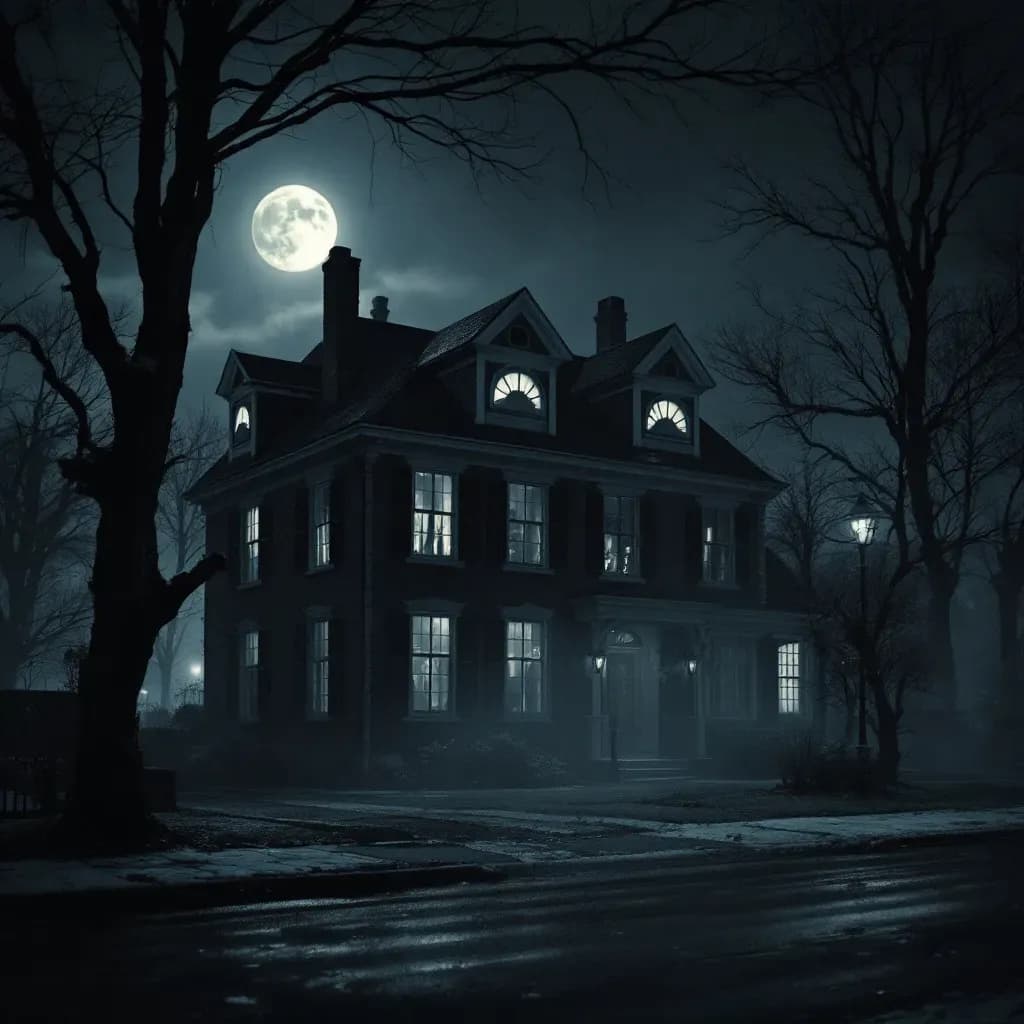
The house at 112 Ocean Avenue remains a private residence. It has been renovated over the years — most notably, the distinctive attic windows have been altered — but it continues to attract curiosity seekers and true-crime tourists. As reporting on the house and town has consistently noted, the local community has long wished the real victims — Ronald Sr., Louise, Dawn, Allison, Marc, and John DeFeo — could be remembered on their own terms, rather than as a prelude to a ghost story.