Wagner's Failed Mutiny: How Prigozhin Challenged Putin
A 24-hour armed rebellion that shook Russia—and ended in amnesty, followed by a mysterious death
Published June 6, 2025
Case Details
Quick Facts
Quick facts
Yevgeny Prigozhin, the powerful chief of the Wagner Group, launched an armed mutiny against Russia's military establishment on June 23-24, 2023, in what many observers saw as an unprecedented challenge to Vladimir Putin's authority.
The rebellion erupted after months of escalating tension. Prigozhin, commanding approximately 25,000 Wagner fighters, had waged a profane and relentless social media campaign against Defence Minister Sergei Shoigu and General Valery Gerasimov, Chief of the Russian General Staff. His grievances were specific: he accused both men of incompetence, corruption, and systematically denying Wagner adequate ammunition during operations in Ukraine. The final trigger came when the Defence Ministry ordered Wagner to sign contracts with the regular military—a move Prigozhin saw as an attempt to subordinate his force.
On June 23, Prigozhin's forces seized control of military installations in Rostov-on-Don in southern Russia, a dramatic show of force that appeared aimed at capturing Shoigu and Gerasimov. However, both men were absent from the city. Prigozhin called the operation a "march of justice," careful to frame it as something other than a direct coup against Putin himself. He also made shocking allegations: Wagner had suffered massive losses taking Bakhmut in Ukraine (captured in May 2023), and he claimed the military had hidden 2,000 bodies to conceal the true scale of casualties. The Defence Ministry dismissed his accusations as "informational provocation."
Timeline
Start of the Wagner uprising
Yevgeny Prigozhin starts an armed uprising with Wagner troops. The city of Rostov-on-Don is captured, Wagner units march toward Moscow.
Putin speaks of treason
President Putin addresses the nation in a speech and calls Prigozhin's actions treason. He announces harsh measures.
Meeting in the Kremlin
Prigozhin meets Putin in Moscow, together with 35 Wagner commanders. The charges are dropped, Prigozhin is offered the option of moving to Belarus.
Prigozhin's death
Exactly two months after the start of the uprising, Prigozhin dies in the crash of his private plane. American intelligence services suspect a targeted explosive device as the cause.
Putin responded swiftly and publicly. On June 24, he addressed the nation, condemning the mutiny as "treason" and a "stab in the back." He vowed punishment for those involved and branded it an "armed mutiny"—language designed to delegitimize Prigozhin's framing as a march of justice. The FSB, Russia's security service, opened a criminal case against Prigozhin for "calling for an armed mutiny."
However, the rebellion never escalated into the confrontation many feared. On June 24, just hours after it began, Belarus President Alexander Lukashenko brokered a deal that halted the mutiny. The agreement offered Wagner forces three options: relocate to Belarus, retire from service, or sign contracts with the Russian Defence Ministry. Prigozhin accepted the amnesty, effectively ending the crisis. In a later statement, he claimed he had simply "lost his temper"—a striking downgrade from his initial revolutionary rhetoric.
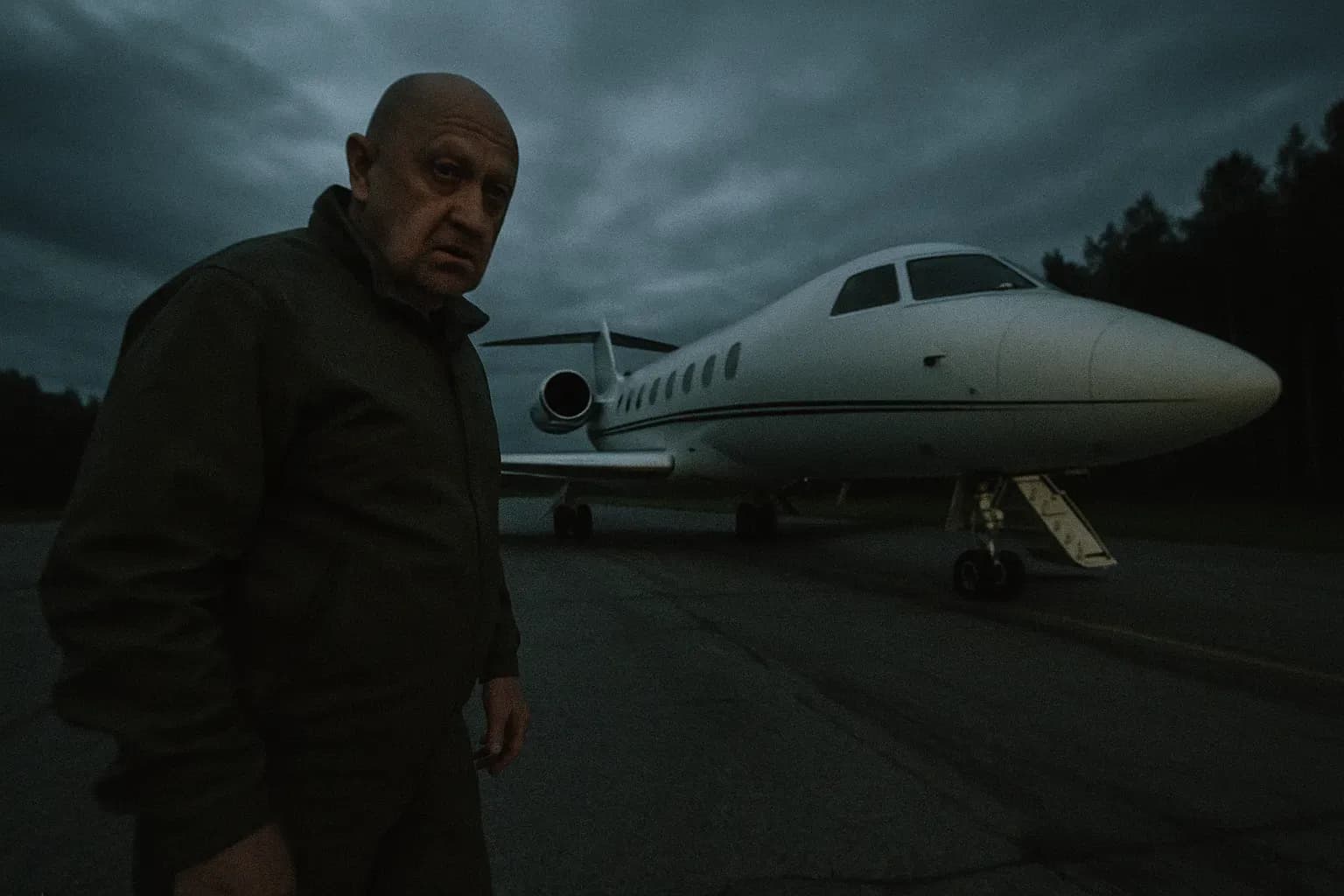
But the story did not end there. Exactly two months after the failed mutiny, on August 23, 2023, Prigozhin died in a plane crash near Tver, Russia, while flying from Moscow to St. Petersburg. All 10 people on board—seven passengers and three crew members—were killed. The crash raised immediate questions about whether Prigozhin's death was an accident or retribution for his challenge to Putin's authority. No verdicts or trials related to the mutiny were ever reported, and the amnesty deal remained in place.
The Wagner mutiny represented a rare moment of internal instability in Putin's Russia, exposing deep rifts within the military hierarchy over Ukraine strategy and resources. Yet its rapid collapse and Prigozhin's subsequent death underscored the limits of challenging Putin's grip on power, even for a figure with significant military resources and influence.
Sources
- https://www.euronews.com/2024/06/23/a-year-ago-a-mutiny-by-a-mercenary-boss-briefly-threatened-putin - https://www.jpost.com/breaking-news/article-747471 - https://themuslimtimes.info/2023/06/24/vladimir-putin-accuses-wagner-group-of-treason-as-mercenaries-claim-russian-city-in-armed-mutiny/
Ask about this case
Answers from KrimiNyt's coverage onlyFollow this case
Get an email when a new documentary, podcast or book about Wagner's Failed Mutiny: How Prigozhin Challenged Putin appears, or when a verdict is reached.