Waco 1993: The Siege That Haunted U.S. Law Enforcement
How a 51-day standoff at a Texas religious compound ended in flames, killing 76 people—and spawning decades of controversy
Published June 6, 2025
Quick Facts
On February 28, 1993, federal agents arrived at Mount Carmel Center, a religious compound outside Waco, Texas, to serve arrest and search warrants on the Branch Davidian sect and its leader, David Koresh. What began as a law enforcement operation would evolve into one of the most contentious sieges in American history—a 51-day standoff that ended in catastrophe and left lingering questions about government use of force that persist today.
The initial raid by the Bureau of Alcohol, Tobacco and Firearms (ATF) descended into gunfire. Four ATF agents and six Branch Davidians died in the opening firefight, setting the stage for a prolonged confrontation. Federal authorities, including the FBI, cordoned off the compound as negotiations began. For seven weeks, agents attempted to convince Koresh and his followers to surrender peacefully.
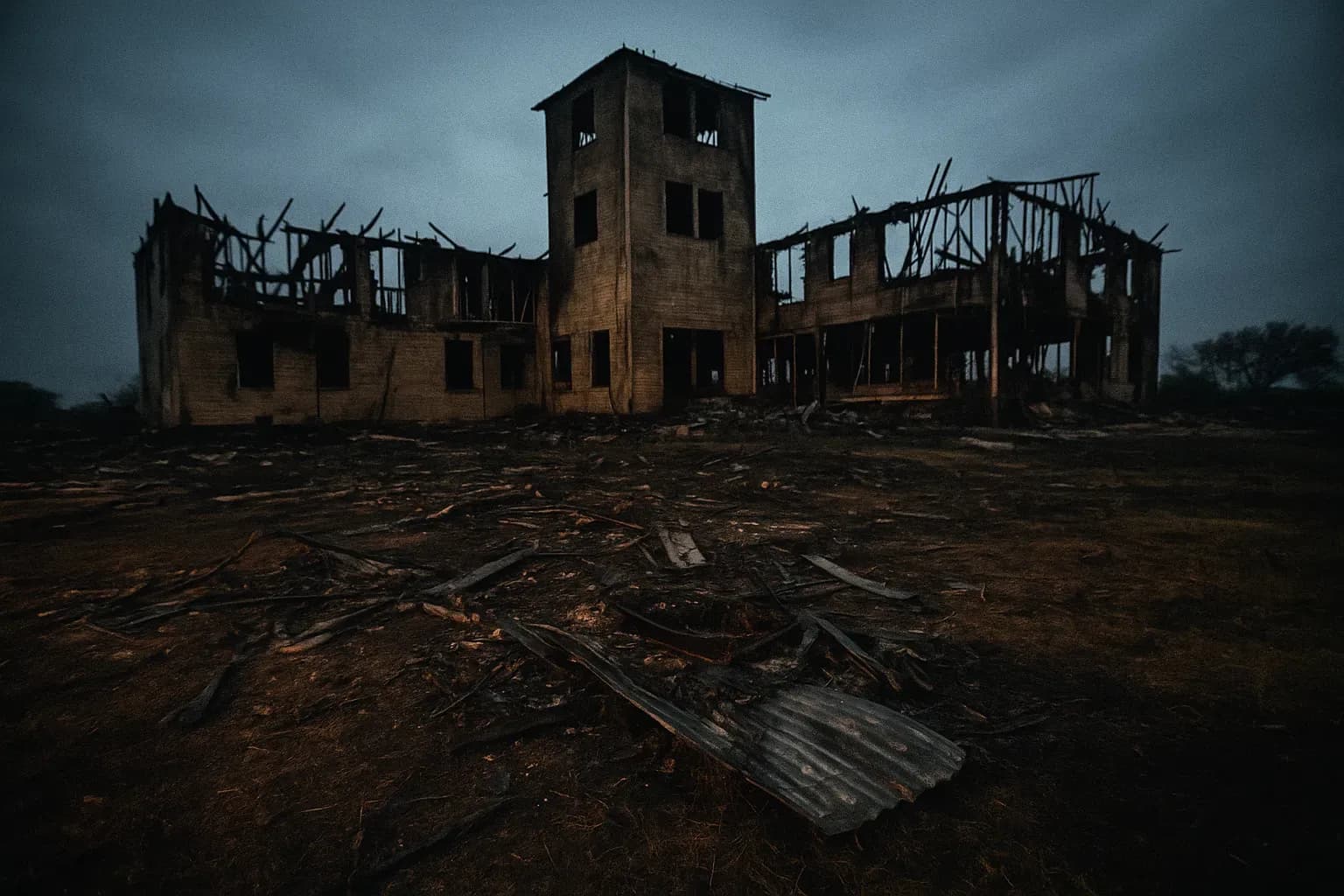
By mid-April, patience had worn thin. On April 19, the FBI launched an assault using CS gas—a tear gas compound—to force occupants from the building. Within hours, Mount Carmel Center was engulfed in flames. The speed and intensity of the fire, combined with structural damage from the gas assault, created a death trap. Of approximately 100 people inside, only nine escaped alive.
Timeline
ATF raid triggers gunfight at Mount Carmel Center
On February 28, 1993, the ATF attempts to carry out a raid. A gunfight breaks out, killing 4 ATF agents and 6 Branch Davidians.
Siege begins — FBI takes over command
After the failed raid on February 28, 1993, the FBI takes over command, and a 51-day siege of Mount Carmel Center begins.
Fire breaks out — 76 people die
On April 19, 1993, fire breaks out at Mount Carmel Center. 76 people, including 25 children, die. David Koresh is found with a gunshot wound to the head.
Siege ends after 51 days
With the fire on April 19, 1993, the 51-day siege comes to an end. Surviving Branch Davidians are taken into custody by authorities.
Trial of surviving Branch Davidians in San Antonio
Surviving Branch Davidians are prosecuted at the United States District Court for the Western District of Texas in San Antonio on, among other things, homicide-related charges and weapons violations.
Jury delivers mixed verdicts
The jury acquits the defendants of homicide-related charges but convicts some of aiding and abetting the manslaughter of federal agents and weapons violations.
Cases appealed to U.S. Court of Appeals for the Fifth Circuit
After the mixed verdicts in San Antonio, the cases are appealed to the U.S. Court of Appeals for the Fifth Circuit, the relevant federal appellate court for Texas.
The death toll was staggering: 76 Branch Davidians perished, including between 20 and 28 children. Many bodies were later found in a storage room known as "the bunker," their remains indicating they had been unable to escape. Causes of death varied—some died from smoke inhalation, others from burns, and some from structural collapse or gunshot wounds.
Among the dead was Koresh himself. The sect leader's body was identified through dental records, and an autopsy revealed a gunshot wound to the head. The FBI's official account attributed Koresh's death to Steve Schneider, the sect's second-in-command, who allegedly shot the leader before turning the weapon on himself. However, the medical examiner's report left the cause of Koresh's death officially undetermined—neither clearly murder nor suicide—a ambiguity that has fueled conspiracy theories and skepticism ever since.
For international observers accustomed to different law enforcement protocols, the Waco siege exposed stark contrasts in American tactics. European nations, for instance, have historically favored negotiation-heavy approaches in hostage or barricade situations, with lethal force as a last resort. The American operation's escalation—particularly the decision to deploy CS gas without apparent agreement from occupants—drew criticism from international law enforcement experts and human rights organizations.
Investigations followed. A Texas Rangers arson report concluded that fire accelerants used by occupants—not the FBI's gas canisters—ignited the blaze, though critics disputed this finding. Multiple congressional hearings examined the decisions made during those 51 days. Yet no criminal charges were ever filed against federal agents involved.
The Waco siege became a touchstone for American debates about government overreach, religious liberty, and the militarization of law enforcement. For armed groups and anti-government movements, particularly in the United States, Waco became a rallying point—cited as evidence of federal tyranny. The siege preceded the 1995 Oklahoma City bombing by just over two years, an attack that killer Timothy McVeigh explicitly linked to Waco as justification.
Three decades later, Waco remains contested territory in American memory. Documentaries, books, and investigative reports continue to dissect what went wrong and who bears responsibility. For international true crime observers, the case illustrates how law enforcement operations can spiral beyond their original intent, and how tragedy at a single compound can reverberate through a nation's politics and culture for generations.
Ask about this case
Answers from KrimiNyt's coverage onlyFollow this case
Get an email when a new documentary, podcast or book about Waco 1993: The Siege That Haunted U.S. Law Enforcement appears, or when a verdict is reached.