The Opioid Crisis Case — Purdue Pharma's Federal Guilty Plea
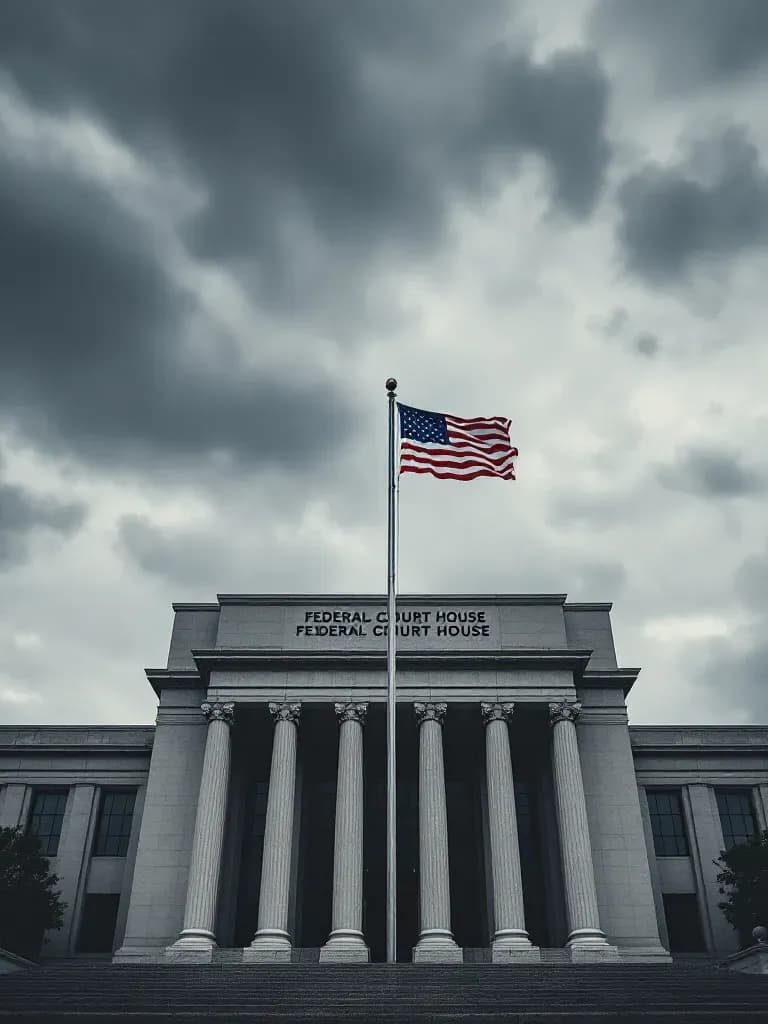
Federal court, New Jersey, USA, 2020 — corporate criminal case resolved through guilty plea
Published June 2, 2026
Quick Facts
The Case
The Opioid Crisis Case, as resolved at the federal criminal level, refers to Purdue Pharma L.P.'s guilty plea in 2020 to a three-count felony information in federal court in New Jersey. It is a corporate criminal case, not a single homicide, and addresses Purdue's role in the broader U.S. opioid epidemic through deceptive marketing, misleading reports to federal regulators, and unlawful kickback arrangements that helped fuel widespread opioid misuse and overdose deaths across the United States.
Unlike a traditional true crime case with an identifiable offender and victim, the harm here is collective: the opioid epidemic has contributed to hundreds of thousands of overdose deaths nationwide, with Purdue's prescription opioid OxyContin frequently cited as a central catalyst.
The Crime
According to the U.S. Department of Justice, Purdue admitted to a dual-object conspiracy to defraud the United States and to violate the Food, Drug, and Cosmetic Act, as well as a separate conspiracy to violate the Anti-Kickback Statute. The admitted criminal conduct covered the period from May 2007 through at least March 2017, with related civil misconduct extending from 2010 through 2018.
Timeline
First Purdue case: guilty plea for misbranding OxyContin
In a separate case in 2007, Purdue Pharma pleaded guilty to misbranding OxyContin in relation to the drug's addiction risk. This case is legally separate from the 2020 case.
Justice Department announces global federal resolution
On October 21, 2020, the U.S. Department of Justice announced the comprehensive federal resolution, which included criminal charges and a civil settlement agreement against Purdue Pharma L.P.
Purdue Pharma pleads guilty in federal court in Newark
On November 24, 2020, Purdue Pharma formally pleaded guilty to all three federal felony counts before the U.S. District Court for the District of New Jersey in Newark.
Supreme Court strikes down protection clause for Sackler family
In 2024, the U.S. Supreme Court struck down the clause in the civil settlement agreement intended to protect the Sackler family from future civil lawsuits, and returned the case for a revised settlement.
Judge Madeline Cox Arleo delivers verdict against Purdue Pharma
In April 2026, federal judge Madeline Cox Arleo of the U.S. District Court for the District of New Jersey delivered the final verdict against the company Purdue Pharma L.P.
Revised settlement implemented — Purdue Pharma dissolved
The final implementation of a revised settlement and corporate penalty took place in 2026, after which Purdue Pharma L.P. was formally dissolved as a company.
The modus operandi was systemic and corporate in nature. Purdue admitted that it represented to the Drug Enforcement Administration that it maintained an effective anti-diversion program, while in reality continuing to market its opioid products to more than 100 healthcare providers the company had reason to believe were diverting opioids. It also provided misleading information to the DEA to boost its manufacturing quotas, allowing the company to produce and sell more opioids than would otherwise have been permitted.
The Victims
The federal resolution does not identify individual victims by name. Instead, the harm is described as a nationwide public-health catastrophe. According to the CDC's overview of the opioid overdose epidemic, opioid-involved overdose deaths have risen dramatically since the late 1990s, driven first by prescription opioids and later by heroin and synthetic opioids such as illicitly manufactured fentanyl.
State-level analyses, such as those compiled by SHADAC on the opioid epidemic in the United States, document the scale of the crisis across communities, age groups, and demographic categories. Academic work, including research indexed via PubMed Central, has traced the epidemic's origins to aggressive opioid prescribing practices that were themselves shaped by pharmaceutical marketing of the kind Purdue admitted to.
Investigation
The federal investigation was conducted by the Department of Justice in coordination with the DEA and other agencies. Because the defendant was a corporation rather than an individual, the case proceeded without an arrest in the traditional sense. Investigators relied on internal company records, marketing materials, regulatory filings, and communications between Purdue and healthcare providers to build the case.
Key evidence ultimately came from Purdue's own admissions in the plea agreement, including acknowledgements that the company misrepresented its compliance posture to the DEA while continuing to push opioid sales to suspect prescribers, and that it engaged in kickback arrangements designed to increase opioid prescriptions.
Trial and Verdict
Rather than going to trial, Purdue agreed to plead guilty to a three-count felony information in federal court in New Jersey. The criminal resolution included a $3.544 billion criminal fine and $2 billion in criminal forfeiture, alongside additional civil settlements with the federal government. The plea also addressed the kickback conspiracy, marking one of the most significant corporate criminal resolutions ever announced in connection with the opioid crisis.
The resolution did not, by itself, address individual criminal liability for Purdue's executives or the Sackler family, which owned the company. Civil claims and bankruptcy proceedings involving the Sacklers and Purdue have continued in parallel and have generated significant additional litigation.
Today
The specific federal criminal case against Purdue Pharma is considered resolved through the guilty plea and global settlement. However, the underlying opioid crisis remains ongoing. Overdose deaths involving synthetic opioids such as fentanyl have continued to rise in many parts of the country, and federal, state, and local authorities continue to pursue litigation, regulation, and public-health interventions.
The Purdue case has become a touchstone in discussions of corporate accountability, pharmaceutical regulation, and the limits of criminal law in addressing mass public-health harms. It is referenced extensively in journalism, documentaries, and academic literature examining how legal opioids became a driver of one of the deadliest drug crises in American history.
Media coverage
TV series
- The Crime of the Century(2026)
Ask about this case
Answers from KrimiNyt's coverage onlyFollow this case
Get an email when a new documentary, podcast or book about The Opioid Crisis Case — Purdue Pharma's Federal Guilty Plea appears, or when a verdict is reached.