The H.H. Holmes Murders — America's First Serial Killer
Chicago, Illinois and multiple states, 1890–1895 — partially solved
Published June 7, 2026
Case Details
Quick Facts
Classification:
The Case
The H.H. Holmes murders represent one of America's most sensationalized yet historically murky serial killer cases. Herman Webster Mudgett, better known as Dr. Henry Howard Holmes or H.H. Holmes, was convicted and executed for the murder of Benjamin Pitezel in 1896, but the true extent of his crimes remains a subject of historical debate. While Holmes confessed to 27 murders, modern historians have determined that some of his alleged victims were still alive at the time of his confession, and only a smaller number of killings can be credibly attributed to him.
Born on May 16, 1861, in Gilmanton, New Hampshire, Mudgett studied medicine and moved to Chicago, where he established himself as a con artist, fraudster, and possible serial killer. Operating under various aliases, he engaged in insurance fraud, bigamy, grave robbing, and confidence schemes throughout the early 1890s. The case spans multiple states and years, with no single crime date or location, making it one of the most complex criminal investigations of the 19th century.
The Crime
Holmes's documented criminal activities centered on an elaborate insurance fraud scheme that ultimately led to his downfall. His modus operandi involved using deception and financial manipulation to isolate victims before allegedly killing them through various methods including chloroform overdose, suffocation, gas fumes, starvation, strangulation, or confinement.
Timeline
Herman Webster Mudgett born
Born in Gilmanton, New Hampshire, the future H.H. Holmes began his life in rural New England, before studying medicine and starting a criminal career.
Alleged murder of Julia and Pearl Conner
Holmes allegedly murdered Julia Conner, her daughter Pearl, and Julia's unborn child in Chicago. These murders remain among the better-documented allegations from Chicago, but were never prosecuted.
Benjamin Pitezel found dead
Benjamin Pitezel was discovered dead in Philadelphia as part of an insurance fraud scheme orchestrated by Holmes. This murder would become the central case in the prosecution of Holmes.
Holmes arrested in Boston
Following a tip from convicted train robber Marion Hedgepeth to insurance investigators, Holmes was arrested in Boston, Massachusetts on fraud charges.
Trial begins in Philadelphia
Holmes stood trial in Philadelphia for the murder of Benjamin Pitezel. The prosecution presented evidence of the insurance fraud and Pitezel's death.
Holmes convicted of murder
After a short trial, Holmes was found guilty of the murder of Benjamin Pitezel and sentenced to death by hanging.
Holmes executed
Herman Mudgett, known as H.H. Holmes, was hanged at Moyamensing Prison in Philadelphia, Pennsylvania. Before his death, he had confessed to 27 murders.
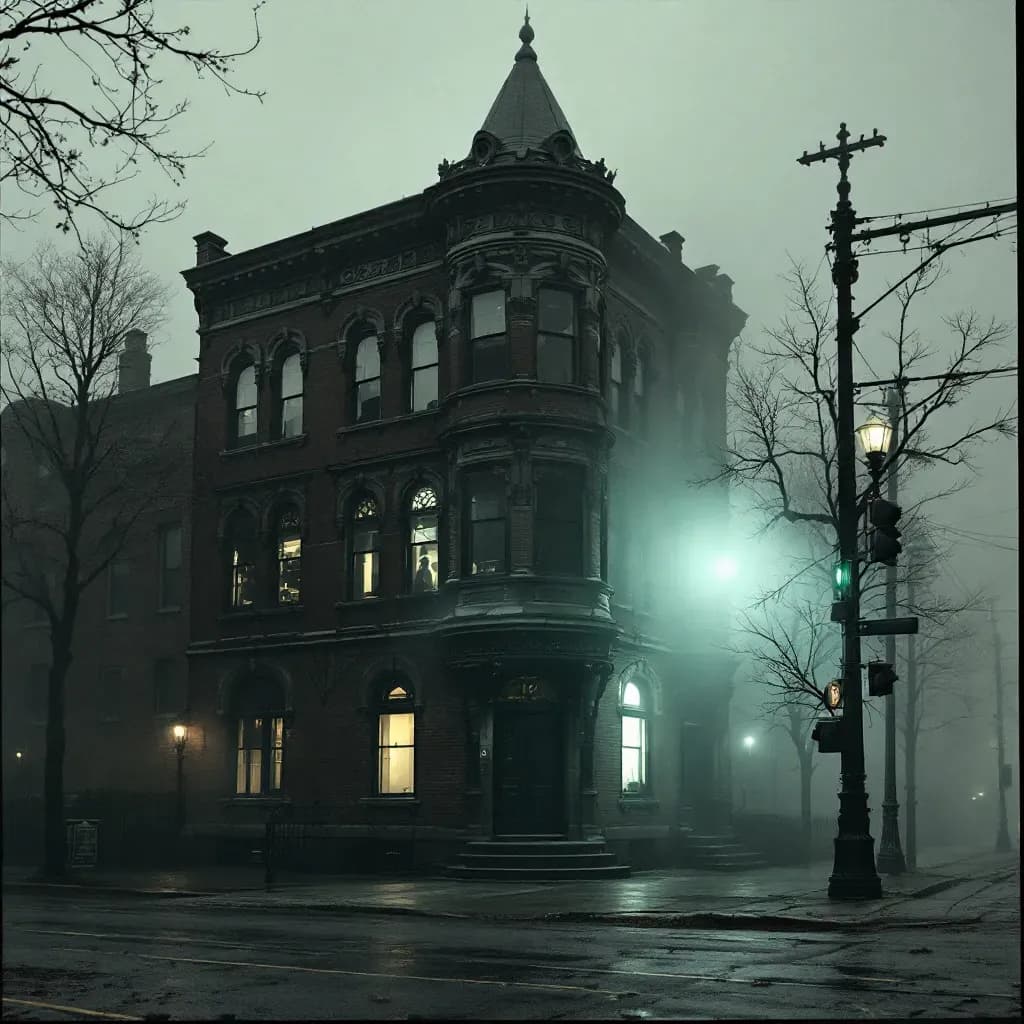
The most sensational aspect of the Holmes legend involves his Chicago building, popularly known as the "Murder Castle." This structure allegedly contained torture rooms, hidden passages, gas chambers, and a basement crematorium specifically designed for killing. However, some details about this building have been challenged by modern historians as exaggerated or embellished over time. The building became a focal point of media attention during Holmes's trial and execution, contributing to his notoriety as "America's first serial killer."
The crimes attributed to Holmes occurred primarily between 1890 and 1895, with activities spanning Chicago, Illinois, Indianapolis, Indiana, Toronto, Ontario, and Philadelphia, Pennsylvania. His methods combined his medical knowledge with elaborate deceptions, allowing him to prey on vulnerable individuals while maintaining a respectable public facade.
The Victims
The most conclusively documented victim was Benjamin Pitezel, an adult male who was Holmes's business associate. The murder of Pitezel formed the centerpiece of Holmes's trial and conviction. Pitezel's death was disguised as an accident as part of an insurance fraud scheme, but investigators eventually uncovered Holmes's role in the killing.
Holmes later confessed to killing three of Benjamin Pitezel's children, including Alice Pitezel. The exact details of these murders were investigated as part of the broader fraud and murder case. The children had been traveling with Holmes after their father's death, and their disappearances raised suspicions among investigators.
Other alleged victims include Julia Conner, her unborn child, and her daughter Pearl Conner, whom Holmes reportedly murdered around Christmas 1891 in Chicago. These are among the better-known Chicago allegations, though they were never prosecuted in court.
Holmes also confessed to murdering Minnie Williams and Nannie Williams, two sisters associated with his Chicago operations. These cases appear in later discussions of Holmes's confession and the investigation.
The critical issue with Holmes's victim count is credibility. While he confessed to 27 murders, subsequent investigations revealed that some of the people he claimed to have killed were actually still alive. Modern historians believe only a fraction of his confessed murders can be verified, possibly as few as nine confirmed victims, though the exact number remains disputed.
Investigation
The investigation into Holmes began not through traditional police work, but through the insurance industry. Marion Hedgepeth, a convicted train robber whom Holmes had met in prison, provided the crucial break in the case. Holmes had sought Hedgepeth's assistance in finding a corrupt lawyer for his insurance scheme, promising him a share of the proceeds. When Holmes failed to pay Hedgepeth as promised, the angry convict alerted insurance investigators to the fraud.
Following Hedgepeth's tip, insurance investigators began examining the suspicious death of Benjamin Pitezel in Philadelphia. Their investigation revealed inconsistencies in the supposed accidental death and uncovered Holmes's elaborate scheme to collect insurance money using Pitezel's corpse.
Holmes was arrested in Boston, Massachusetts in November 1894. As investigators dug deeper, they discovered the disappearances of the Pitezel children and began to suspect Holmes of multiple murders beyond the insurance fraud.
Detective Frank Geyer played a crucial role in tracking Holmes's movements and locating evidence of the murdered Pitezel children. Geyer's investigation took him across multiple states, following the trail of Holmes's travels with the children.
The investigation expanded to include Holmes's activities in Chicago, where his mysterious building and the disappearances of several people connected to him raised additional suspicions. However, much of the evidence from the Chicago period remained circumstantial or was based solely on Holmes's later confessions.
Trial and Verdict
Holmes stood trial in Philadelphia in October 1895, specifically for the murder of Benjamin Pitezel. The prosecution, led by District Attorney George Graham, focused on the verifiable evidence of the Pitezel killing rather than attempting to prove the numerous other alleged murders.
The trial was relatively brief, lasting only a few days. The prosecution presented evidence of the insurance fraud scheme, the circumstances of Pitezel's death, and Holmes's deliberate deceptions. The defense struggled to counter the overwhelming evidence of Holmes's guilt in the Pitezel case.
On November 2, 1895, Holmes was convicted of murder and sentenced to death by hanging. While awaiting execution, he provided various confessions, including his claim of having killed 27 people. These confessions were inconsistent and often contradictory, leading to skepticism about their reliability.
Holmes was executed by hanging on May 7, 1896, at Moyamensing Prison in Philadelphia. According to reports, the hanging was botched, and Holmes may have suffered for several minutes before dying. He was 34 years old at the time of his execution.
Notably, Holmes was never tried for the majority of the murders he confessed to, including the Chicago killings. The legal proceedings focused exclusively on the Pitezel murder, which had the strongest evidence for conviction.
Today
The H.H. Holmes case remains a subject of ongoing historical debate and popular fascination. Modern historians and researchers continue to examine primary sources to separate fact from fiction in the Holmes legend. The sensational "Murder Castle" narrative has been questioned by scholars who note that many details were embellished by contemporary newspapers seeking to boost circulation.
The case gained renewed attention with Erik Larson's 2003 bestselling book "The Devil in the White City," which intertwined Holmes's story with the 1893 Chicago World's Fair. This book introduced Holmes to a new generation and sparked fresh interest in his crimes. The History Channel produced a series titled "American Ripper" examining the Holmes case, and numerous documentaries continue to explore the mystery.
Archivists and researchers have worked to verify Holmes's actual victim count using contemporary records, death certificates, and witness statements. This scholarly work has revealed that the true number of victims is likely much lower than the sensational claims made during and after Holmes's trial, possibly between nine and a dozen confirmed murders.
The site of Holmes's Chicago building, which burned down shortly before his execution under suspicious circumstances, is now occupied by a post office. No physical evidence from the building survives, making it impossible to verify many of the claims about its alleged torture chambers and killing rooms.
The case continues to raise questions about media sensationalism, the reliability of confessions, and how criminal legends are constructed and perpetuated. While Holmes was undoubtedly a con artist and murderer, the extent of his crimes may never be fully known, leaving his case perpetually classified as partially solved.
Media coverage
TV series
- H.H. Holmes: America's First Serial Killer(2026)
Ask about this case
Answers from KrimiNyt's coverage onlyFollow this case
Get an email when a new documentary, podcast or book about The H.H. Holmes Murders — America's First Serial Killer appears, or when a verdict is reached.