The Family International: From Cult to Reckoning
How a 1960s Jesus Movement splinter group became one of the most controversial organizations in modern history
Published June 6, 2025
Case Details
Quick Facts
Classification:
Quick facts
In 1968, David Brandt Berg launched what would become one of the most controversial religious organizations of the modern era. Beginning in Huntington Beach, California, as "Teens for Christ," the group quickly evolved through various names—Children of God, The Family of Love, and eventually The Family International (TFI)—each rebranding reflecting shifts in ideology and public perception.
Berg's vision was radical for its time. The organization emphasized a "spiritual revolution" against "the System"—their term for the outside world—combined with apocalyptic messaging and demands for total commitment from followers. By 1972, just four years after its founding, the movement had already established 130 communities worldwide. Within a decade, TFI operated in an estimated 70 countries with roughly 10,000 full-time members, according to BBC reports from the 1970s.
The group's rapid expansion masked darker practices that would later become the focus of international scrutiny. Beginning in 1976, TFI leadership introduced "Flirty Fishing"—a practice that used sexual contact to evangelize and secure financial support from outsiders. TFI claimed the controversial method resulted in over 100,000 conversions, but it would later serve as a gateway to more systematic abuses.
Timeline
Founding of Children of God
David Berg founds the group in Huntington Beach, California
Start of international investigations
Police raids and legal investigations in several countries due to child abuse
First official changes
The leadership bans sexual contact with children and minors
End of Flirty Fishing
The controversial practice is officially discontinued
Court verdict
The court confirms systematic child abuse, but notes changes in practice
By the late 1970s, TFI's internal publications and documented practices revealed alarming patterns: advocacy for and documentation of adult-child sexual contact and the sexualization of children within the organization. Between 1978 and 1986, children within TFI communities were subjected to inappropriate sexual advances by adults, a reality the organization would eventually acknowledge.
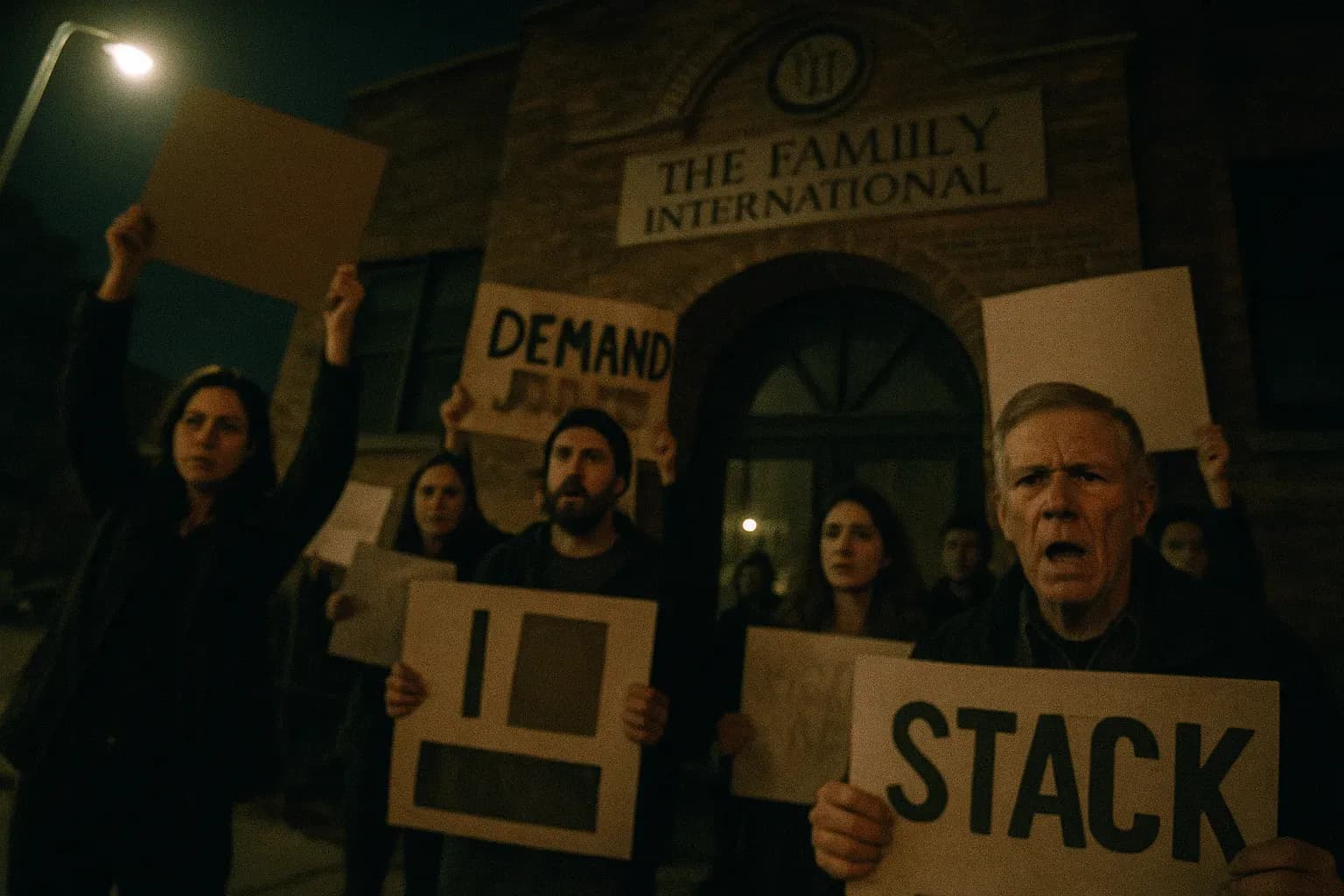
The first major public reckoning came in 1974 when New York's Attorney General's Office officially designated COG a "cult." Throughout the 1970s and into the 1980s, both the FBI and Interpol conducted investigations into allegations of rape, imprisonment, kidnapping, and incest within TFI communities. These investigations continued until 1994, the year Berg died and leadership passed to Karen Zerby, who assumed the titles "Queen" and "prophetess."
The 1993 Los Angeles Times exposé marked a turning point. The investigation prompted TFI to invite journalists and scholars to one of their California communes in an attempt at damage control—a move that backfired as reporting intensified public awareness of the group's history.
In response to mounting pressure, TFI implemented a partial reform in 1986: banning sexual contact between adults and minors under 21, making such violations excommunicable offenses. However, the organization maintained a troubling policy regarding historical abuses—it would not turn over pre-1989 child abusers to civil authorities, instead handling cases internally through excommunication for violations after July 1989.
International legal systems eventually caught up with TFI's history. A British court found the organization to be an authoritarian cult engaged in systematic physical and sexual abuse of children, causing lasting psychological trauma to survivors. China's government also identified TFI as a cult. By the 1990s, as TFI's membership declined to approximately 9,000 worldwide (750 in the United States), multiple countries launched formal investigations.
These investigations revealed a complex picture: while contemporary TFI environments were found to be generally safe for children, the organization's historical practices constituted some of the most documented cases of systematic institutional child abuse in modern religious history.
Today, TFI remains active in international missionary work, but its legacy is permanently marked by decades of abuse, institutional cover-ups, and the thousands of survivors left to process trauma inflicted during their childhoods within the organization.
Ask about this case
Answers from KrimiNyt's coverage onlyFollow this case
Get an email when a new documentary, podcast or book about The Family International: From Cult to Reckoning appears, or when a verdict is reached.