The $6 Billion Gold Hoax That Fooled the World
How Bre-X Minerals fabricated one of history's largest mining frauds in the Indonesian jungle
Published June 6, 2025
Case Details
Quick Facts
Classification:
Quick facts
In October 1995, Calgary-based Bre-X Minerals announced a discovery that would make headlines worldwide: an enormous gold deposit at the Busang site in East Kalimantan, Indonesia. The company's stock price soared. Independent engineers from Kilborn Engineering valued the find at approximately 71 million troy ounces. By 1996, Bre-X's market capitalization had reached $6 billion, making it one of the most valuable mining companies in the world.
But there was no gold—at least not in the quantities claimed. The entire discovery was a fabrication.
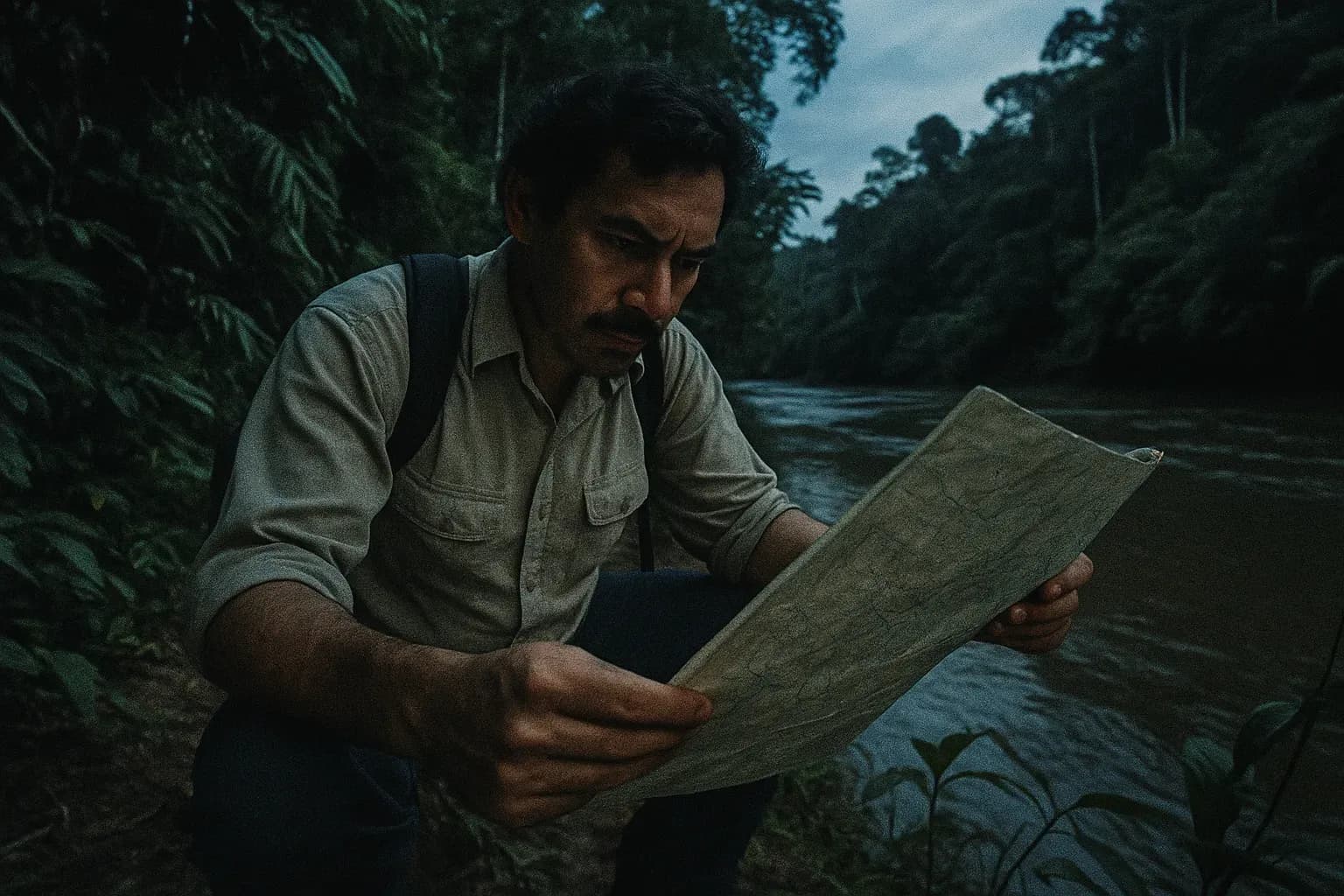
The fraud began to unravel in March 1997. On March 19, Michael de Guzman, Bre-X's chief geologist and the key figure driving the Busang project, reportedly jumped from a helicopter over the Indonesian jungle. His body was found four days later, 400 meters from a logging road, missing hands and feet. The circumstances surrounding de Guzman's death have remained contested, with questions raised about whether it was truly suicide and whether the body was correctly identified.
Timeline
Beginning of exploration work
Bre-X Minerals begins exploration work in the Busang region of Borneo, Indonesia.
Sensational gold discovery announced
Bre-X announces the alleged discovery of significant gold deposits in Busang. Stock prices begin to rise.
Peak of the hype
Bre-X's market value reaches astronomical heights. The company is valued at up to 6 billion US dollars.
Death of Michael de Guzman
Chief geologist Michael de Guzman falls to his death from a helicopter over the Indonesian jungle under unclear circumstances. The official cause of death remains unclear.
Strathcona report reveals fraud
Strathcona Minerals publishes a devastating analysis report: the drill samples had been tampered with, with gold artificially added.
Freeport-McMoRan finds no gold
The American mining company Freeport-McMoRan conducts its own drilling and finds no gold in the minerals at all.
Bre-X collapse
Bre-X's stock price collapses completely. Trading is suspended, and the company faces its end.
Indonesian government withdrawal
The Indonesian government withdraws several permits and reduces Bre-X's control over the mining area to 45 percent.
Following de Guzman's death, the company's share price plunged. On May 4, 1997, independent laboratory testing confirmed what skeptics had suspected: core samples from Busang had been salted with gold dust and shavings—in some cases, gold shaved directly from jewelry—to inflate the assay results artificially.
The scope of the deception was staggering. There was no significant gold at Busang. An entire multi-billion-dollar mining claim was built on fraudulent core samples.
The backstory made the fraud even more audacious. Before announcing the Busang discovery, Bre-X was nearly broke. Founder David Walsh had filed for personal bankruptcy in June 1992, carrying a debt of $200,000. The gold discovery changed everything—or appeared to.
Bre-X was forced into bankruptcy in 1997. The company that had captivated the mining world and attracted billions in investment collapsed entirely.
What followed was a legal reckoning that satisfied few. Despite the scale of the fraud, no criminal convictions resulted. David Walsh, the company's founder and chairman, maintained he was a victim of the scheme and denied knowledge of the fraud. He died without ever being charged.
John Felderhof, the company's vice president for exploration and vice chairman, also denied knowing about the salted samples. In 2007, after years of legal proceedings, the Ontario Securities Commission acquitted Felderhof of insider trading and securities violations charges, citing insufficient evidence that he knew about the fraud.
Michael de Guzman, the geologist most directly implicated in the sample salting, could not be prosecuted. Beyond questions about the circumstances of his death, there were also peculiar details: one woman claiming to be his wife continued receiving payments after his death, adding another layer of mystery to the case.
Prosecutors faced significant obstacles. The death of de Guzman eliminated a key witness. Evidence was largely circumstantial. Proving intent—that Walsh or Felderhof knowingly participated in the fraud rather than being duped by subordinates—proved impossible in court.
The Bre-X scandal remains one of the largest mining frauds ever perpetrated. It devastated investors who believed in the company's promise and exposed vulnerabilities in how mining discoveries are verified. The fact that no one faced serious criminal consequences has rankled observers for decades, making Bre-X a cautionary tale about the dangers of unchecked ambition in the resource extraction industry.
Sources: https://www.jdsupra.com/legalnews/the-bre-x-mining-scandal-part-1-a-7147074/ https://en.wikipedia.org/wiki/Bre-X https://compliancepodcastnetwork.net/the-bre-x-mining-scandal-part-3-why-was-no-one-prosecuted/ https://www.historyvshollywood.com/reelfaces/gold/ https://www.cliffsnotes.com/study-notes/34083615
Ask about this case
Answers from KrimiNyt's coverage onlyFollow this case
Get an email when a new documentary, podcast or book about The $6 Billion Gold Hoax That Fooled the World appears, or when a verdict is reached.