Lasermannen: Sweden's Racist Serial Shooter John Ausonius
Terror spree targeting immigrants across Stockholm
Published June 6, 2025
Classification:
Quick Facts
What Happened
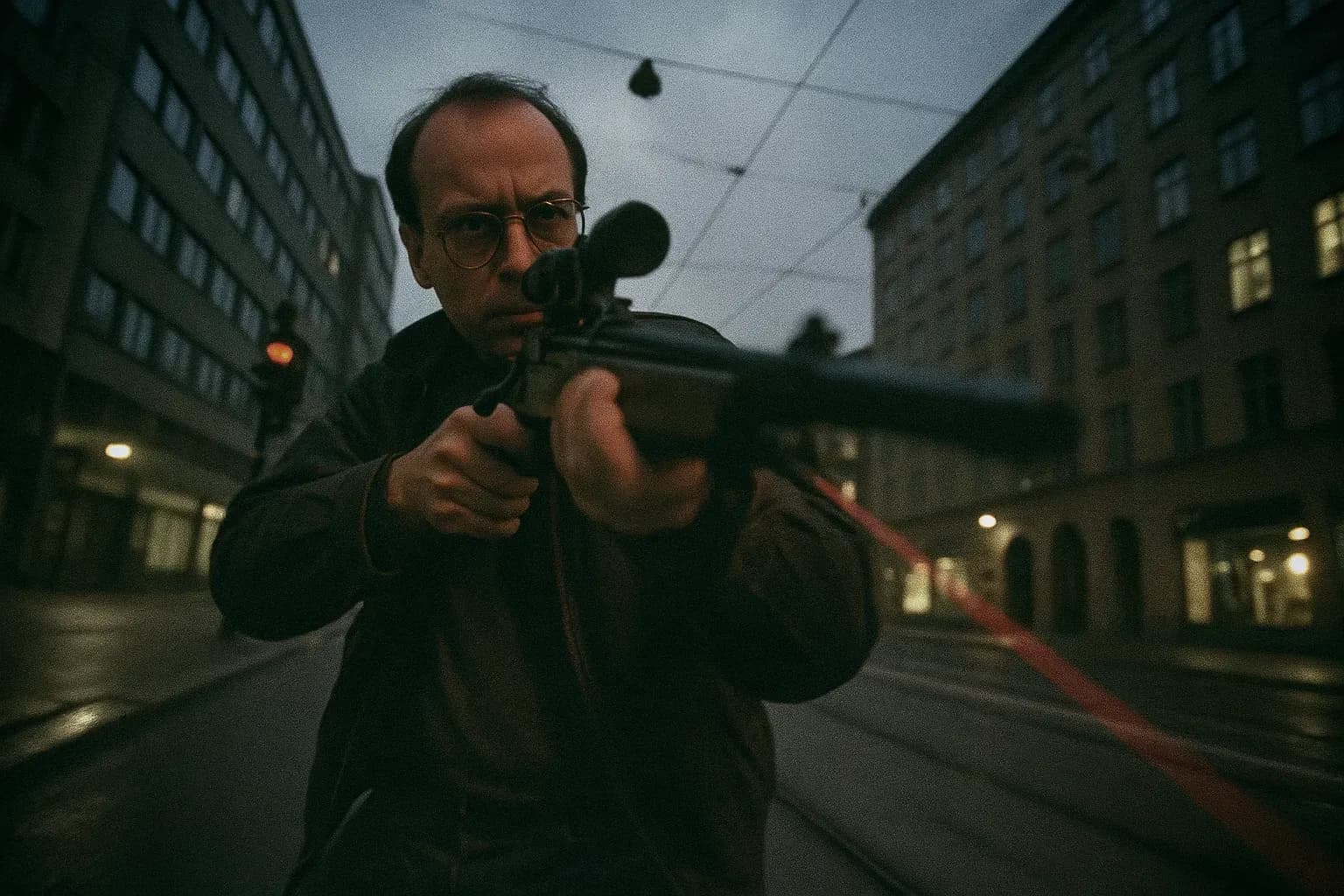
John Wolfgang Alexander Ausonius, born Wolfgang Alexander Zaugg on July 12, 1953, conducted a six-month reign of terror across Stockholm and Uppsala, Sweden, between August 1991 and January 1992. Operating under cover of darkness, Ausonius targeted immigrants with a rifle equipped with a laser sight, earning him the chilling nickname "Lasermannen" (The Laser Man).
The shooting spree began in August 1991 when Ausonius shot a 21-year-old Eritrean student. Over the following months, he would shoot a total of 11 people, selecting his victims based solely on their immigrant background or non-Swedish appearance. Ten victims survived with serious injuries, while 34-year-old Iranian man Jimmy Ranjbar was killed during the rampage.
The attacks created widespread fear in Sweden's immigrant communities, with many people of foreign background afraid to venture out after dark. The distinctive red laser dot that victims saw before being shot became a symbol of terror throughout the country.
Timeline
David Gebremariam killed — first known attack
The 21-year-old Eritrean immigrant David Gebremariam is shot and killed. The attack is the first in Ausonius' shooting campaign and takes place on August 3, 1991.
Shooting campaign in Sweden ends
The systematic series of attacks in the Stockholm area and Uppsala ends in January 1992. A total of 11 people are hit — 1 killed and 10 wounded.
Ausonius arrested after bank robbery in Stockholm
On June 12, 1992, John Ausonius is arrested in connection with a bank robbery in Stockholm. The arrest leads to the solving of the Laser Man case.
Killing of Blanka Zmigrod in Frankfurt
Ausonius commits a separate killing of Holocaust survivor Blanka Zmigrod in Frankfurt, Germany, in 1992. The case is subsequently handled by German courts.
Ausonius's criminal activities extended beyond Sweden. In 1992, he murdered 68-year-old Blanka Zmigrod, a Jewish Holocaust survivor, in Frankfurt, Germany. This killing would later result in additional prosecution decades after his Swedish conviction.
Investigation
The Lasermannen case became one of Sweden's most intensive manhunts. Police struggled to identify the shooter as he struck seemingly at random across the Stockholm and Uppsala area, leaving few clues at each scene. The use of a laser sight was unusual and became the investigation's defining characteristic.
Swedish authorities faced mounting public pressure as the attacks continued through late 1991 and into early 1992. The pattern was clear—all victims were visibly immigrants or people of color—indicating racist motivation, but the shooter's identity remained elusive.
The breakthrough came through traditional police work rather than forensic evidence. Investigators eventually identified Ausonius and arrested him, ending the shooting spree that had paralyzed immigrant communities for months.
The connection to the Frankfurt murder of Blanka Zmigrod would not be established until much later, requiring cooperation between Swedish and German law enforcement agencies.
Legal Proceedings
John Ausonius was convicted in Sweden for the shooting spree that terrorized Stockholm and Uppsala between 1991 and 1992. Swedish courts found him guilty of murder in the death of Jimmy Ranjbar and attempted murder for the ten survivors of his attacks. He received a life sentence for these crimes.
The case took an international turn when German authorities connected Ausonius to the 1992 murder of Blanka Zmigrod in Frankfurt. Decades after the original Swedish conviction, German prosecutors sought to try Ausonius for this separate killing.
Ausonius was subsequently convicted in Germany for the murder of the Holocaust survivor, resulting in a second life sentence. The German prosecution highlighted the particularly heinous nature of killing a woman who had survived the Holocaust only to be murdered in an act of antisemitic violence.
The dual life sentences in two countries represent one of Europe's most significant prosecutions for racially motivated serial violence. The cases in both Sweden and Germany emphasized the terrorist nature of Ausonius's crimes, which were designed to create fear within immigrant and Jewish communities.
Current Status
John Wolfgang Alexander Ausonius remains incarcerated, serving life sentences in both Sweden and Germany for his crimes. The Lasermannen case resulted in his conviction for one murder and ten attempted murders in Sweden, plus the additional murder conviction in Germany for killing Blanka Zmigrod.
The double life sentence reflects the severity and international scope of his crimes. Swedish life sentences typically allow for parole consideration, but the addition of the German conviction complicates any potential release.
Ausonius's case continues to be referenced in discussions about racist violence, hate crimes, and terrorism in Europe. The shooting spree remains one of Sweden's most notorious criminal cases.
Media Coverage
The Lasermannen case received extensive media coverage in Sweden during the 1991-1992 shooting spree, with daily reports tracking the investigation and warning immigrant communities. The distinctive laser sight detail captured public imagination and fear, making the case one of the most reported criminal investigations in Swedish history.
International media attention increased when the connection to the Frankfurt murder emerged, particularly given that Blanka Zmigrod was a Holocaust survivor. The case became a symbol of both racist and antisemitic violence in Europe.
The moniker "Lasermannen" has entered Swedish cultural vocabulary as shorthand for racist terrorism. The case has been the subject of books, documentaries, and academic studies examining hate crimes and racial violence in Scandinavia.
German media coverage of the Zmigrod murder trial decades later brought renewed attention to Ausonius's crimes, emphasizing the long-delayed justice for the Frankfurt victim and highlighting the persistence of authorities in pursuing historical cases.
Sources
This article was compiled from English-language sources documenting the Lasermannen case, including reporting on John Wolfgang Alexander Ausonius's convictions in both Sweden and Germany. The case details derive from court records and contemporary reporting on the 1991-1992 Stockholm and Uppsala shooting spree, the murder of Jimmy Ranjbar, and the subsequent prosecution for the Frankfurt killing of Blanka Zmigrod. Additional information comes from international crime databases and European law enforcement reports on cross-border prosecutions for racially motivated violence.
Media coverage
TV series
- Jakten på Lasermannen: Inside Sweden's Hunt for the Laser Man(2026)
- Lasermannen: SVT's Documentary on John Ausonius's Stockholm Terror(2026)
Ask about this case
Answers from KrimiNyt's coverage onlyFollow this case
Get an email when a new documentary, podcast or book about Lasermannen: Sweden's Racist Serial Shooter John Ausonius appears, or when a verdict is reached.