The Kanungu Massacre: When a Cult's End Times Became Murder
How a religious movement in Uganda killed over 1,000 people in planned executions disguised as apocalyptic suicide
Published June 6, 2025
Case Details
Quick Facts
Classification:
Quick facts
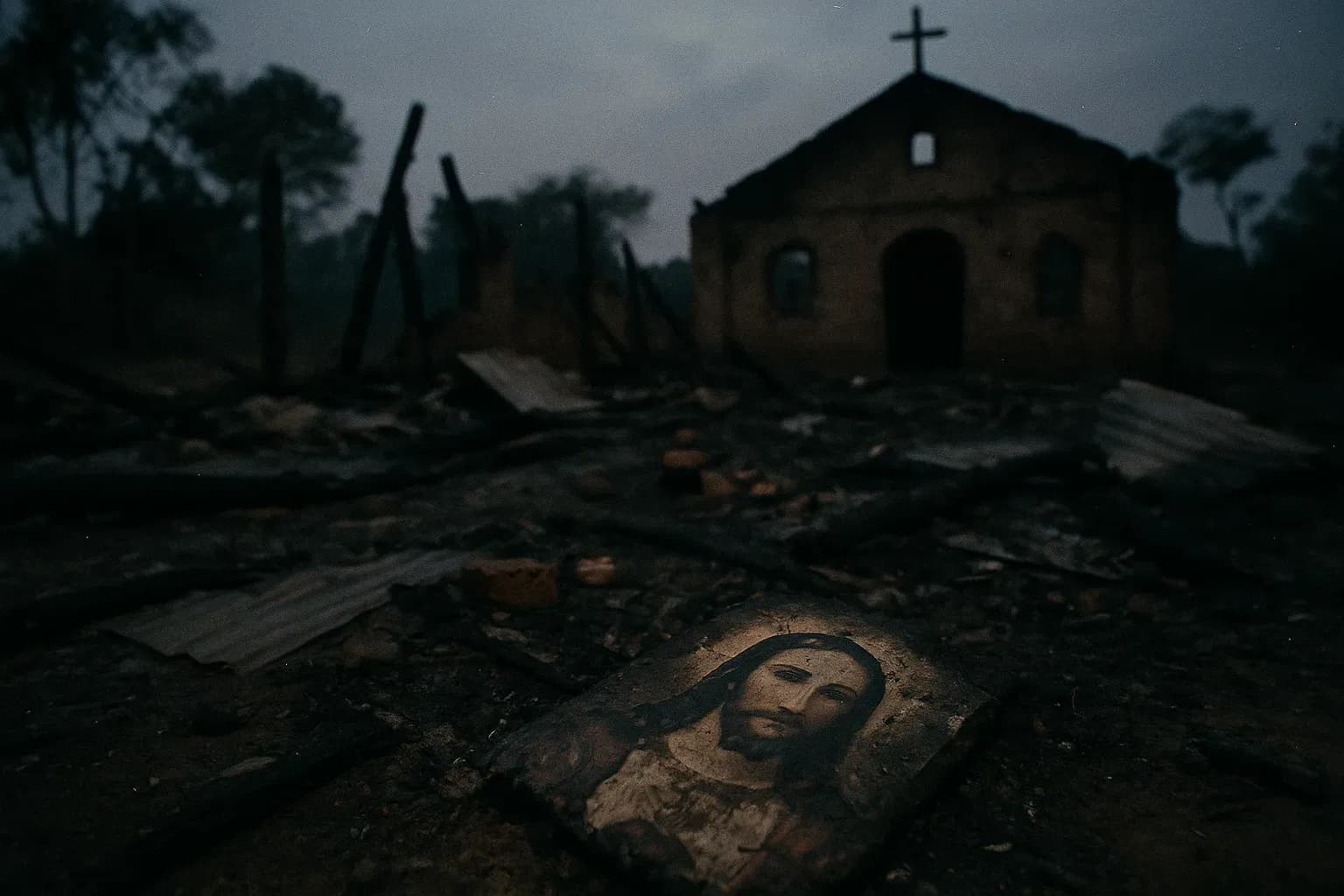
On March 17, 2000, southwestern Uganda witnessed one of the deadliest cult-related mass killings in modern history. In Kanungu, Rukungiri District, more than 500 people were locked inside a church hall known as "the Ark"—a reference to Noah's Ark—as cult leaders set it ablaze. The doors and windows had been boarded up and nailed shut. By the end of March, the confirmed death toll had soared to approximately 1,000 as authorities discovered mass graves at multiple cult sites across the country.
What initially appeared to be a mass suicide was quickly established as premeditated mass murder. The perpetrators were the leadership of the Movement for the Restoration of the Ten Commandments of God, a splinter group from the Catholic Church that had cultivated an apocalyptic following through manipulation and exploitation.
The Cult's Apocalyptic Deception
Timeline
Failed doomsday prophecy
The cult leaders had predicted the end of the world on New Year's Eve 1999. When this did not happen, they intensified their manipulation of the followers.
Church fire in Kanungu
Over 500 people die in a church in Kanungu, Uganda, that had been locked from the inside and set on fire.
First mass graves discovered
Authorities begin finding mass graves with hundreds of bodies on the cult's properties.
153 bodies found in Buhinga
In the village of Buhinga, 153 bodies are discovered in mass graves.
155 bodies in Rugazi
At the house of priest Dominic Kataribabo in Rugazi, 155 additional victims are found.
Further mass graves
Additional mass graves are located in Rushojwa (81 victims) and Buziga (55 victims). The total death toll exceeds 1,000.
Mass murder instead of suicide
Investigators confirm: it was not mass suicide, but systematic murder. Many victims were killed weeks before the church fire.
The movement's co-leader, Credonia Mwerinde, had claimed to receive visions from the Virgin Mary and possessed spiritual powers. She prophesied that the world would end on December 31, 1999. When that date passed without incident, followers were told a new end-times scenario: the apocalypse would arrive on March 17, 2000. The cult's messaging exploited Uganda's devastating HIV/AIDS epidemic, portraying the disease as divine punishment for sinners.
Leader Joseph Kibwetere and his co-conspirators—including renegade Catholic priests Fr. Joseph Kasapurari, Fr. Dominic Kataribabo, and others—systematized the deception. In March 2000, the group made preparations that revealed their true intentions: they slaughtered cattle and purchased massive quantities of Coca-Cola, ostensibly preparing for a "feast before death."
Murder Before the Flames
Excavations exposed the horrifying reality behind the narrative. Ugandan authorities exhumed 81 bodies from one site alone, described as "fresh"—less than a month old. Three mass graves were found within the cult leaders' house itself, two in one room and one in another. Eight additional graves were discovered in a banana garden, containing bodies buried well before March 2000, interred with apparent local knowledge and assistance.
Forensic examination revealed the victims did not all perish in the fire. Causes of death included fractured skulls (three victims), strangulation (21 victims), and stabbing (one victim). Others had been poisoned. Children were among the dead—victims too young to make any independent decision about their fate, let alone consent to their own execution.
Investigation and Accountability
Ugandan police issued an arrest warrant for Joseph Kibwetere, who disappeared on or around March 17, 2000. Whether he died in the Kanungu fire alongside two of his daughters and four of his sons remains unclear; he was survived by three married daughters and one son in Rwanda. He was accused of setting victims ablaze. Unconfirmed reports from 2014 suggested Kibwetere had been hiding in Malawi, though this has never been verified.
Credonia Mwerinde's fate is equally uncertain. Scholar Richard Vokes, in his 2009 work *Ghosts of Kanungu*, noted that witness testimony surrounding the leadership's movements was unreliable, leaving open the possibility that some cult architects escaped justice.
Police indicted the cult's leadership for mass murder. However, government-ordered exhumations were subsequently suspended, meaning the true death toll may never be fully known. The confirmed count of approximately 1,000 represents only those whose remains were discovered—likely an underestimate of the movement's total victims.
Sources
https://infosect.freeshell.org/infocult/THE_KANUNGU_MASSACRE.doc
https://www.theeastafrican.co.ke/tea/magazine/the-cult-killings-that-shocked-the-world-1388194
https://en.wikipedia.org/wiki/Joseph_Kibweteere
https://www.ecoi.net/en/document/2026678.html
Ask about this case
Answers from KrimiNyt's coverage onlyFollow this case
Get an email when a new documentary, podcast or book about The Kanungu Massacre: When a Cult's End Times Became Murder appears, or when a verdict is reached.