Bitconned
Netflix, 2024 — The Centra Tech crypto ICO fraud that stole $25M+ from investors
Quick facts
What Is Bitconned About?
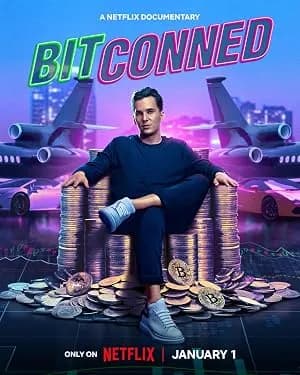
Bitconned is a Netflix documentary film directed by Bryan Storkel and released on January 1, 2024. It tells the story of Centra Tech, a Miami-based cryptocurrency startup whose founders raised more than $25 million — and by some accounts over $32 million — from investors through a fraudulent initial coin offering (ICO) in 2017. Netflix has described it as the story of "the first high-profile fraud case of the crypto era," and the film uses co-founder Raymond "Ray" Trapani as its central narrator, allowing him to recount his own role in the scheme in his own words. The result is a documentary that functions simultaneously as a cautionary tale about the speculative frenzy surrounding early cryptocurrency, a portrait of brazen financial crime, and an uncomfortable showcase for one of the scheme's chief architects.
The Case
Centra Tech was founded in South Florida — primarily operating out of Miami — by Sohrab "Sam" Sharma, Raymond "Ray" Trapani, and Robert Farkas. Beginning in mid-2017, the company launched an ICO for its "CTR Token," marketing itself as a business that had secured partnerships with Visa and Mastercard to offer a cryptocurrency debit card. Those partnerships were entirely fabricated. The company also invented fictitious executive biographies and falsified credentials to lend the operation an air of legitimacy during a period when ICO investment was booming and regulatory frameworks were still catching up.
The scheme attracted more than $25 million in investor funds before federal and regulatory authorities moved in. The investigation and eventual prosecution were accelerated by journalist reporting that publicly identified Centra Tech as a fraudulent enterprise, a detail Netflix highlights in the documentary's framing. The U.S. Securities and Exchange Commission also filed civil charges alongside the federal criminal case.
All three founders ultimately pleaded guilty:
- Sohrab "Sam" Sharma pleaded guilty to conspiracy to commit securities fraud, wire fraud, and mail fraud, and was sentenced to 8 years in federal prison. He remains incarcerated.
- Robert Farkas, the company's CFO, pleaded guilty to conspiracy to commit securities fraud and wire fraud, and served 1 year in prison. He has since been released.
- Raymond "Ray" Trapani pleaded guilty to 10 counts, including securities fraud and wire fraud, but received a sentence of time served in recognition of his substantial cooperation with federal prosecutors.
The victims were investors — retail and otherwise — who purchased CTR Tokens during the ICO period, drawn in by the company's false claims of institutional credibility and the speculative excitement of the early crypto boom.
Production
Bitconned was directed by Bryan Storkel, whose previous work includes documentary films examining faith, sport, and subculture. According to Netflix's Tudum, the film centers heavily on Ray Trapani, who speaks directly to camera and narrates the story of how Centra Tech was built and ultimately collapsed. This structural choice — giving a convicted fraudster the platform to tell his own story — is one of the film's most discussed creative decisions.
Storkel reportedly secured Trapani's participation as the primary on-screen subject, which gives Bitconned much of its propulsive energy but also raises legitimate questions about point of view and editorial control. The Netflix Media Center frames the documentary as an investigation into how the fraud was constructed, how it was exposed, and what it reveals about the vulnerabilities of investors during the early ICO gold rush. The film runs as a single feature-length documentary rather than a multi-episode series.
Reception
Bitconned holds an IMDb rating of 6.5/10, which reflects a modestly positive but divided audience response. Critics and reviewers have largely described the film as entertaining and infuriating in equal measure, with the entertainment often coming at the expense of a more rigorous moral reckoning.
Reason magazine's review characterizes the documentary as a portrait of a "sleazy" con artist whose charisma is on full display throughout — and notes that the film's decision to let Trapani narrate his own complicity risks allowing him to self-mythologize rather than be properly held to account. This tension — between compelling storytelling and the danger of glamorizing fraud — is the central critical conversation around Bitconned.
Other reviewers have emphasized its value as a cautionary tale about "get-rich-quick" mentality and the dangers of speculative investment in unregulated markets. The documentary arrives at a moment when crypto fraud remains a live and evolving issue, which gives the Centra Tech story renewed relevance even though the crimes occurred in 2017–2018. Viewer reactions captured in early coverage tend to be sharply critical of the scammers themselves, with Trapani in particular described in harsh terms despite — or perhaps because of — his prominent on-screen role.
The film's most persistent controversy is precisely its framing: by centering Trapani and allowing him extended screen time to reflect on the scheme, Bitconned walks a fine line between exposé and platform. Whether Storkel successfully keeps that tension productive or whether the documentary ultimately flatters its subject is a question reviewers have not resolved unanimously.
The Case Today
As of 2024, the legal consequences of the Centra Tech fraud have largely run their course through the courts. Sohrab Sharma is still serving his eight-year federal prison sentence. Robert Farkas has completed his one-year sentence and been released. Raymond Trapani, whose cooperation with federal authorities earned him a time-served sentence, is not reported to be incarcerated and has clearly re-entered public life sufficiently to participate in the making of Bitconned.
The Centra Tech case remains a landmark in the history of cryptocurrency regulation. It was among the first major ICO fraud prosecutions in the United States, and it helped establish the legal precedent that digital token offerings can constitute securities offerings subject to federal law — a principle that continues to shape SEC enforcement actions across the crypto industry. For investors, journalists, and regulators, the story documented in Bitconned is not a historical curiosity but an early chapter in an ongoing reckoning with how fraud adapts to emerging financial technologies.