Crypto
Behind the facade of anonymous transactions and cybercriminals' preferred tool
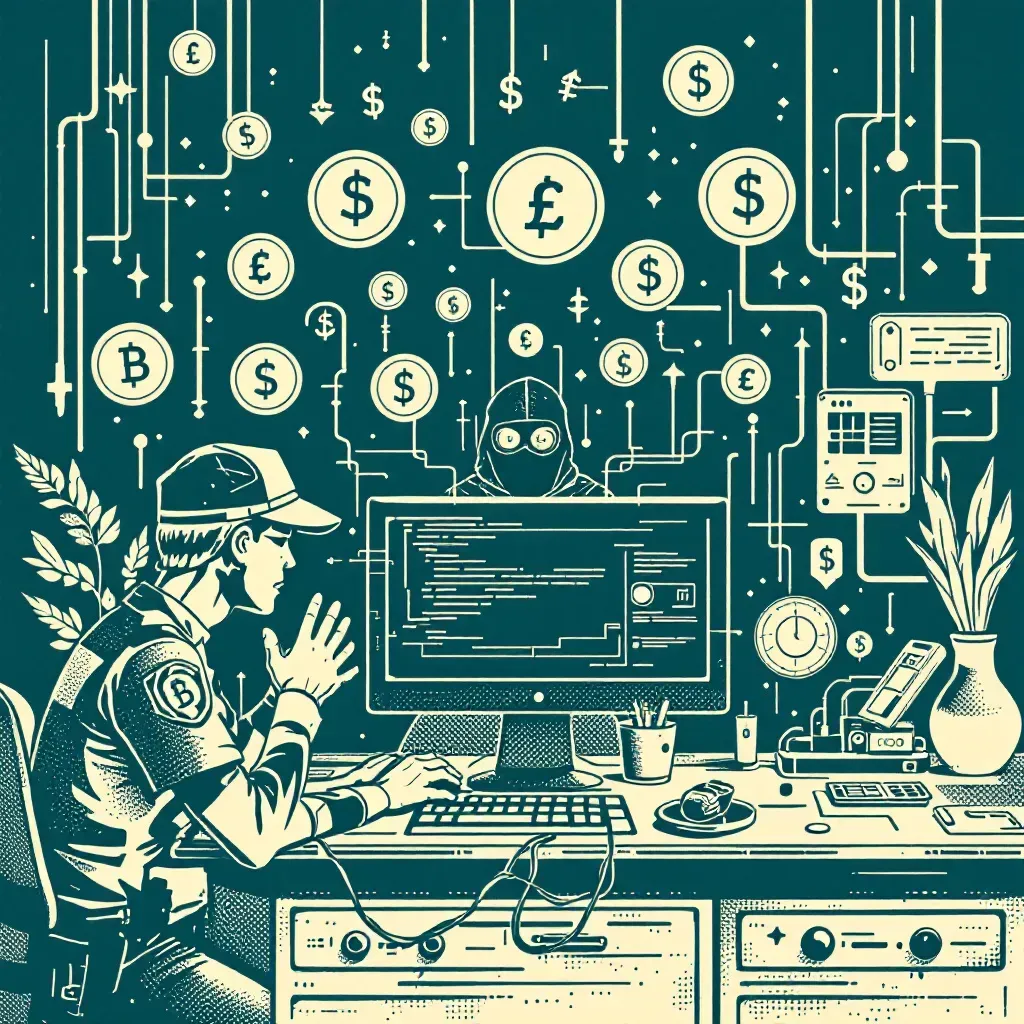
Definition
Crypto: More than digital currency – it's criminals' tool for extortion, money laundering, and illicit trade. Discover why it poses a huge challenge for the police.
Behind the facade of anonymous transactions and cybercriminals' preferred tool
Crypto: Digital currency a key tool on the dark web
Cryptocurrency, also known as crypto, refers to digital currencies that use cryptography for security. In the context of true crime, however, it is cryptocurrency's role in criminal transactions that is central. The potential for increased anonymity and its decentralized nature have made specific cryptocurrencies a preferred tool for perpetrators in various forms of financial crime and other illegal activities. This includes trading illegal goods and services on the dark web, advanced money laundering of criminal proceeds, and as a widespread means of payment in extortion cases, including ransomware attacks where perpetrators encrypt and withhold victims' critical data.
The hunt for digital traces: crypto-crime complexity
Investigating crimes involving cryptocurrency presents authorities worldwide with a particularly complex and resource-intensive task. Although transactions on most blockchains are, in principle, public and traceable, it is often a major challenge to link the digital wallets used to the real identities behind criminal acts. Criminal actors frequently use advanced obfuscation methods, including 'mixing services' (also known as tumblers), which co-mingle funds from various sources to make tracing difficult, as well as privacy-focused cryptocurrencies (privacy coins) specifically designed to enhance anonymity. These methods place significant demands on investigators' technical expertise in blockchain analysis and cybercrime, as well as on close international cooperation to effectively follow digital trails and money flows across borders.
Cryptocurrency's double-edge: knowledge vs cybercrime
A thorough understanding of cryptocurrency and its function in today's criminal economy is essential. This is crucial not only for solving specific crimes but also for developing effective strategies against new forms of cybercrime that continually emerge in the digital domain. The complex and dynamic nature of cryptocurrency means that combating its misuse will remain an ongoing challenge for law enforcement agencies and society at large, as the technology holds inherent potential for both positive innovation and criminal exploitation.
What does crypto misuse look like in practice? See how criminals use it for extortion and international money laundering. Read our harrowing case studies on the topic below.
Read more
Celsius Founder Sentenced to 12 Years for Crypto Fraud
Alexander Mashinsky, founder and former CEO of Celsius Network, was sentenced to 12 years in federal prison on December 3, 2024, in New York after pleading guilty to commodities and securities fraud. The sentencing concludes a major prosecution of the crypto lending platform that collapsed in 2022, wiping out billions in customer savings.
Hackers Steal $570 Million in Binance Coin Cyberattack
Unknown hackers exploited a vulnerability in Binance's BSC Token Hub bridge on October 4, 2022, stealing approximately 2 million BNB tokens valued at $570 million. The attack, discovered two days later, marked one of crypto's largest bridge heists but left user funds untouched.
Naples Mafia Reaches Across Europe: Camorra's Global Empire
The Camorra, a Neapolitan organized crime syndicate, has transformed from a regional Italian threat into a transnational criminal powerhouse with operations spanning Europe, North America, and Asia. Fueled by drug trafficking, weapons smuggling, and environmental crimes, the organization generates billions annually while leaving a trail of violence that claims innocent civilians.
Related articles

Frank Abagnale: The Con Artist Who Became His Own Greatest Hoax
Frank Abagnale Jr., arrested in Georgia in November 1970 for passing fake payroll checks, built a decades-long career on claims of elaborate cons that investigators say never happened. The gap between his memoir and the documented record reveals how a real criminal became fiction's most celebrated impostor.

Celsius Founder Sentenced to 12 Years for Crypto Fraud
Alexander Mashinsky, founder and former CEO of Celsius Network, was sentenced to 12 years in federal prison on December 3, 2024, in New York after pleading guilty to commodities and securities fraud. The sentencing concludes a major prosecution of the crypto lending platform that collapsed in 2022, wiping out billions in customer savings.

Hackers Steal $570 Million in Binance Coin Cyberattack
Unknown hackers exploited a vulnerability in Binance's BSC Token Hub bridge on October 4, 2022, stealing approximately 2 million BNB tokens valued at $570 million. The attack, discovered two days later, marked one of crypto's largest bridge heists but left user funds untouched.

Naples Mafia Reaches Across Europe: Camorra's Global Empire
The Camorra, a Neapolitan organized crime syndicate, has transformed from a regional Italian threat into a transnational criminal powerhouse with operations spanning Europe, North America, and Asia. Fueled by drug trafficking, weapons smuggling, and environmental crimes, the organization generates billions annually while leaving a trail of violence that claims innocent civilians.

U.S. Charges Chinese Military Officers in Massive Equifax Hack
U.S. federal prosecutors charged four members of China's People's Liberation Army on February 10, 2020, with orchestrating one of the largest data breaches in history. The defendants allegedly exploited a vulnerability in Equifax's systems to steal sensitive information from approximately 145 million Americans over a two-month period in 2017.

Four Americans Kidnapped by Gulf Cartel in Mexico
Four Americans were kidnapped in Matamoros, Mexico on March 3, 2023, after being mistaken for Haitian drug smugglers by members of the Gulf Cartel. Two of the victims were killed, while two survived. The Gulf Cartel itself moved to apprehend five of its own suspected members.

The Mt. Gox Collapse: How Bitcoin's Largest Exchange Lost $450M
In February 2014, Mt. Gox—once the world's largest Bitcoin exchange—abruptly suspended trading and went offline, revealing the theft of over 744,000 Bitcoins worth approximately $450 million. The collapse exposed critical vulnerabilities in early cryptocurrency infrastructure and led to the arrest of CEO Mark Karpelès, a French businessman who had acquired the exchange just three years earlier.

7 Million Robinhood Users Hit by Data Breach
An unknown hacker infiltrated the American trading platform Robinhood on November 3, 2021, stealing data from approximately 7 million users. The attack was carried out by manipulating a customer support employee over the phone.

Hacker Steals $610M in Crypto, Then Returns It All
An unidentified hacker breached Poly Network, a decentralized finance platform, and stole $610 million in cryptocurrencies across multiple blockchain networks in August 2021. Within days, the attacker returned nearly all the funds, leaving investigators puzzled about the motive.

The Bonanno Crime Family: A Century of New York Mafia Power
The Bonanno crime family emerged from the violent Castellammarese War of the early 1930s to become one of New York City's most powerful Mafia organizations. Led for three decades by Joseph Bonanno, the family expanded from Brooklyn across North America until internal corruption and federal investigation fractured its ranks.

Twitch Breach Exposed Top Streamers' Million-Dollar Payouts
A hacker breached Twitch's internal systems in early October 2021, leaking source code, passwords, and payout data for thousands of streamers. The leaked information exposed two years of earnings data, revealing that top creators earned millions from subscriptions, ad revenue, and Bits donations.

WannaCry: The Ransomware Attack That Crippled the NHS
On May 12, 2017, the WannaCry ransomware attack struck more than 300,000 computers across 150 countries, but its impact on Britain's National Health Service proved particularly devastating. The attack infected at least 80 NHS trusts and over 600 primary care organizations, forcing hospitals to cancel thousands of procedures and revert to pen-and-paper record-keeping.