About This Episode
A major American true crime podcast has revived one of Britain's most controversial murder cases, launching a formal investigation into evidence that could overturn a 40-year-old conviction.
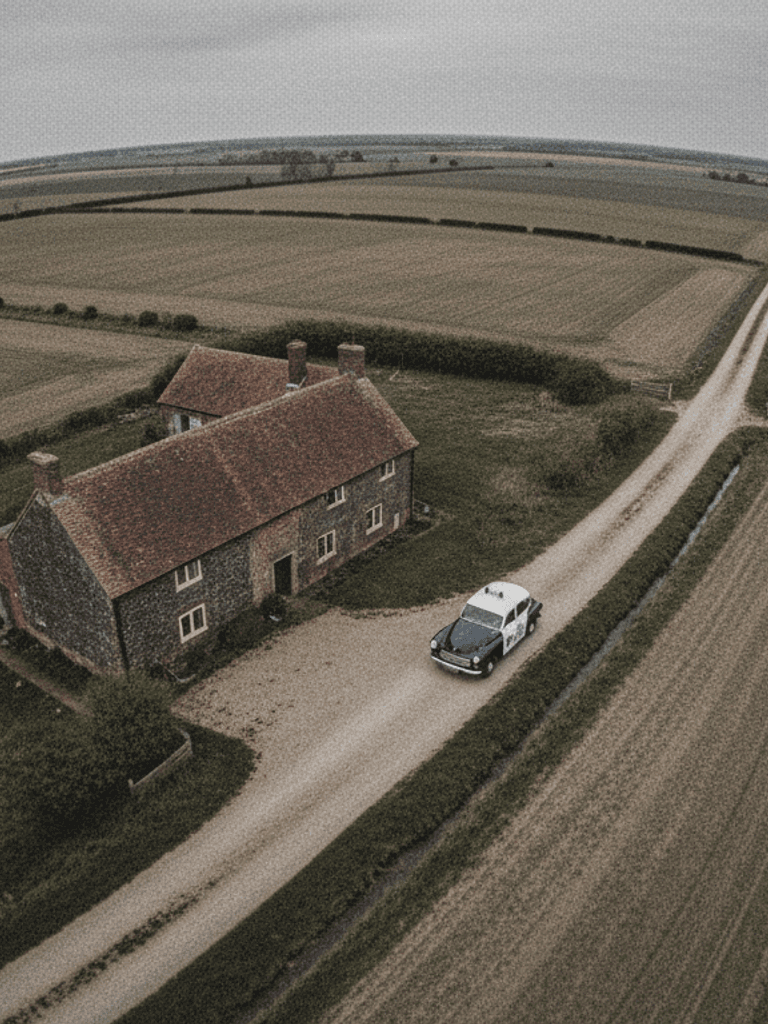
'Blood Relatives,' produced by the acclaimed In The Dark series and hosted by New Yorker journalist Heidi Blake, debuted in October 2024 with six episodes examining the White House Farm murders of August 7, 1985—a crime that shocked the United Kingdom and has remained contentious among legal experts ever since.
On that night, five members of the Bamber family were shot dead: Jeremy Bamber's parents, his sister Sheila, and her two sons. Jeremy Bamber, then 24, was convicted of their murders and has remained imprisoned for four decades. The podcast presents previously unreleased material, including recorded prison interviews with Bamber himself, alongside investigative findings that challenge the original police narrative.
The case hinges on a contested theory: police concluded that Sheila Bamber, who had a diagnosis of schizophrenia, carried out the mass shooting before taking her own life. 'Blood Relatives' examines whether this narrative withstands scrutiny given new evidence—or re-examined old evidence—the series has uncovered.
Among the podcast's key claims are allegations that police contaminated or manipulated the crime scene, and that family members may have altered physical evidence. Most significantly, the series raises questions about an emergency call log from the night of the murders, suggesting the record may have been falsified—a detail that could fundamentally alter the case's trajectory.
The involvement of The New Yorker and Blake, a respected investigative writer, gives the project substantial journalistic credibility. In The Dark, which airs through NPR and Spotify, has previously tackled high-profile cases of potential wrongful conviction, establishing a track record of rigorous investigation that has sometimes prompted legal reviews of closed cases.
The White House Farm murders occurred in Essex, England, and represent a rare example of a mass family killing that resulted in conviction. The case attracted international media attention and has been the subject of television dramatizations and previous books questioning Bamber's guilt. However, 'Blood Relatives' represents the first major English-language investigation of this scale in recent years specifically designed to reach an international audience.
Bamber's case reflects broader debates within Anglo-American criminal justice systems about police procedures, evidence handling, and the finality of conviction. In Britain particularly, where wrongful conviction inquiries have become more common following high-profile exonerations, the White House Farm case has long occupied an ambiguous space—acknowledged as controversial by legal scholars, yet proceeding without successful appeal.
The podcast's emergence also highlights how American true crime media—with substantial production budgets and international distribution networks—increasingly investigates cases from other English-speaking countries. This transatlantic interest can amplify domestic scrutiny: British legal experts and victims' advocates will likely respond to the podcast's claims, potentially reigniting public and judicial debate.
For international observers, the case illustrates tensions between initial police investigations and subsequent scrutiny, particularly when mental illness factors into the official narrative. Similar cases in Scandinavia and Europe have prompted wider discussions about how psychiatric conditions influence both criminal investigations and public perception of guilt.
The podcast does not claim to prove Bamber's innocence definitively, but rather argues his conviction warrants reexamination. Whether 'Blood Relatives' will prompt formal legal action remains unclear, but its release has already reignited international conversation about one of Britain's most disputed murder verdicts.