About This Episode
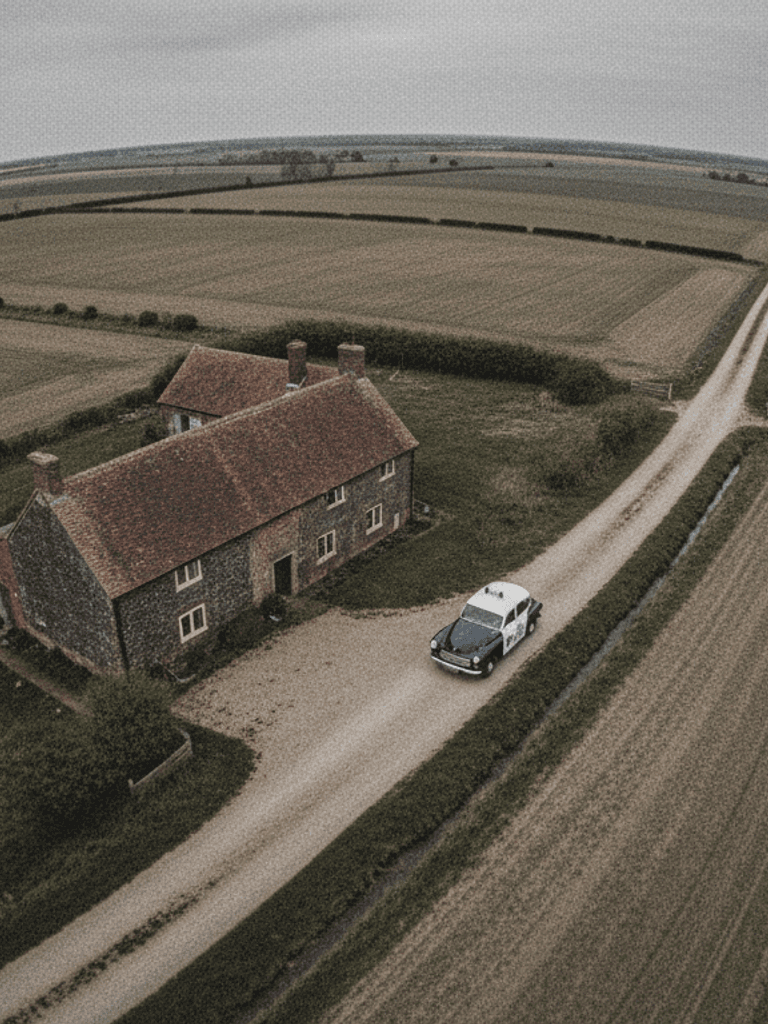
In the early hours of August 7, 1985, five members of the Bamber family were found dead at White House Farm near Tolleshunt D'Arcy, Essex. Jeremy Bamber was convicted of their murders in October 1986 and has spent nearly four decades in prison. Now, investigative journalist Heidi Blake has spent eight months examining the case and uncovered what she describes as "significant evidence" that challenges the conviction that sent Bamber away.
Blake's investigation, published as a 17,000-word article in The New Yorker titled *Did the U.K.'s Most Infamous Family Massacre End in a Wrongful Conviction?*, reveals two critical findings: evidence of crime scene interference by senior police officers and documentation of a telephone call made from within White House Farm at 6:09am on July 7, 1985—a time when Bamber was not present at the property.
The victims were Nevill and June Bamber, their daughter Sheila Caffell, and her twin children. A rifle with a silencer was recovered at the scene. The prosecution's case against Bamber rested on the theory that he left the farm around 10pm on August 6 after dining with family, then returned in the early morning via a back route to commit the murders. Prosecutors argued Bamber was motivated by hatred and greed.
Central to the Crown's case was a disputed telephone call. Bamber claimed his father rang him at approximately 3am, saying Sheila had "gone berserk" with the gun. The prosecution contended no such call ever occurred, suggesting that if Bamber fabricated this, he must have been the killer and knew details only the perpetrator would possess. This allegation became foundational to securing his conviction.
Blake's discovery of evidence documenting a call from inside White House Farm at 6:09am—when Bamber could not have been present—directly contradicts the prosecution's timeline and raises serious questions about the investigation's thoroughness. Additionally, her research identified evidence of interference with the crime scene itself by senior officers, suggesting potential contamination of the physical evidence upon which much of the case depended.
The rifle's design also featured in the original trial. Prosecutors argued the weapon was too long for Sheila Caffell to have shot herself, a biomechanical argument that supported their theory of murder rather than murder-suicide. Blake's investigation appears to have identified investigative shortcomings that warrant renewed scrutiny of this conclusion.
Jeremy Bamber was convicted by a 10–2 majority verdict in 1986 and sentenced to a minimum 25 years imprisonment. In 1994, he was informed he would never be released. The Court of Appeal upheld his conviction in 2002, but Blake's findings suggest that decision may have been made without access to crucial evidence now emerging.
Mark Newby, Bamber's lawyer, submitted an application to the Criminal Cases Review Commission (CCRC) in 2021 with nine potential grounds for appeal. As of the time Blake's article was published, the CCRC had reviewed only three of those grounds, with projections suggesting six additional years would be required to complete the review. Newby has welcomed Blake's investigation, noting it identifies "significant further fresh evidence," particularly regarding interference with evidence already supplied to the CCRC.
Blake's work extends beyond the written investigation. A podcast series titled *In the Dark: Blood Relatives*, produced by WNYC Studios, explores the case further, and Blake has discussed her findings on the *Crime Story* podcast. Her investigation was prompted, in part, by failings she observed in CCRC handling of other wrongful conviction cases, including those of Andy Malkinson and Samuel Nealon.
The White House Farm case remains one of the United Kingdom's most notorious family massacres. Blake's eight-month investigation suggests that the conviction securing Bamber's imprisonment may rest on foundations far less solid than the courts have previously accepted.
Sources: - https://www.thejusticegap.com/bamber-significant-new-evidence-revealed-in-whitehouse-farms-murders/ - https://en.wikipedia.org/wiki/White_House_Farm_murders - https://podcasts.apple.com/nz/podcast/how-police-allegedly-botched-one-of-the-uks/id1708259679?i=1000748579288 - https://www.wnycstudios.org/podcasts/tnyradiohour/articles/from-in-the-dark-blood-relatives