About This Episode
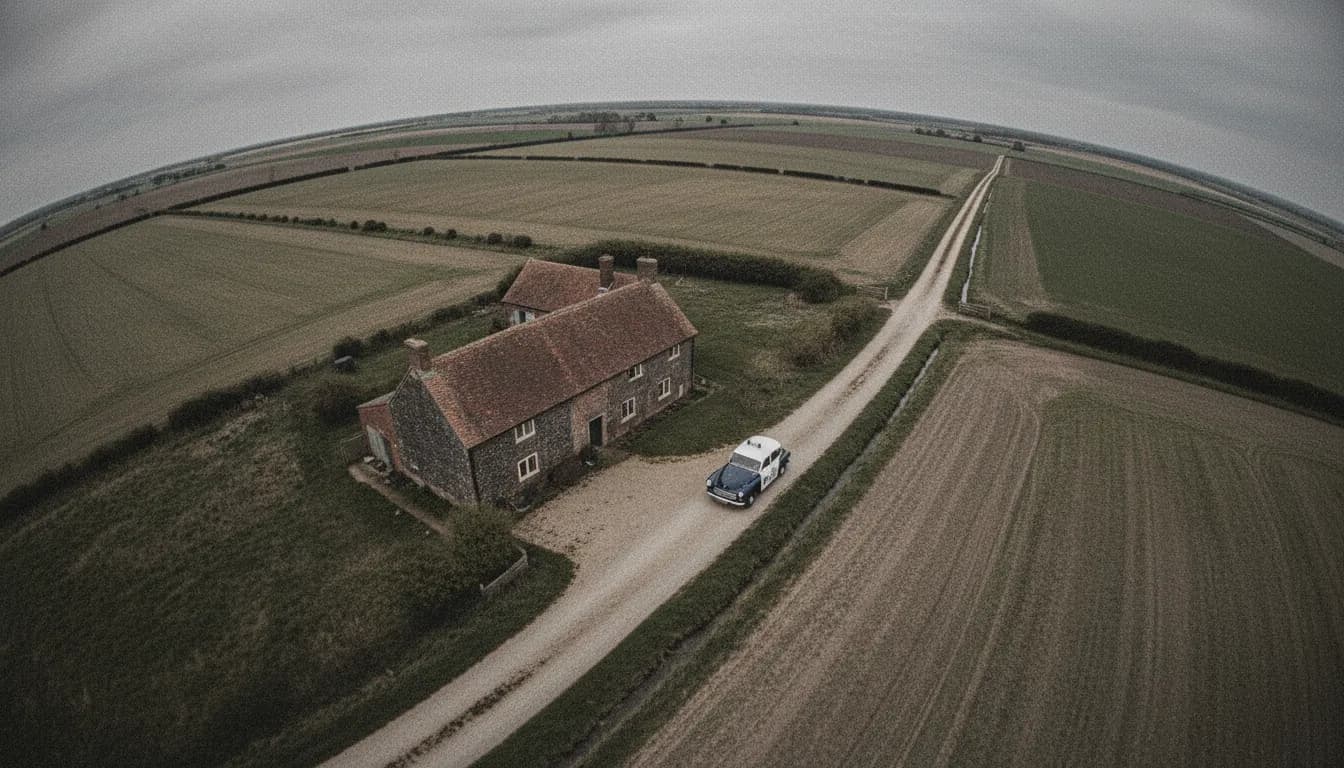
On the night of 6–7 August 1985, five members of the Bamber family were shot dead at White House Farm near Tolleshunt D'Arcy in Essex, England. Jeremy BamberEngland. Jeremy Bamber, then 24, would be convicted of their murders less than 15 months later—but the case that shocked Britain remains deeply controversial.
The Victims
The dead were Nevill Bamber, 61, and his wife June, 61; their adopted daughter Sheila Caffell, 28; and Sheila's twin sons, Daniel and Nicholas, both 6. Nevill's body bore the most brutal injuries: he was found downstairs in a pool of blood, bludgeoned and shot, having apparently been shot upstairs before struggling down. The others were found inside the farmhouse. The weapon used was a legally held semi-automatic rifle.
The Initial Theory
When police arrived at the farm on 7 August 1985, they found Sheila dead in her parents' bedroom with the rifle positioned against her throat. The initial conclusion seemed straightforward: Sheila, who had been diagnosed with schizophrenia and treated in a psychiatric hospital months earlier, had killed her family in a psychotic episode before taking her own life.
But this narrative would soon be challenged.
The Crucial Phone Call
Jeremy Bamber's account of events hinged on a single phone call. He told police that his father, Nevill, had rung him around 3:26 am claiming that Sheila had "gone berserk" with the rifle. Yet the prosecution would later argue there was no evidence Nevill made this call—that he was too severely injured to speak, that there was no blood on the kitchen telephone, and that he would have called police directly rather than his son.
The Silencer Discovery
Three days after the murders, on 10 August, Jeremy's cousin David Boutflour found a silencer and rifle sights in the gun cupboard during a family visit. Police had searched that same cupboard on 7 August and found nothing. The silencer contained Sheila's blood—a detail the prosecution seized upon. If Sheila had committed the murders and then taken her own life, they argued, how could the silencer have ended up stored downstairs? The rifle often functioned without the silencer, and it didn't fit easily into the gun case, making the prosecution's theory seem plausible.
The Conviction
The prosecution's case rested on circumstantial evidence and testimony. Jeremy's girlfriend at the time, Julie Mugford, became a pivotal witness. She reported that Bamber had confessed to the murders and discussed executing a "perfect murder"—testimony she gave despite still loving him and harboring hopes of marriage. The prosecution also presented evidence that Bamber could have accessed the farm via a downstairs window, using a bicycle from his cottage in nearby Goldhanger.
On 14 October 1986, at Chelmsford Crown Court, Jeremy Bamber was convicted.
Lingering Doubts
Bamber has maintained his innocence and has mounted unsuccessful appeals challenging the reliability of the silencer evidence and alleging that police logs showed Nevill did call police. Subsequent investigations have raised troubling questions about police conduct at the crime scene, including allegations that evidence was moved or tampered with. A New Yorker investigation documented that firearms officers noted discrepancies between photographs taken at the scene, adding to doubts about the integrity of the evidence.
More than three decades later, the White House Farm murders remain one of Britain's most contentious criminal cases—a story of family tragedy darkened by questions of justice and whether the right man was convicted.
Sources
https://en.wikipedia.org/wiki/Jeremy_Bamber https://en.wikipedia.org/wiki/White_House_Farm_murders https://www.thejusticegap.com/bamber-significant-new-evidence-revealed-in-whitehouse-farms-murders/ https://www.crimeandinvestigation.co.uk/crime-files/jeremy-bamber