About This Episode
On Sunday, November 29, 1970, a 12-year-old girl and her father discovered a charred corpse lying on its back in Isdalen Valley, a remote, wooded scree slope near Bergen in western Norway. The woman's jewelry—a watch, two earrings, and a ring—lay arranged beside her body in what investigators described as a deliberate, almost ceremonial placement. She had been badly burned. Her face was unrecognizable. And no one knew who she was.
Fifty years would pass before her identity remained unknown.
When police searched the woman's hotel room and suitcase, they uncovered a cache of espionage-grade tradecraft: eight forged passports bearing different identities, multiple wigs, all labels and tags surgically removed from her clothing. In her possessions lay what appeared to be coded documents. Eyewitnesses reported seeing her with unidentified men near Bergen's port—a hub for NATO and military sailors from Germany, Norway, and the United States. Yet no one came forward. No man was ever charged. The case went cold.
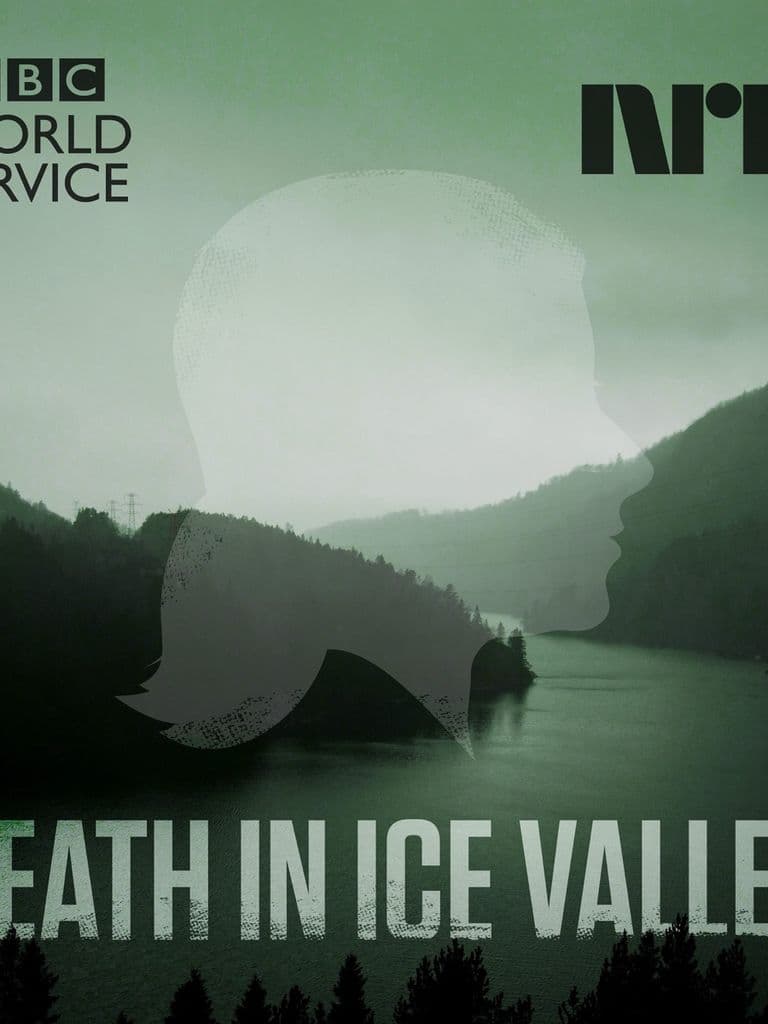
Enter *Death in Ice Valley*, a 14-episode podcast co-produced by the BBC World Service and NRK (Norwegian public broadcaster) and launched in 2018. Anchored by Norwegian investigative journalist Marit Higraff and BBC documentary producer Neil McCarthy, the series represents a rare transatlantic collaboration in true crime storytelling—one that weaponizes modern forensic science against decades-old mysteries.
The podcast's approach is methodical and innovative. Episodes deploy isotope analysis to map the woman's geographical origins, organize listener-driven investigations, and conduct fresh excavations of the crime scene. High-profile guests—including crime writer Gunnar Staalesen, forensic pathologist Inge Morild, and Nils Jarle Gjøvåg, head of forensics at Bergen Police—bring competing theories to bear on the evidence. Episode 11, "Turning Detective—Live," broadcast in June 2019, assembled these experts live while incorporating crowd-sourced leads from listeners.
Yet the podcast's most compelling strength is its refusal to resolve. Episode 12, "Anna and Angelina" (aired in 2021), presents two separate female suspects—a suspected fraudster and an alleged spy, both operating under multiple identities and wigs—without confirming either as the victim. The ambiguity is haunting, and deliberate. The podcast runs active, unsolved cases through public scrutiny rather than pretending closure where none exists.
The case itself sits at the intersection of Cold War paranoia and genuine mystery. Was she a spy? A defector? A victim of foul play, accident, or suicide? The arranged jewelry suggests ritual. The fake passports suggest espionage. The remote location suggests someone wanted her undiscovered. Yet the burned remains, the lack of witnesses, and the passage of time have rendered certainty impossible.
What *Death in Ice Valley* achieves is something rarer than a solution: it resurrects a forgotten victim and transforms her into a mirror for larger questions about Cold War secrets, identity, and the limits of forensic science. The podcast ran from 2018 to 2021 and found no definitive answer—but it found something audiences rarely expect: intellectual honesty about what we can and cannot know.
For true crime listeners accustomed to neat narratives and guilty verdicts, *Death in Ice Valley* offers a different gift: the unsettling recognition that some mysteries endure because they are genuinely, stubbornly opaque.
Sources
- https://en.wikipedia.org/wiki/Death_in_Ice_Valley - https://podcastreview.org/review/death-in-ice-valley/ - https://coldwarconversations.com/episode99/ - https://wilwilliams.reviews/2018/06/22/marit-higraff-talks-journalism-storytelling-and-death-in-ice-valley/ - https://www.youtube.com/watch?v=zPPIJpCJS9Q